A. Choose the correct answer
1. Absence of illness and injury means:
(a) Wealth (b) Sanity (c) Health (d) Public Health system Ans: ( c)
2. The manpower of a country is its
(a) Human resources (b) Power stations (c) Electricity (d) Political leaders Ans: (a)
3. 21% of all the communicable diseases are:
(a) Waterborne (b) Terminal (c) Mental (d) Psychological Ans : (a)
4. A foreigner can stay in India for medical reasons for:
(a) 15 days (b) 3 months (C) 20 days (d)30 days Ans : (b)
B. Fill in the blanks.
1. Health of the citizens affects development of a nation.
2.Niti Aayog replace the planning commission in 2015
3. The full form of WHO is World Health Organisation.
4. Private Healthcare facilities are very expensive.
C. Match the columns.
- International organisation that provides assistance to Public Health Care programs— WHO
2. Private Healthcare — Healthcare and medicine provided by entities other than the government.
3. The Ministry of Health and Family Welfare —A central government body responsible for forming health policies.
4. Waterborne diseases —- Dysentery jaundice hepatitis diarrhoea.
5. Niti Aayog — Set up on January 1, 2015.
D. Write T for through and F for false statements
1. A person with no illness and injury is considered healthy. (True)
2. India has only government-run dispensaries and hospitals. (False)
3. Kerala has the poorest health service facilities in India. (False)
4. Medical tourism is a growing sector in India.
(True)
E. Very short answer type questions
1. What do you mean by health?
Answer– Health is a state of complete physical mental and social well-being, not marely the absence of disease or Infinity.
2. What are the factors on which the health of a person depends?
Answer– The health of a person depends on factors such as genetics, lifestyle, environment, access to health care, and socio- economic conditions.
3. How does the government private organisations and NGOs try to prevent or treat illness
Answer –they implement health policies, run awareness campaigns, provide vaccinations, offer healthcare services, and promote sanitation and hygiene.
4. List the reasons why large sections of the population do not have access to medical care.
Answer— Reasons include poverty, lake of healthcare, infrastructure, geographical barriers, and insufficient healthcare professionals in remote areas.
5. How does the government use the money paid by citizens is Texas
Answer—The government uses tax money to fund public services like healthcare, education, infrastructure, and social welfare programs.
F. Short answer type questions
1. What is Niti Aayog why was it formed
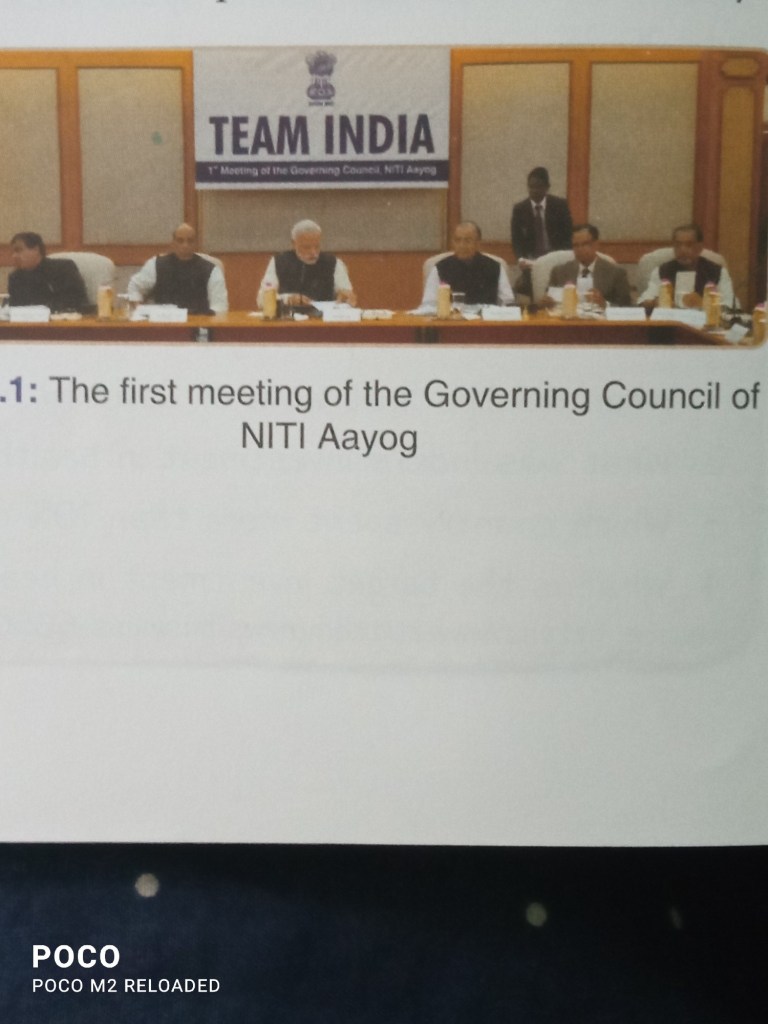
Answer— Niti Aayog is a policy think tank of the Indian government, formed in 2015 to replace the planning commission. It was created to provide strategic and technical advice on economic and social issues.
2. Explain the working of the public health care system
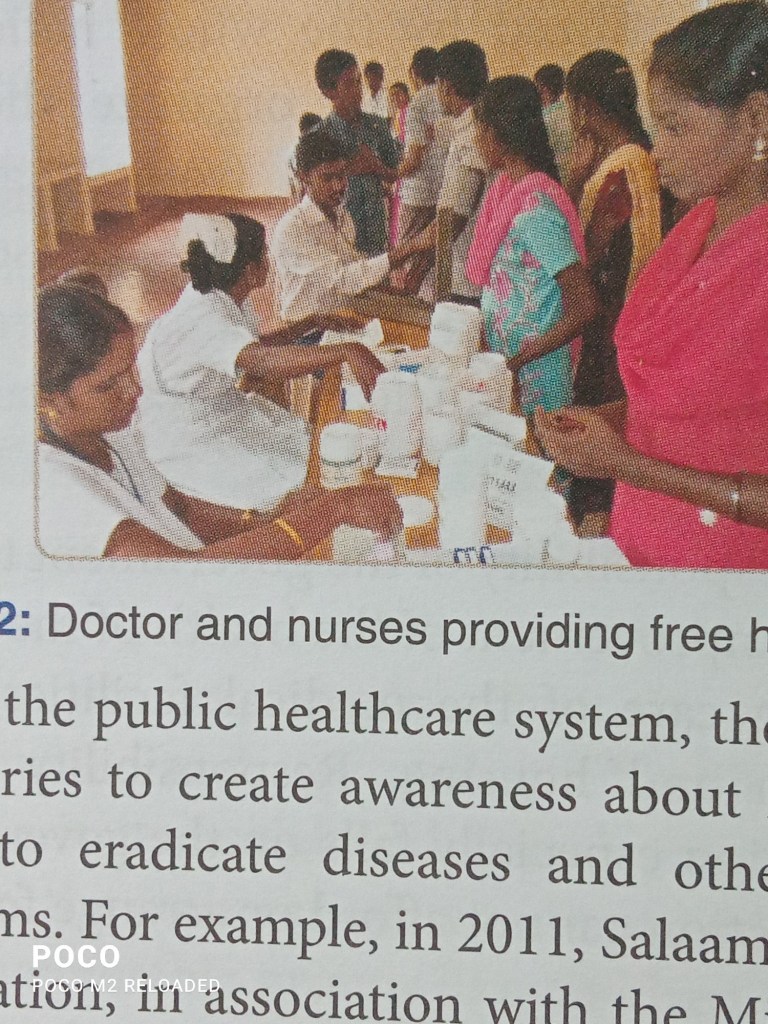
Answer— The public health care system in India is run by the government, providing affordable healthcare services to citizens through a network of hospitals, dispensaries, and healthcare centres. It focuses on preventive care, treatment, and health Promotion.
3. Write a not on Private Health Care system.
Answer — The private healthcare system consist of privately-owned hospitals clinics and healthcare providers. It offers high quality services but is often expensive and primarily accessible to those who can effort it or have insurance coverage.
4. India has become a destination for medical tourism. Elaborate.
Answer— India has emerged as a leading destination for medical tourism due to its advanced healthcare facilities, skilled medical professionals, and affordable treatment cost. Patients from around the world come to India for treatment such as surgeries, organ transplants and specialized medical care.
G. Long answer type question
1. What guidelines have been mentioned in the Directive Principles of State Policy related to healthcare? How do they ensure access of all the resources to all community.
Answer— In the field of healthcare, the Directive Principles of State Policy ensure that:
. Citizens get required means of livelihood.
. Equal pay for equal work is given.
. Sick, aged, unemployed and disabled get works, education, and public assistance.
. Maternity relief is given to working women.
. The level of nutrition and standard of living condition is raised and public health is improved.
To ensure available of resources, public health expenditure in a state is shared by the Central and State the government. NGOs and international organisation like WHO also provide assistant to public health care programmes.
 Site 𝓝𝓲𝓻𝓾'𝓼𝓫𝓵𝓸𝓰