A. Choose the correct answer:
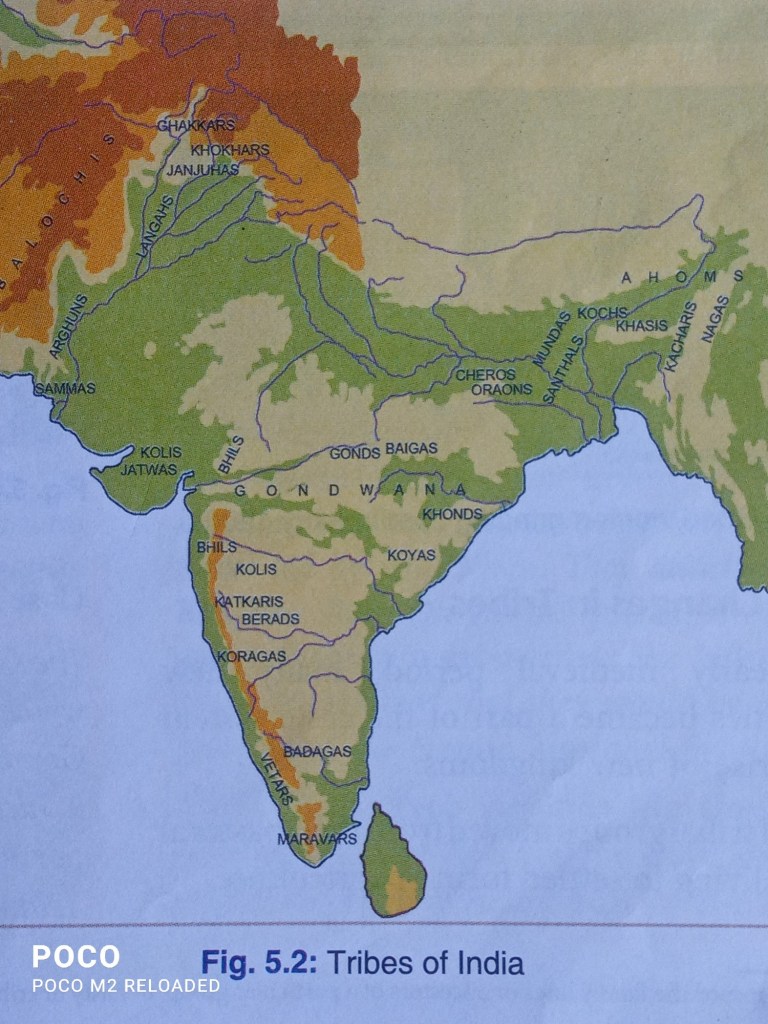
1. The Khokhars and Ghakkars were powerful tribes in:
(a) Multan and Sindh (b) Odisha and bangal
(c) North East (d) Punjab
Ans: (d) Punjab
2.The Ghakkar chief,Kamal Khan, was made a mansabdar during the reign of:
(a) Babur (b) Akbar (c) Jahangir (d) Shah Jahan
Ans: (b) Akbar
3. Raja Man Singh was the Mughal general when the Mughal defeated the:
(a) Ahoms (b) Gonds (c) Cheros (d) Todas
Ans: (a) Ahoms
4. Rani Durgavati was a famous ruler of the:
(a) Gonds (b) Ahoms (c) Bhils (d) Cheros
Ans: (c) Bhils
5. A barhot was made up of:
(a) 10 villages (b) 12 villages (c) 15 villages (d)50 villages
Ans: (b) 12 villages
B. Write T for True and F for False statements:
1. T
2. F
3. T
4. T
5. F
C. Fill in the blanks:
1. The Delhi sultanate ruler Alauddin Khilji had used the services of the Banjaras to transport grain to the city markets.
2. The Cholas embraced Nadu who had once been a tribal deity, as their royal family god.
3. The Gond clans worship a deity described as Persa Pen.
4. The first Ahom ruler was Sukapha.
5. The older political system of the Bhuyans was suppressed by the Ahoms to create a new state.
D. Very Short Answer Type Questions:
1. List two powerful tribes in Punjab. Which tribal chief was made a mansabdar by Akbar?
Ans: Khokhars and Gakkhars were two powerful tribes in Punjab. Kamal Khan, a Ghakkhar chief, was made a mansabdar by Akbar.
2. What is shifting cultivation?
Ans: Shifting cultivation is a method of farming where land is cleared, cultivated, and then abandoned for a few years to allow it to regenerate naturally.
3. How did the folk artists make their living?
Ans: Folk artists earned their living by crafting and selling their artwork or performing traditional music, dances, and storytelling.
4. Who were the Gonds? In which region did they live?
Ans: The Gonds were a tribal group that lived in Madhya Pradesh, Chhattisgarh, and Andhra Pradesh regions.
5. Who were the Ahoms?
Ans: The Ahoms were an Assamese tribal group. They ruled over Kamrup, Darrang Nowgong, Sibsagar, Lakhimpur and portions of the Sadiya frontier tract for nearly 600 years.
E. Short Answer Type Questions:
1. What are tribes?
Ans: Tribes are social groups comprising families or communities with a shared ancestry, language, culture, and customs. They generally live in specific territories and have a unique way of life distinct from mainstream society.
2. Mention the names of major tribes of India and the reasons where they live.
Ans: Major tribes of India and their regions:
Gonds: Madhya Pradesh and Chhattisgarh
Bhils: Rajasthan and Gujarat
Santhals: Jharkhand, Odisha, and West Bengal
Ahoms: Assam
F. Long Answer Type Questions:
1. Why is there not much information about tribal groups? How is information about them made available?
Ans: Tribal groups traditionally preserved their knowledge, customs, and history orally, passing it from one generation to another. As a result, they left behind limited written records. Information about them is gathered from folklore, local traditions, archaeological evidence, and records by outsiders like travelers and rulers.
2. Discuss the changes in the caste system during the medieval period.
Ans: During the medieval period, the caste system became more rigid. New groups, such as artisans and traders, were integrated into the system. Tribal societies were increasingly influenced by Brahmanical traditions, and many tribes adopted the hierarchical caste system. Some tribes like the Rajputs gained prominence by assimilating into Kshatriya status.
3. Write some similarities and differences between the Gonds and the Ahoms.
Ans: Similarities: Both tribes established powerful kingdoms and played significant roles in medieval Indian history. They assimilated local cultures and adopted Hindu practices over time.
Differences: The Gonds were concentrated in Central India, while the Ahoms ruled in Assam. The Ahoms established a strong administrative system, while the Gonds relied on tribal councils.
4. Classify different tribes based on their occupations:
Hunter-gatherers: Bhils and Santhals
Pastoralists: Banjaras
Settled agriculturists: Gonds
Craftsmen and traders: Ahoms
G. Differentiate between the following:
1. Garh and Khel
Garh: A large administrative unit used by the Gonds.
Khel: A unit of clan-based organization used by the Ahoms.
2. Chaurasi and Barhot
Chaurasi: A cluster of 84 villages under Gond administration.
Barhot: A cluster of 12 villages.
3. Artisans and Folk artists
Artisans: Skilled workers who make goods by hand, such as pottery or textiles.
Folk artists: Individuals who perform or create traditional art forms, including music, dance, and storytelling.
H. Higher-Order Thinking Skills:
1. How did the decline in forests affect the tribal groups during the medieval period?
Ans: The decline in forests disrupted the livelihood of tribal groups, who depended on forest resources for hunting, gathering, and shifting cultivation. It forced many tribes to adapt to new occupations like settled farming or artisan work and made them more vulnerable to external control by rulers.
2. What was the main factor for the growing power of the Ahoms?
Ans: The main factor for the Ahoms’ growing power was their well-organized administration, military strength, and the assimilation of local tribal groups into their kingdom. They also adopted Hindu traditions, which helped them consolidate power.
*********************
 Site 𝓝𝓲𝓻𝓾'𝓼𝓫𝓵𝓸𝓰