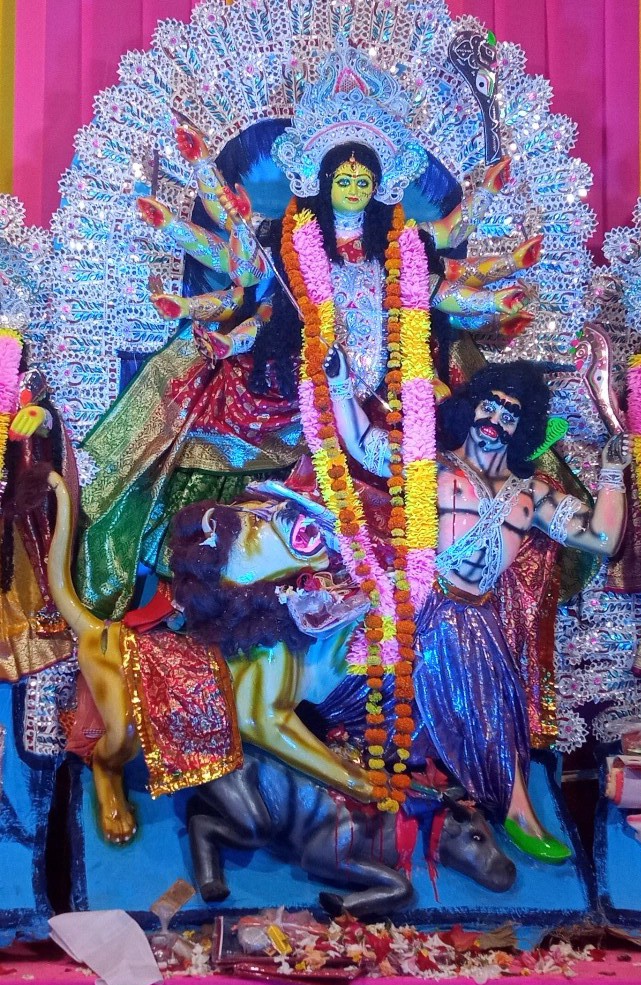
This is an artist group came from another village
The Bishnupriya Manipuri community celebrates Durga Puja with a unique blend of Bengali, Assamese, and Manipuri cultural influences, deeply rooted in their Vaishnavite traditions and devotional lifestyle. Here’s an overview of how they typically observe Durga Puja:
1. Pre-Puja Preparations
- Cleaning and decorating homes – like in many Indian communities, the festival begins with preparing the household.
- Setting up pandals (temporary shrines) – in community areas or temples.
- Idol installation – In some areas, traditional clay idols of Maa Durga are installed, though in smaller towns or villages, symbolic worship may be more common.
2. Rituals and Worship
- Bishnupriya Manipuris follow Vaishnavism, so Durga Puja is sometimes observed with a devotional twist—offering prayers not only to Goddess Durga but also integrating rituals for Lord Krishna or Vishnu.
- Chanting and bhajans – Devotional songs are sung in the Bishnupriya Manipuri language, often blending Vaishnavite themes.
- Offerings (Bhog) – Special vegetarian dishes, fruits, sweets (like kheer, luchi, halwa), and sometimes traditional Manipuri dishes are offered.
- Aarti – With conch shells (shankha) and incense, especially in the evening.
3. Cultural Programs
- Dance performances – Classical Raas Leela or Manipuri dance might be performed during the evenings.
- Drama and natak – Local clubs or youth groups may perform mythological stories.
- Community feasts – The community gathers for meals, especially on Maha Ashtami and Navami.
4. Immersion or Conclusion
- On Dashami (the last day), if there’s an idol, the immersion (Visarjan) takes place in a local water body, accompanied by music and chants.
- Some communities end with Sindoor Khela (sindoor play among married women), though this is more prominent in Bengali celebrations.
Unique Aspects in Bishnupriya Manipuri Style:
- Language and songs used are in the Bishnupriya Manipuri dialect.
- Fusion of Vaishnavite rituals with Durga Puja traditions.
- More devotional simplicity in rural areas compared to the grandeur seen in urban Bengali communities.
Would you like a sample itinerary or celebration plan if you’re organizing a Bishnupriya Manipuri-style Durga Puja? I can help draft one!
 Site 𝓝𝓲𝓻𝓾'𝓼𝓫𝓵𝓸𝓰