Section A: Tick the correct answer
(All answers are correct ✅)
1. Alfred Wegener – Gave the Continental Drift Theory ✅
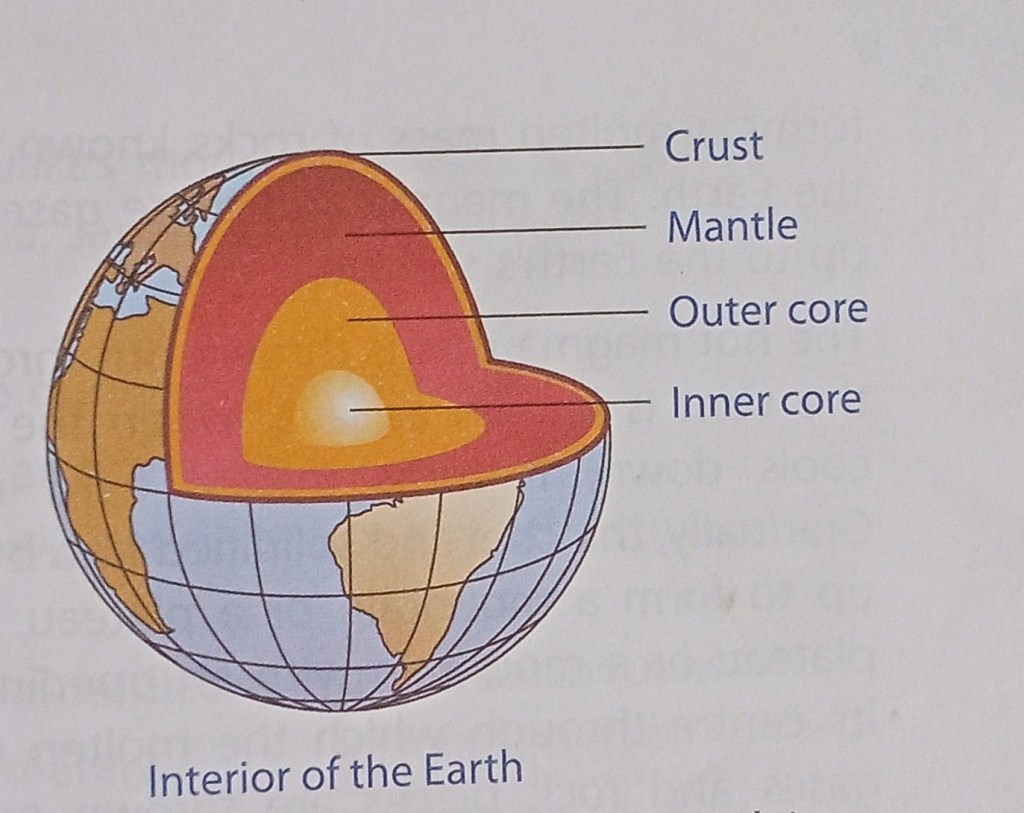
2. Crust – Top layer of the Earth ✅
3. Lava – Hot magma that comes out of the volcano ✅
4. Focus – The place where the effect of an earthquake is maximum ✅
Section B: Fill in the blanks
1. The surface of the Earth is made of 29% land and 71% water. ✅
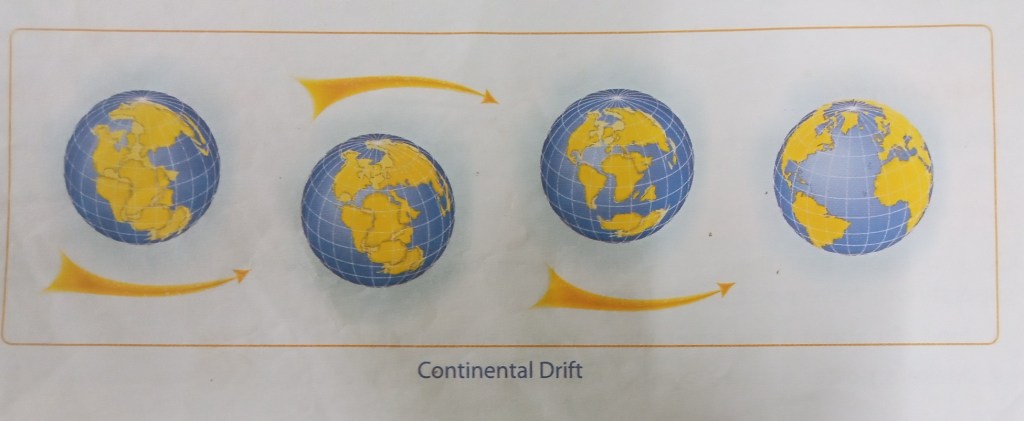
2. Nearly 200 million years ago, all the landmasses formed a supercontinent known as Pangaea. ✅
3. The metals nickel and iron make up the core of the Earth. ✅
4. A tsunami is a series of underwater waves. ✅
Section C: Answer the following questions
1. What is Continental Drift Theory?
Continental Drift Theory was given by Alfred Wegener. It states that all the continents were once joined together as a single landmass called Pangaea, and they slowly drifted apart over millions of years.
2. Write a note on the exterior of the Earth.
The exterior of the Earth is called the crust. It is the outermost and thinnest layer of the Earth. It includes land (continents) and ocean floors and is made up of solid rocks and minerals.
3. Compare slow changes and rapid changes. Give their examples.
Slow changes happen over a long period of time. Example: Mountain formation, weathering.
Rapid changes happen suddenly and quickly. Example: Earthquakes, volcanic eruptions, floods.
4. What is a volcano?
A volcano is an opening in the Earth’s surface through which hot magma, gases, and ash come out. When the magma reaches the surface, it is called lava.
5. How does an earthquake occur?
An earthquake occurs when there is a sudden movement or shaking of the Earth’s crust. This happens due to the release of energy from the Earth’s interior, usually along faults or cracks in the crust.
Section D: Give reasons
1. The core of the Earth is known as NiFe.
The core is made up mainly of two metals – Nickel (Ni) and Iron (Fe). That is why it is called NiFe.
2. Famine is a major consequence of droughts.
During droughts, there is very little or no rainfall for a long time. This causes crops to fail, which leads to a shortage of food. This condition is called famine.
3. Floods are quite common in India.
Floods are common in India because many parts of the country receive heavy rainfall during the monsoon. Rivers overflow, and water spreads over large areas, causing floods.

 Site 𝓝𝓲𝓻𝓾'𝓼𝓫𝓵𝓸𝓰