A. Choose the correct answer
1. The main occupation of rural people is:
(b) Agriculture
2. The middle-level farmers own:
(c) Small plots of land
3. Fishermen can’t go fishing during the:
(a) Monsoon season
4. Cattle are used for tilling the fields mostly by:
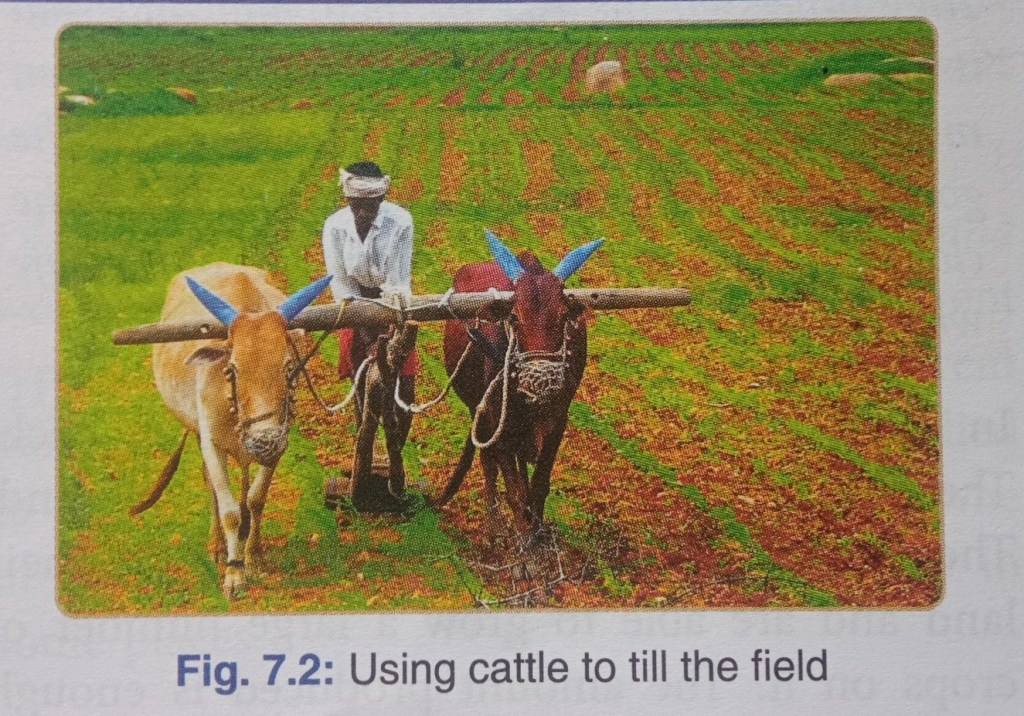
(b) Small or mid-level farmers
5. Rearing of animals to produce food is referred to as:
(c) Animal husbandry
—
B. True or False
1. The work of landless peasants is seasonal. – True
2. Banking, teaching and trading are secondary occupations. – True
3. Poultry refers to birds such as chickens, ducks and geese. – True
4. The rich farmers have to work in their fields. – False
5. Fishing is a primary occupation. – True
—
C. Fill in the blanks
1.Agricultureis the main occupation of majority of people in rural area.
2. Rich farmers can afford to buy fertilizers, modern machinery and other things.
3. Landless labourers borrow money to buy seeds, fertilizers and insecticides.
4. Animals such as cows, goats and buffaloes are mainly reared for their milk.
5. Many people from rural areas are forced to migrate to urban areas to find jobs.
—
D. Very Short Answer Type Questions
1. Which is the main occupation in rural areas?
Answer: The main occupation in rural areas is agriculture, as most people depend on farming for their livelihood.
2. Who are landless peasants?
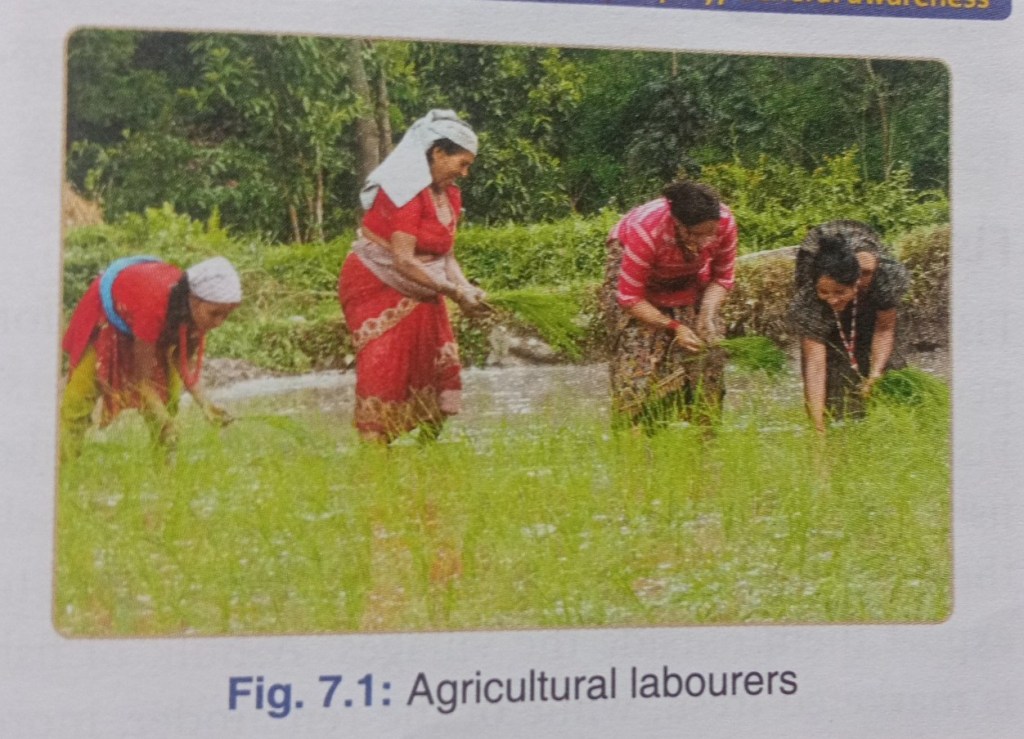
Answer: Landless peasants are poor farmers who do not own land and work on others’ fields for daily wages.
3. What is animal husbandry?
Answer: Animal husbandry is the practice of rearing animals like cows, goats and buffaloes for milk, meat and other products.
4. What is poultry?
Answer: Poultry refers to the rearing of birds like chickens, ducks and geese for eggs and meat.
5. Who are rich farmers?
Answer: Rich farmers are those who own large plots of land and can afford modern machinery, fertilizers and good seeds for farming.
—
E. Short Answer Type Questions (50–60 words)
1. Explain the term livelihood.
Answer: Livelihood refers to the means or way by which people earn their living and meet their basic needs like food, clothing and shelter. It includes activities such as farming, fishing, trading, animal husbandry and other work that help them survive and support their families.
—
2. What is animal husbandry?
Answer: Animal husbandry is the practice of breeding and rearing animals like cows, goats, buffaloes and sheep to obtain products such as milk, meat, wool and leather. It is an important occupation in rural areas and supports farmers’ income.
—
3. How do people living near forest areas earn their livelihood?
Answer: People living near forest areas earn their livelihood by collecting forest products like wood, honey, fruits, medicinal plants and leaves. Some of them also hunt animals, fish in rivers, or make handicrafts from bamboo and other materials found in forests.
—
4. How do small farmers incur heavy debts?
Answer: Small farmers incur heavy debts because they do not have enough money to buy seeds, fertilizers, and farming tools. They borrow money from moneylenders at high interest rates, and if the crops fail due to drought or floods, they are unable to repay the loans.
—
5. Why do farm labourers migrate to urban areas?
Answer: Farm labourers migrate to urban areas in search of better employment opportunities, higher wages and improved living conditions. Due to seasonal farming, they do not get regular work in villages and move to cities to work in factories, construction sites or as daily wage labourers.
—
F. Long Answer Type Questions (80–100 words)
1. Who are middle-level farmers? Explain.
Answer: Middle-level farmers are those who own small or medium-sized plots of land. They do not have as much land or wealth as rich farmers but are better off than landless labourers. These farmers generally work on their own fields with the help of family members and sometimes hire labourers during the busy seasons. They grow crops for their own use and sell the surplus in the market. Their income is moderate, and they may use simple farming tools instead of modern machinery.
—
2. Discuss in detail about fishing and cottage industries in rural areas.
Answer: Fishing is an important occupation in coastal and riverine rural areas. Fishermen catch fish using boats and nets and sell them in local markets. It provides food and income to many rural families. Cottage industries are small-scale industries run from homes or small workshops. Examples include weaving, pottery, handicrafts, and basket-making. These industries use locally available raw materials and provide supplementary income to rural households, especially during non-farming seasons.
—
3. Write a note on the three sectors of occupations.
Answer: Occupations are divided into three main sectors:
Primary sector: Includes activities like farming, fishing, mining and forestry that use natural resources.
Secondary sector: Includes industries that process raw materials into finished goods, like textile or food processing.
Tertiary sector: Includes services like banking, teaching, transportation and trade that support the other two sectors.
All three sectors are interdependent and essential for the economy.
—
4. Distinguish between small and middle-level farmers.
Answer: Small farmers: Own very small pieces of land, often less than two hectares. They mostly work themselves and face financial difficulties.
Middle-level farmers: Own slightly larger land, can produce enough for their family and sell surplus. They may hire some labourers during peak seasons.
Small farmers are poorer and more dependent on loans, while middle-level farmers are relatively stable.
—
5. Write a note on different types of farmers living in rural areas.
Answer: Farmers in rural areas can be divided into three types:
Rich farmers: Own large plots of land and modern machinery. They can easily buy fertilizers, seeds and employ labourers.
Middle-level farmers: Own moderate land and use family labour. They manage with simple tools and have limited income.
Small farmers and landless labourers: Either own very little land or none at all. They work on others’ fields for wages and face financial struggles.
—
G. Differentiate between the following
Answer: . Primary livelihoods and secondary livelihoods
Primary livelihoods: Activities that directly use natural resources like farming, fishing and forestry.
Secondary livelihoods: Activities that process raw materials into products like weaving, pottery, or small-scale industries.
—
2. Small farmers and rich farmers
Answer: Small farmers: Have little land, cannot afford modern tools, and rely on manual labour.
Rich farmers: Own large landholdings, use modern machinery, and produce surplus crops for sale.
—
3. Animal husbandry and poultry farming
Answer: Animal husbandry: Rearing of animals like cows, buffaloes and goats for milk, meat and wool.
Poultry farming: Rearing of birds like chickens and ducks for eggs and meat.
*****************
 Site 𝓝𝓲𝓻𝓾'𝓼𝓫𝓵𝓸𝓰