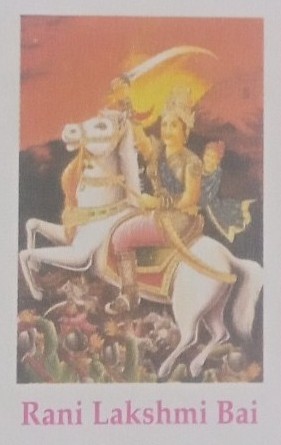
Important words
1. Patriotism – Love and devotion for one’s country.
2. Import Duties – Tax charged on goods brought into a country.
3. Sovereign – Having complete independence and power.
4. Publicist – A person who spreads ideas through writing or speaking.
5. Moderates – Congress leaders who believed in peaceful methods like petitions.
6. Extremists – Leaders who believed in strikes, boycotts, and protests.
7. Repeal – To officially cancel a law.
8. Satyagraha – A non-violent movement based on truth and peace.
9. Swadeshi – Goods made in one’s own country.
10. Boycott – Refusing to buy, use, or take part in something.
11. Mahant – A religious head of a Gurudwara.
12. Knighthood – An honour given by the British Crown.
13. Picket – To stop people from entering a shop or place.
14. Monopoly – Complete control over something.
15. Federation – A system where powers are shared between different levels of government.
16. Provincial Autonomy – Freedom given to provinces to make some of their own decisions.
17. General Constituencies – Election areas with no reservation for any community.
I. Objective Type Questions
A. Choose the correct answer
1. The Vellore Mutiny occurred in
(b) 1824
2. The ‘First War of Indian Independence ‘ was the
(c) Revolt of 1857
3. The adopted son of Peshwa Baji Rao II was
(d) Bahkt Khan
4. Birjis Qadir was declared the Nawab of
(d) Awadh
5.Sir Hugh Rose succeeded in recapturing
(b) Kanpur
6. The Indian Civil Service Act was passed in
(d) 1861
7. The immediate cause of the Revolt was
(d) Enfield Rifle
B. Match the Columns
Delhi → (iv) Bahadur Shah Zafar
Jhansi → (v) Rani Lakshmi Bai
Lucknow → (i) Begum Hazrat Mahal
Arrah → (ii) Kunwar Singh
Kanpur → (iii) Nana Saheb
C. State True or False
1. The British denied pension to Nana Saheb.
False
2. The Thugs mainly lived by plunder.
True
3. Indian handicrafts flourished under the British.
False
4. High posts in civil and military were reserved for the Indians.
True
5. The missionaries attempted to convert Indians to Christianity.
True
D. Assertion and Reason
(d) Assertion is false, but Reason is true.
(c) Assertion is true, but Reason is false.
(a) Both are true, and Reason correctly explains the Assertion.
(b) Both are true, but Reason is not the correct explanation.
II. Short Answer Type Questions
1. Why did the Muslims revolt against the British?
Answer:
The Muslims revolted because the British ended Mughal rule, reduced their political power, and interfered in their religious and social matters.
2. List two economic causes of the Revolt of 1857.
Answer:
(i) Heavy land revenue and taxes.
(ii) Destruction of Indian industries and handicrafts.
3. What events took place in Awadh?
Answer:
Awadh was annexed by the British in 1856. During the revolt, Begum Hazrat Mahal led the rebellion against the British.
4. How did the British succeed in suppressing the revolt?
Answer:
The British had better weapons, strong leadership, support from loyal rulers, and better communication and transport.
5. List the main features of the Government of India Act, 1858.
Answer:
The main features of the Government of India Act are as follows:
(i) Company rule ended.
(ii) India came under the British Crown.
(iii) A Secretary of State for India was appointed.
(iv) The Governor-General became the Viceroy of India.
III. Long Answer Type Questions
1. Describe the military causes of the Revolt of 1857.
Answer:
(i) Low pay and discrimination against Indian soldiers.
(ii) No promotions to higher ranks.
(iii) General Service Enlistment Act caused dissatisfaction.
(iv) Introduction of the Enfield Rifle with greased cartridges hurt religious feelings.
2. What was the sepoys’ resentment against the Enfield Rifle? How was it responsible for the revolt?
Answer:
Answer: The cartridges of the Enfield Rifle were believed to be greased with cow and pig fat. Since soldiers had to bite them open, it offended the religious beliefs of both Hindus and Muslims. This led to anger among the sepoys and became the immediate cause of the Revolt of 1857.
3. Which were the main centres of the Revolt of 1857 and who were their leaders?
Answer:
Delhi – Bahadur Shah Zafar
Kanpur – Nana Saheb
Lucknow – Begum Hazrat Mahal
Jhansi – Rani Lakshmi Bai
Arrah – Kunwar Singh
4. Analyse the main causes of the failure of the Revolt of 1857.
Answer:
(i) Lack of unity among the rebels.
(ii) No common leadership or planning.
(iv) Limited resources and weapons.
(v) Better-trained British army and modern weapons.
(vi) Many Indian rulers supported the British.
5. List three impacts of the Revolt of 1857.
Answer:
(i) East India Company’s rule ended.
(ii) India came under the British Crown.
(iii) The British changed their policies towards Indian rulers and the army.
IV. Picture Study
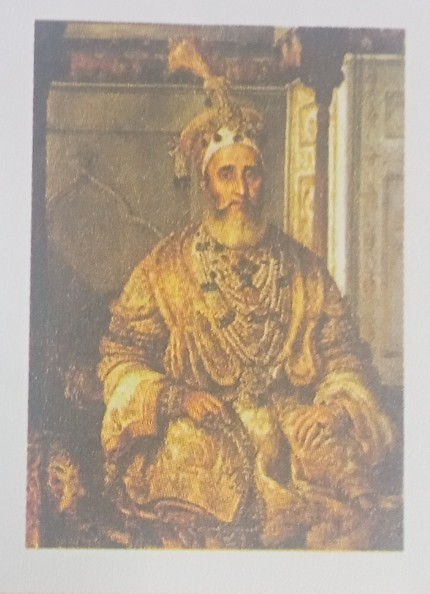
1. Identify the emperor.
Ans: Bahadur Shah Zafar II
2. What was the announcement of Lord Dalhousie for this emperor?
Ans: Lord Dalhousie declared that after Bahadur Shah Zafar’s death, his successors would not be allowed to use the title of Emperor and would have to leave the Red Fort.
3. Discuss his role in the Revolt of 1857.
Ans: Bahadur Shah Zafar was accepted as the symbolic leader of the Revolt of 1857 by the rebels.
4. What was the final fate of the emperor and his family?
Ans: He was captured by the British, his sons were executed, and he was exiled to Rangoon (Myanmar), where he died in 1862.

