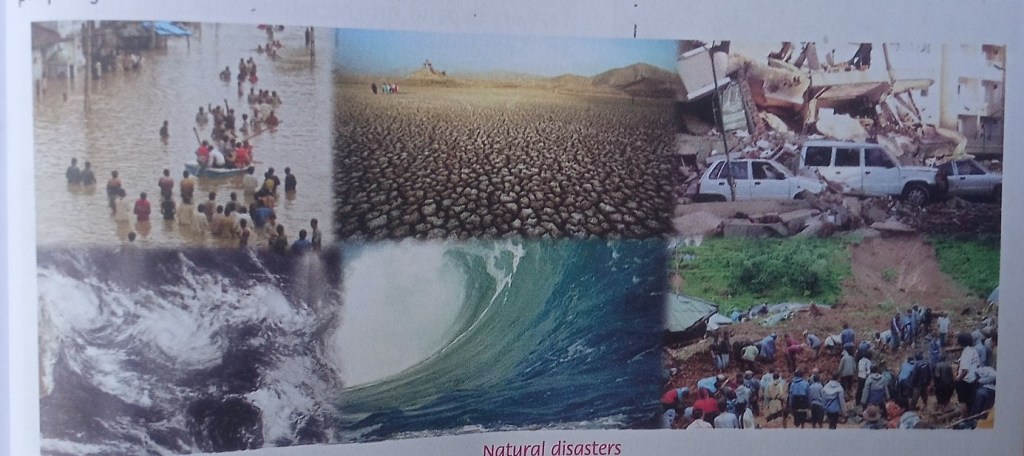
A. Answers to the MCQs
1. Which of the following is not a natural disaster?
Answer: (c) Accident
2. Which of the following statements regarding flood is wrong?
Answer: (c) It occurs only in hilly areas.
3. The scarcity of water causes:
Answer: (d) drought
4. Cyclones are frequent in the ________.
Answer: (b) coastal areas
5. Which of the following types of media help in connecting people during disasters?
Answer: (d) all of these
B. Very Short Answer Type Questions
1. What does epidemics mean?
Answer: Epidemics are diseases that spread on a very large scale and affect many people in a short time.
2. Name any two organisations that provide relief and support during natural calamities.
Answer: Red Cross and NGOs.
3. Who help in maintaining law and order during natural calamities?
Answer: The police and armed forces help in maintaining law and order.
4. What is drought?
Answer: Drought is a condition caused by scarcity of rainfall and water for a long period.
5. Name the areas affected by the cyclones.
Answer: Coastal areas are mainly affected by cyclones.
C. Short Answer Type Questions
1. What are the results of droughts?
Answer: Droughts cause scarcity of water and food grains. Crops fail, animals suffer, and people face many hardships.
2. What are the reasons of cyclones?
Answer: Cyclones occur due to low-pressure systems over the sea where winds move at very high speed.
3. List five agencies that help during a natural disaster.
Answer:
Police
Armed forces
NGOs
Red Cross
Medical teams
4. How can a community be helpful during a disaster?
Answer: A community can help by rescuing people, providing food, clothes, shelter, medicines, and supporting affected families.
5. Give a short note on the post calamitic impacts.
Answer: Natural disasters cause heavy loss of life and property. They may also lead to diseases, shortage of food and water, and damage to roads, houses, and crops.
D. Fill in the blanks
1. In hilly areas, heavy rains cause landslides.
2. The main occupation of people is agriculture in India.
3. There is a great difference between temperature and pressure conditions on land and sea in cyclone prone areas.
4. Earthquakes are caused by disturbances within the earth.
5. Epidemics are caused due to unhygienic conditions after disasters.
6. Televisions, radio and newspapers play an important role in connecting people.
7. Natural disasters cause a great damage to life and property.
E. Correctly Match List I with List II
List I.List II
(i) Floods
(d) excessive rain
(ii) Droughts
(e) scarcity of food
(iii) Epidemics
(b) cholera, plague, measles
(iv) Armed forces
(c) rescue operation
(v) UNDMT
(a) rehabilitation of disaster-affected people
*******************
 Site 𝓝𝓲𝓻𝓾'𝓼𝓫𝓵𝓸𝓰