Atmosphere Lesson -5, Subject – Social Science, Class -VII.

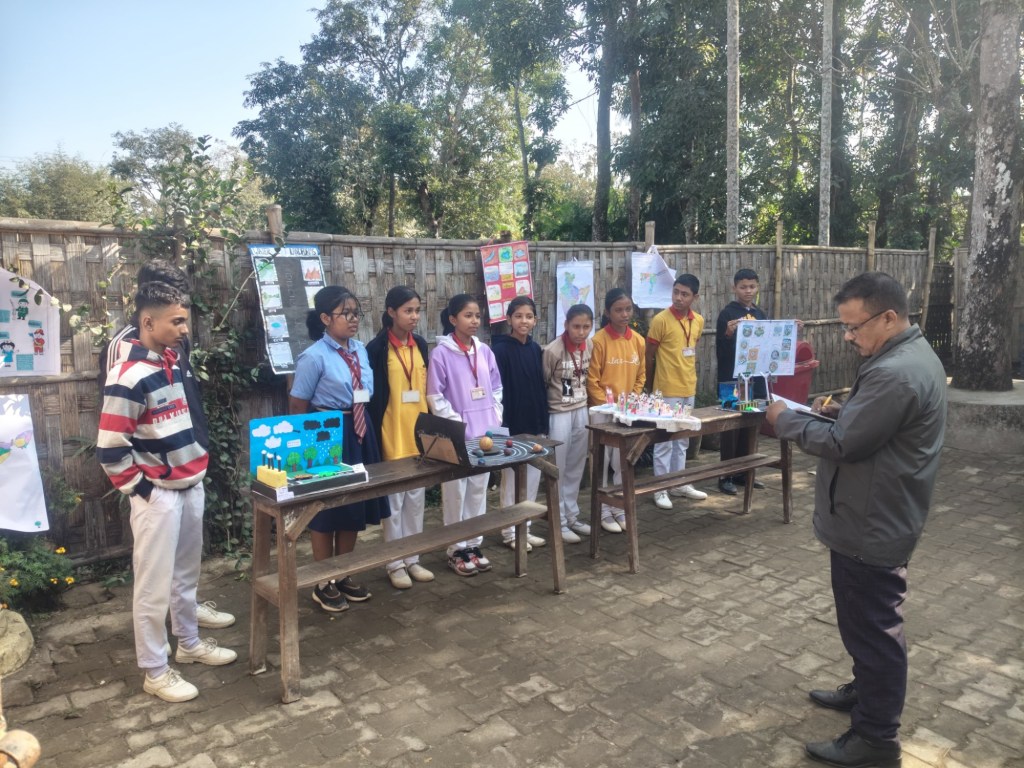
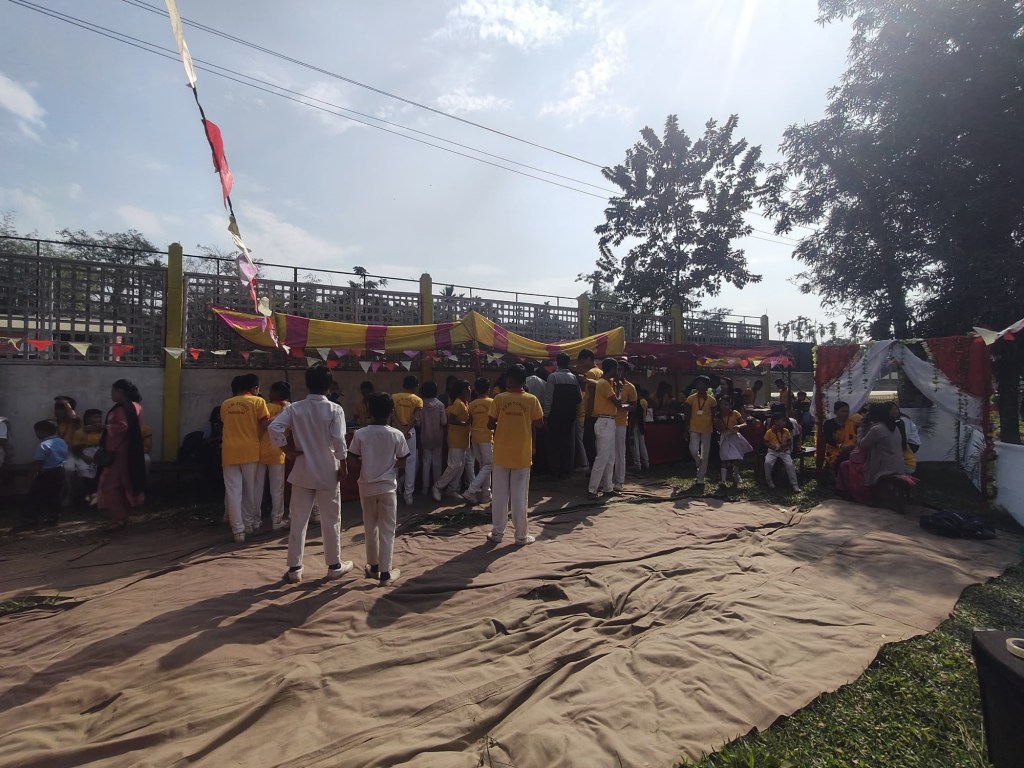
Food carnival festival held on 7th January 2025 at  Vidya Mandir Public School

A. Choose the correct answer:

1. Which is gas causes the greenhouse effect?    Answer: (b) Carbon dioxide

2. Which is the lowest layer of the atmosphere?  Answer:  (d) Troposphere

3. Radio waves are transmitted back to earth by:                                                                      Answer: (c) Thermosphere

4. Which is is the coldest layer of the atmosphere?                                                     Answer: (c) Mesosphere

5. The stratosphere is also called:                        Answer: (b) Ozonosphere

B. Fill in the blanks:

1. The main gases present in the atmosphere are nitrogen and oxygen.

2. The troposphere is the lowest layer of the atmosphere.

3. Temperature in the mesosphere layer of the atmosphere decreases with an increase in altitude.

4. Ozone absorbs the harmful ultraviolet rays of the sun.

5. The narrow boundary that separates the stratosphere from the mesosphere is called the stratopouse.

C. Write T for True and F for False statements:

1. Oxygen in the atmosphere creates the greenhouse effect.                               False

2. Plants absorb carbon dioxide during photosynthesis.                                     True

3. The Earth’s gravitational pull holds the atmosphere close to it.                       True

4. The atmosphere can be divided into six concentric layers.                                True

5. As altitude increases the atmosphere becomes thinner.                                 True


E. Very Short Answer Type Questions:

1. List the layers of the atmosphere.
Troposphere, Stratosphere, Mesosphere, Thermosphere, Exosphere.


2. Describe the composition of the atmosphere.
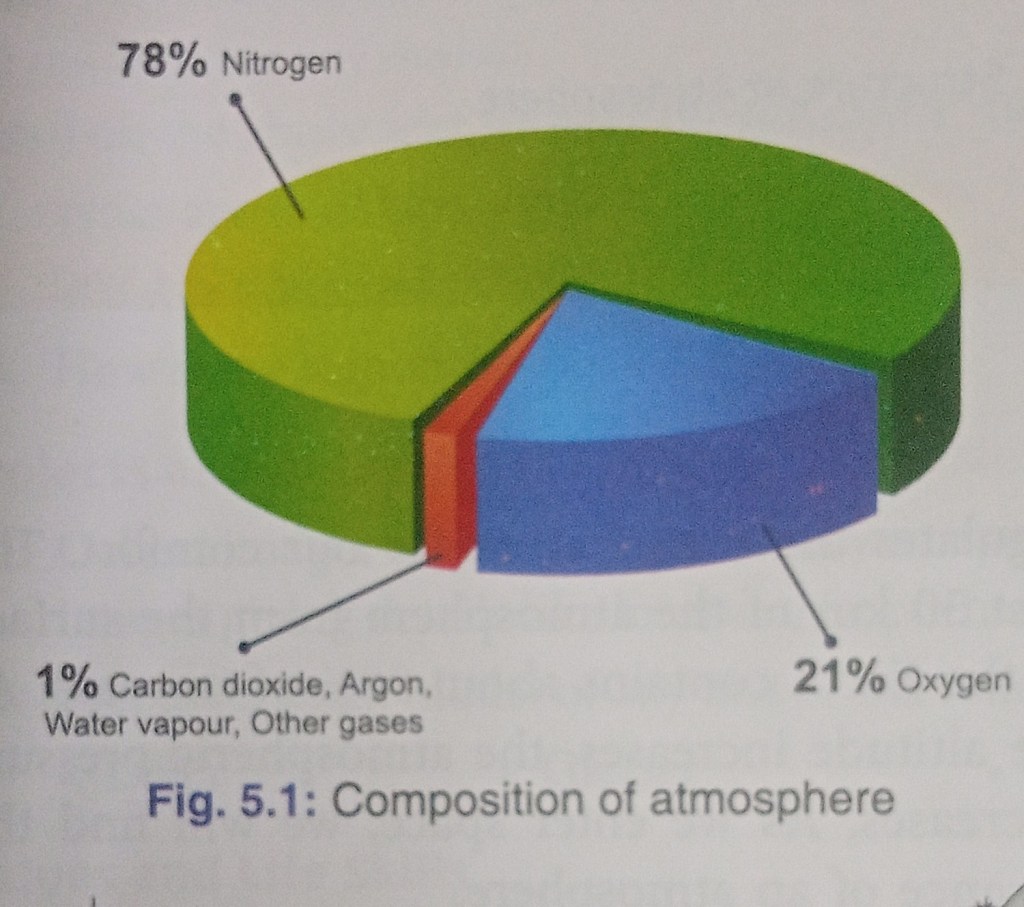
Answer: The atmosphere is composed of 78% nitrogen, 21% oxygen, and 1% other gases such as carbon dioxide, argon, and trace gases.


3. What do you understand by the term “atmospheric gases”?
Answer: Atmospheric gases are the mixture of different gases, such as nitrogen, oxygen, carbon dioxide, and trace gases, that make up Earth’s atmosphere.


4. What are the benefits of the ozone layer?
Answer: The ozone layer absorbs harmful ultraviolet (UV) radiation from the sun, protecting living organisms from its damaging effects.


5. Which gases are found in the exosphere?
Answer: Hydrogen and helium are the primary gases found in the exosphere.


F. Short Answer Type Questions:

1. Discuss the thermosphere.
Answer: The thermosphere is the fourth layer of the atmosphere, extending from about 80 km to 700 km above Earth’s surface. It has high temperatures because it absorbs solar radiation, and it is where auroras occur and satellites orbit.


2. Write a note on the stratosphere.
Answer: The stratosphere is the second layer of the atmosphere, lying above the troposphere and extending up to 50 km. It contains the ozone layer, which absorbs UV radiation, and is characterized by stable weather conditions and increasing temperatures with altitude.


3. In which layer do meteors burn up? Why do they burn?
Answer: Meteors burn up in the mesosphere because of friction with the atmospheric particles. This friction generates heat, causing the meteors to incinerate.


4. Write a note on the exosphere.
Answer: The exosphere is the outermost layer of the atmosphere, extending from about 700 km to 10,000 km. It merges with outer space and contains very low-density gases like hydrogen and helium.


5. Which layer allows long-distance wireless communication, and how?
Answer: The thermosphere allows long-distance wireless communication because it contains the ionosphere, a region filled with charged particles that reflect radio waves back to Earth.


—

G. Long Answer Type Questions:


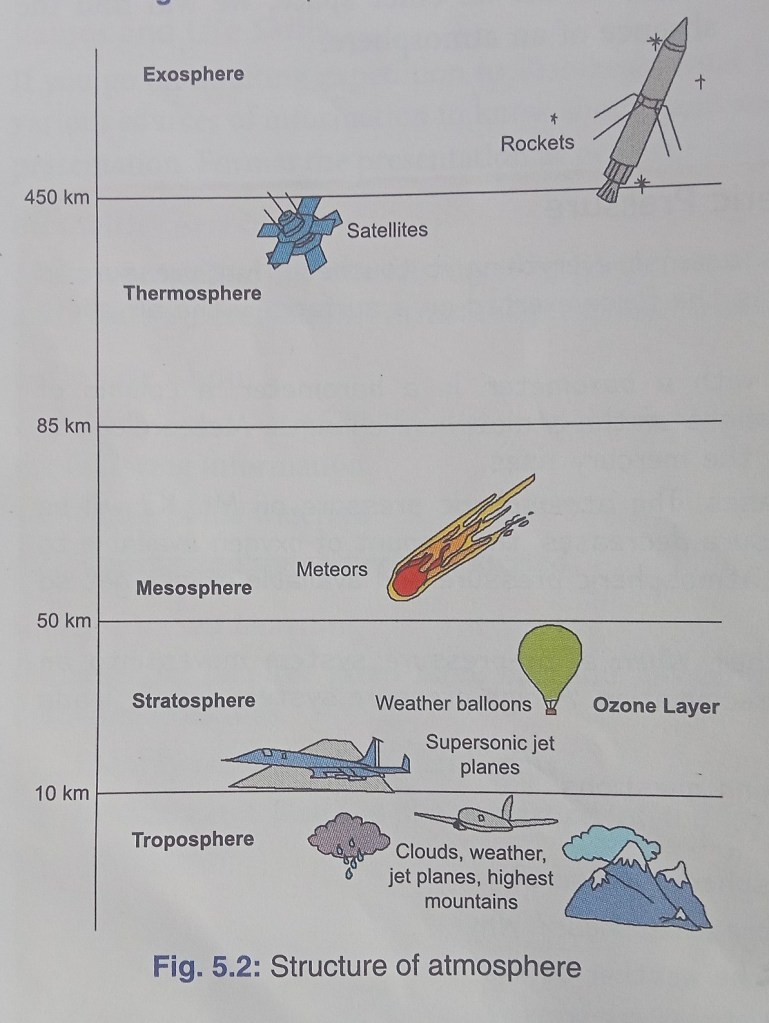
1. With the help of a diagram, explain the structure of our atmosphere.
Answer: The atmosphere consists of five layers:


Troposphere (0–12 km): Weather occurs here.

Stratosphere (12–50 km): Contains the ozone layer.

Mesosphere (50–80 km): Meteors burn up here.

Thermosphere (80–700 km): Satellites orbit; auroras occur.

Exosphere (700–10,000 km): Transition to outer space.


2. Write a note on the composition of atmospheric gases.
The Earth’s atmosphere consists mainly of:

Nitrogen (78%): Maintains balance by diluting oxygen and reducing combustion.

Oxygen (21%): Supports respiration and combustion.

Other Gases (1%): Includes argon, carbon dioxide (important for photosynthesis and heat regulation), water vapor, and trace gases.


3. Differentiate between the mesosphere and the thermosphere.

Mesosphere:

Third layer of the atmosphere (50–80 km).

Coldest layer; temperature decreases with altitude.

Meteors burn up here.


Thermosphere:

Fourth layer (80–700 km).

Temperature increases with altitude due to solar radiation absorption.

Contains the ionosphere; facilitates radio communication.
I am Nirupoma teaching in Vidya Mandir public school🎒📚

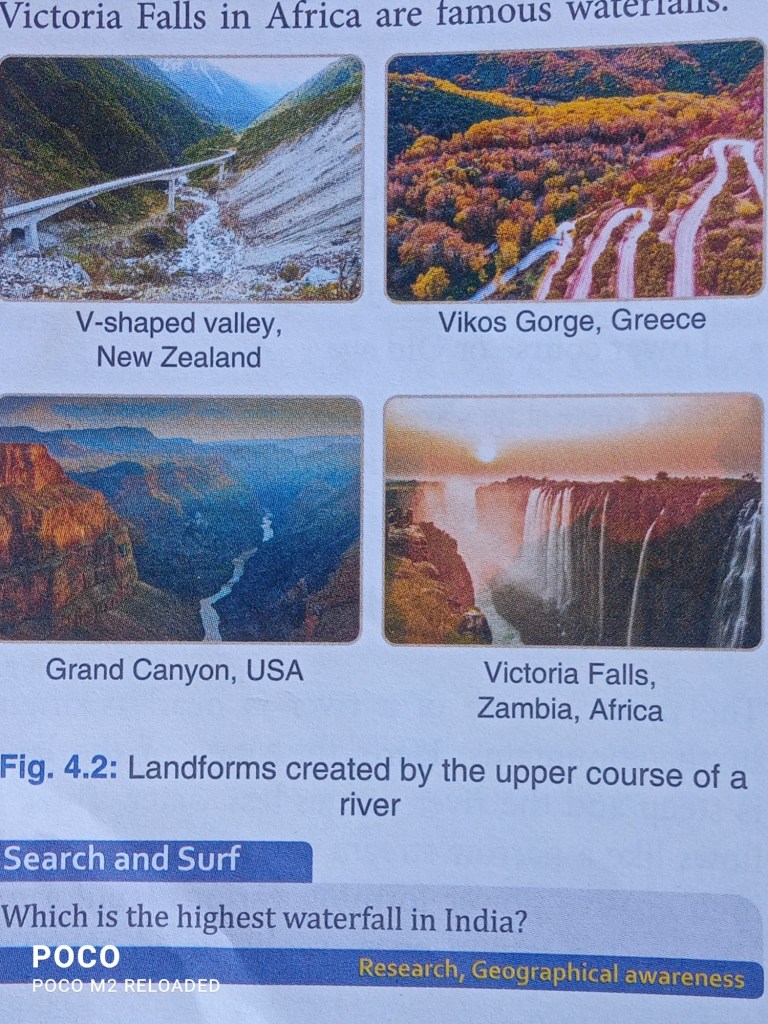
Major Landforms, chapter- 4,Class -7,Subject- Social Science


—

A. Choose the correct answer

1. What are large gorges called?
→ (c) Canyons


2. What are loops of rivers called?
→ (b) Meanders


3. Which one of the following agents forms a cave?
→ (a) Sea wave


4. Accumulation of sediments by glacier is called
→ (c) Moraine


5. Glaciers are slow-moving ______.
→ (b) Mountains


—

B. Fill in the blanks

1. Breaking up of rocks on the Earth’s surface is called weathering.


2. When sea waves cut through a cliff, a sea cave is formed.


3. Delta is the triangular landforms created at the mouths of the river.


4. Glacial lakes are called tarn.


5. In deserts hills of sand are called sand dunes.


—

C. Write T for True and F for False statements

1. The source of a river is called its mouth. → F


2. A lagoon is a landform created by a sea cliff being worn down. → F


3. Rivers of ice are called waterfalls. → F


4. Mushroom rocks have narrow bases and broad tops. → T


5. The valley of a glacier is U-shaped. → T


D. Match the columns

1. Loess – (e) Sand particles deposited by wind


2. Cirque – (d) Hollow in a mountain


3. Sea waves – (a) Sea arch


4. Meanders – (c) River loops


5. Weathering – (b) Decomposition of rocks


E. Very Short Answer Type Questions (20–30 words)

1. What is weathering?
Answer: Weathering is the breaking down of rocks into smaller particles by natural forces like temperature changes, water, wind, and chemical processes.


2. Name the three stages of the course of a river.
Answer: The three stages of the course of a river are:

Upper course

Middle course

Lower course


3. What is a V-shaped valley?
Answer:A V-shaped valley is a deep valley with steep sides formed by the erosional activity of a river in its upper course.


4. What are waterfalls?
Answer: Waterfalls are steep drops of water where a river flows over hard rocks, creating a vertical fall.


5. What is an oasis?
Answer: An oasis is a fertile area in a desert with water, often supplied by underground springs.


F. Short Answer Type Questions (50–60 words)

1. Differentiate between degradation and aggradation.

Answer: Degradation: The process of lowering landforms by erosion.

Aggradation: The process of raising the land surface by the deposition of materials like silt, sand, or gravel.


2. Explain meanders and oxbow lakes.

Answer: Meanders: Curved or looped patterns of a river in the middle course.

Oxbow lakes: U-shaped lakes formed when meanders are cut off from the river due to deposition.


3. Discuss the formation of a delta.
Answer: A delta is formed when a river deposits sediments at its mouth as it meets a body of standing water like a sea, slowing its flow and creating a triangular-shaped landform.


4. What is an estuary?
Answer: An estuary is the wide mouth of a river where it meets the sea, and tidal waters mix with river water.


5. Describe how lagoons are formed.
Answer: Lagoons are shallow bodies of water separated from the sea by sandbars, spits, or coral reefs, formed by the deposition of sediments along coastal areas.


G. Long Answer Type Questions (80–100 words)

1. Differentiate between weathering and erosion.

Answer: Weathering: The breakdown of rocks into smaller particles by physical, chemical, or biological processes without movement.

Erosion: The removal and transportation of weathered materials by agents like water, wind, or ice.


2. Discuss various erosional and depositional features formed by a river in its upper and lower course.

Answer: Upper Course: Erosional features like V-shaped valleys, waterfalls, and rapids.

Lower Course: Depositional features like floodplains, deltas, and levees.


3. Describe the landforms created by sea waves.

Answer: Erosional: Sea cliffs, arches, stacks, and caves.

Depositional: Beaches, sandbars, and spits.


4. Illustrate the landforms formed by moving ice.
Answer: Moving ice (glaciers) forms landforms like cirques, moraines, U-shaped valleys, and drumlins through erosion and deposition.


5. How are mushroom rocks formed?
Answer: Mushroom rocks are formed in deserts when wind erosion erodes the lower parts of rocks more than the upper parts, creating a mushroom-like shape.


H. Higher-Order Thinking Skills

1. How does a river play a major role in shaping the Earth’s surface?
Answer: A river shapes the Earth’s surface through erosion, transportation, and deposition, creating various landforms like valleys, deltas, floodplains, and gorges. It also supports ecosystems and human activities.


2. Why is the river most active in its upper course?
Answer: A river is most active in its upper course due to steep gradients that increase velocity, causing intense erosion and the formation of landforms like waterfalls and V-shaped valleys.

The Mauryan Empire,Chapter -8,Class-VI,Subject-Social Science

A. Choose the correct answer

1. The rise of Chandragupta Maurya is described in:
(c) Mudrarakshasa


2. Ashoka was the son of:
(b) Bindusara


3. The founder of the Mauryan Empire was:
(d) Chandragupta


4. Ashokan inscriptions near Peshawar are written in:
(d) Kharosthi


5. Among the following, which kings were referred to as “the Great”?
(b) Ashoka and Alexander


B. Write T for True and F for False statements

1. The last Mauryan ruler was Brihadratha.
True


2. Ashoka defeated Seleucus Nicator.
False


3. Chandragupta Maurya overthrew the Sungas to set up the Mauryan Empire.
False (He defeated the Nandas.)


4. Tax on produce was fixed between one-fourth to one-sixth of the total produce.
True


5. Indika was written by Megasthenes.
True


C. Fill in the blanks

1. Chanakya is also known as Kautilya and Vishnugupta.


2. Megasthenes was sent as an envoy by Seleucus Nicator to Chandragupta’s court.


3. The Kalinga kingdom was brought under Mauryan rule by Ashoka.


4. Chandragupta Maurya defeated the Nandas to set up the Mauryan Empire.


5. Most of the Ashokan edicts were written in the Kharosthi script.

D. Very Short Answer Type Questions (20–30 words)

1. Who was the founder of the Mauryan Empire? Where did he set up his capital?
Answer: Chandragupta Maurya founded the Mauryan Empire and set up his capital at Pataliputra (modern-day Patna).


2. Who was Chanakya or Kautilya?
Answer: Chanakya, also known as Kautilya or Vishnugupta, was a teacher, economist, and advisor to Chandragupta Maurya. He authored the Arthashastra.


3. Who is considered as the greatest of the Mauryan kings? Write a few lines about him.
Answer: Ashoka is considered the greatest Mauryan king. He adopted Buddhism after the Kalinga War, promoted non-violence, and spread Buddhist teachings across Asia through edicts and inscriptions.


4. How did the Kalinga battle influence Ashoka?
Answer: The Kalinga battle caused immense suffering, leading Ashoka to renounce violence and embrace Buddhism. He adopted a policy of Dhamma and worked for the welfare of his people.


5. What is dhamma?
Answer: Dhamma refers to Ashoka’s principles of moral and ethical living, emphasizing non-violence, kindness, tolerance, and respect for all life forms.


E. Short Answer Type Questions (50–60 words)

1. Discuss various sources available for studying the Mauryan period.
Answer: The Mauryan period is studied through literary sources like Arthashastra and Indika, inscriptions like Ashokan edicts, archaeological remains, coins, and accounts of foreign travelers like Megasthenes.


2. Write a note on Chandragupta Maurya.
Answer: Chandragupta Maurya was the founder of the Mauryan Empire. With the guidance of Chanakya, he defeated the Nandas and established his capital at Pataliputra. He later embraced Jainism.


3. Write a few lines about Bindusara.
Answer: Bindusara, the son of Chandragupta Maurya, was the second Mauryan ruler. Known as Amitraghata (Slayer of Enemies), he expanded the empire further south and maintained peace.


4. Write a few lines on Ashokan edicts.
Answer: Ashokan edicts are inscriptions engraved on rocks and pillars. They propagate his policies of Dhamma, non-violence, and welfare. These inscriptions are found in Brahmi, Kharosthi, and Greek scripts.


5. Examine the taxation system of the Mauryas.
Answer: The Mauryan taxation system was well-organized. Farmers paid a tax ranging from one-fourth to one-sixth of their produce. Taxes were also levied on trade, crafts, and land revenue. The income was used for administration and welfare.

F. Long Answer Type Questions (80–100 words)

1. Write some of the main principles of Ashoka’s dhamma.
Answer: Ashoka’s dhamma emphasized non-violence, compassion, and tolerance. It advocated respect for all religions, kindness towards animals, and proper treatment of servants. Ashoka encouraged truthfulness, generosity, and good behavior. His dhamma sought to promote harmony and unity among people. It focused on moral and ethical living instead of rituals and sacrifices, aiming for societal welfare and peace.


2. What were the methods used by Emperor Ashoka to spread the message of dhamma?
Answer: Ashoka spread his dhamma through inscriptions on rocks and pillars written in scripts like Brahmi and Kharosthi. He appointed dhamma mahamatras (officials) to teach these principles. He sent emissaries to neighboring kingdoms, including Sri Lanka and Southeast Asia, to promote dhamma. Additionally, he conducted public welfare works like building roads, hospitals, and rest houses.


3. Discuss the use of different scripts in different parts of the empire to spread Ashoka’s message.
Answer: Ashoka used Brahmi script in most parts of India and Kharosthi in the northwest, as these were the regional scripts of their respective areas. For areas with Greek and Aramaic influence, such as Afghanistan, Ashoka inscribed his messages in these languages to make them understandable. This ensured the widespread reach of his dhamma.


4. Describe the administration of the Mauryan art and architecture in detail.
Answer: The Mauryan administration was centralized and efficient, with a strong bureaucracy. Art and architecture flourished under their reign, evident in structures like the Ashokan pillars, stupas, and rock-cut caves. The pillars were polished, carved with inscriptions, and topped with animal capitals like the Lion Capital at Sarnath. The stupas, like Sanchi, served as important religious monuments.

G. Differentiate between the following

1. Arthashastra and Indika

Arthashastra: Written by Chanakya, it is a treatise on statecraft, economics, and governance.

Indika: Written by Megasthenes, it is an account of Mauryan society, culture, and administration.


2. Purohita and Senapati

Purohita: The royal priest responsible for religious ceremonies and advising the king on spiritual matters.

Senapati: The military commander-in-chief responsible for the empire’s defense and leading the army.


H. Higher-Order Thinking Skills

1. Why was Ashoka a changed man after the Kalinga War?
The Kalinga War caused widespread destruction and immense suffering, resulting in over 100,000 deaths. Witnessing this brutality deeply affected Ashoka. He renounced violence, embraced Buddhism, and adopted the policy of dhamma, focusing on peace, non-violence, and welfare.


The Gifts of Wali Dad, Lesson – Seventeen, Subject – English, Class – VI.

B  Understand

B1. Here are some statements on the different characters of the play.  Give evidence from the Play to support this statements. Use your own words.

1. Wali Dad was a practical man and did not believe in wasting money.

True. Wali Dad lived a simple life and was content with what he had. When he realized he had extra money, he chose to give it away rather than spend it on luxuries for himself.


2. Evidence of Wali Dad’s simple life is that he did not spend more than he needed to and served the purpose of his life.

True. Wali Dad saved his extra money, lived frugally, and used his wealth to bring happiness to others instead of indulging in unnecessary expenses.


3. The bracelet Wali Dad asked the merchant to give to the queen was a very expensive gift.

True. The bracelet was exchanged for all the money Wali Dad had saved, showing its significant value.


4. The merchant was an honest man.

True. The merchant carried out Wali Dad’s requests faithfully and delivered the gifts to the intended recipients without any deceit.


5. The queen was pleased with the gift of Wali Dad and wanted to reward him.

True. The queen appreciated the gift and, in turn, sent an even grander gift back to Wali Dad.


6. By the time the king and the queen received the second set of gifts, they were suspicious of each other.

True. The repeated exchange of gifts led to confusion and suspicion, as both the king and queen started wondering about the true sender’s intentions.


7. Both the king and the queen wanted to establish that they were richer and more generous than each other.

True. Their desire to outdo each other in generosity contributed to the escalating exchange of extravagant gifts.


8.Wali Dad believed that people should get what they deserved.

Evidence: Wali Dad believed that everyone should receive what they truly deserved.

9. Wali Dad had a big heart and was humble.

Evidence: Wali Dad was kind-hearted and humble, always thinking of others before himself.


C1: Think

1. Why do you think the peris said that everything was the way it should be?

Answer: The peris might have said this because they believed Wali Dad’s selfless actions and humble nature created a balance in the world. His generosity and kindness made everything fall into place as it was intended.


2. Why did the gifts sent by the queen of Khaistan and the king of Nekabad get more elaborate?

Answer: The gifts became more elaborate because both the queen and the king tried to outdo each other, showing their gratitude and trying to match the increasing grandeur of the previous gifts.


3. Are people in real life so unselfish and generous like Wali Dad? Why?

Answer: While some people are genuinely unselfish and generous like Wali Dad, such qualities are rare in today’s world. People often act out of self-interest rather than pure kindness.


—

D1: Vocabulary (Circle the Odd One Out)

1.  warm –  hot -a   red –  hot –  sleek –  blistering

2. famous  –   ancient     –     popular –  well liked –  celebrated

3. hard  –   tough   –   thorough   –    texing  –      formidable

4. strong  –   powerful  –    robust  –    recent  – potent


5. exotic  –  great  –   tremendous  –  elephantine  –  gigantic

6.sad  –  pitiful   – pious  –   glum  –  woeful


7.  funny  –   comical  –   amusing  –  skinny  – hilarious


8. tiny  –  silly  –  small  –  little  –  miniscule


D2: Words Ending in “-ery” with the help of the given clues.

1. Kitchen recipes etc       —     Cookery


2. fooling people          —           Trickery


3. needle work designs       —      Embroidery


4. ornaments         —                Jewellery


5. clay on a wheel           —        Pottery


6. ridiculous acts         —           Mockery

7. Mechanical system in a factory —  Machinery

8. Act of stealing           —           Theft

9. Finding out              —              Discovery

10. Biscuits cakes in a shop      —      Pastries

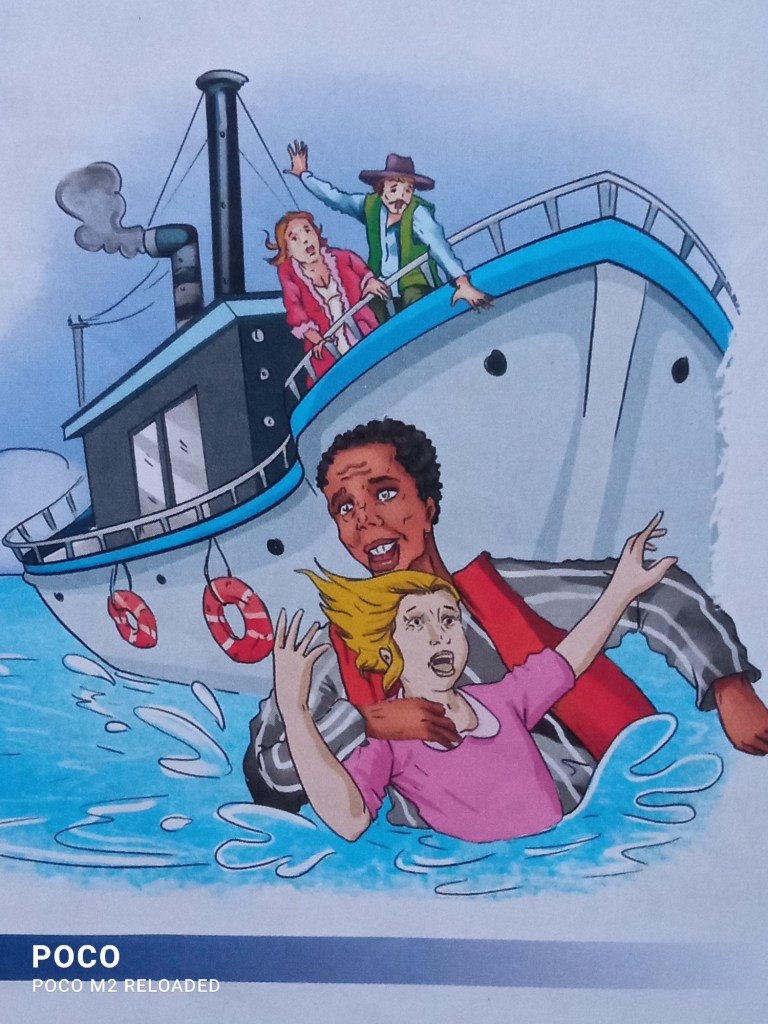
Uncle Tom – II, Chapter – 28, Class – 4, Subject – English


1. Answer the following questions:

(a) What interesting things was Uncle Tom making?
Answer: Uncle Tom was making little baskets out of cherry-stones, drawing funny faces on nut-shells, and making whistles out of small pieces of stick.

(b) What surprised Eva very much?
Answer: Eva was surprised when Uncle Tom said he did not know where he was going after being sold at the slave market.

(c) Why did she say she would ask her father to buy Uncle Tom?
Answer: Eva said she would ask her father to buy Uncle Tom because she wanted him to have good times with them.

(d) How did the accident happen to Eva?
Answer: Eva accidentally slipped over the side of the boat and fell into the water.

(e) How was she rescued?
Answer: Uncle Tom, who was a good swimmer, quickly jumped into the water and rescued Eva.

(f) How did Eva’s father show his thanks to Uncle Tom?
Answer: Eva’s father showed his thanks by buying Uncle Tom from the slave merchant and making him his most trusted servant and coachman.


2. Word Practice

(a) Use each of the following words and phrases in sentences of your own:

1. on board – The passengers were safely on board before the ship departed.


2. dive and drowned – The boy tried to dive into the river, but he nearly drowned because he couldn’t swim.


3. coachman – The coachman waited patiently for his passengers to return.


4. in danger of – The hiker was in danger of falling off the cliff.


5. with a jerk – He pulled the rope with a jerk to secure the tent.


(b) Rewrite the sentences in the present tense:

Eva sat,Tom spoke, Eva stood, Eva said. The verbs in these sentences are all in the past tense. Put each of them into the present tense, as though the actions are going on at this moment.

1. Eva sits.

2. Tom speaks.


3. Eva stands.


4. Eva says.


(c) Write these sentences in full. What do we call the sign which tells us that letters have been left out?
Answer: The sign is called an apostrophe (‘).

1. I do not know, I’m sure.


2. You’ll read the story.


(d) Fill in the blanks with words from the story:

1. I slipped into the tank. When I came out, my clothes were dripped with water.


2. I chased the thief and caught him. I had him in my strong grasp.


3. My servant looks after my house when I am away. I leave the house to him because he is splendid.


4. The fisherman in the boat hauled up their nets which were full of fish.

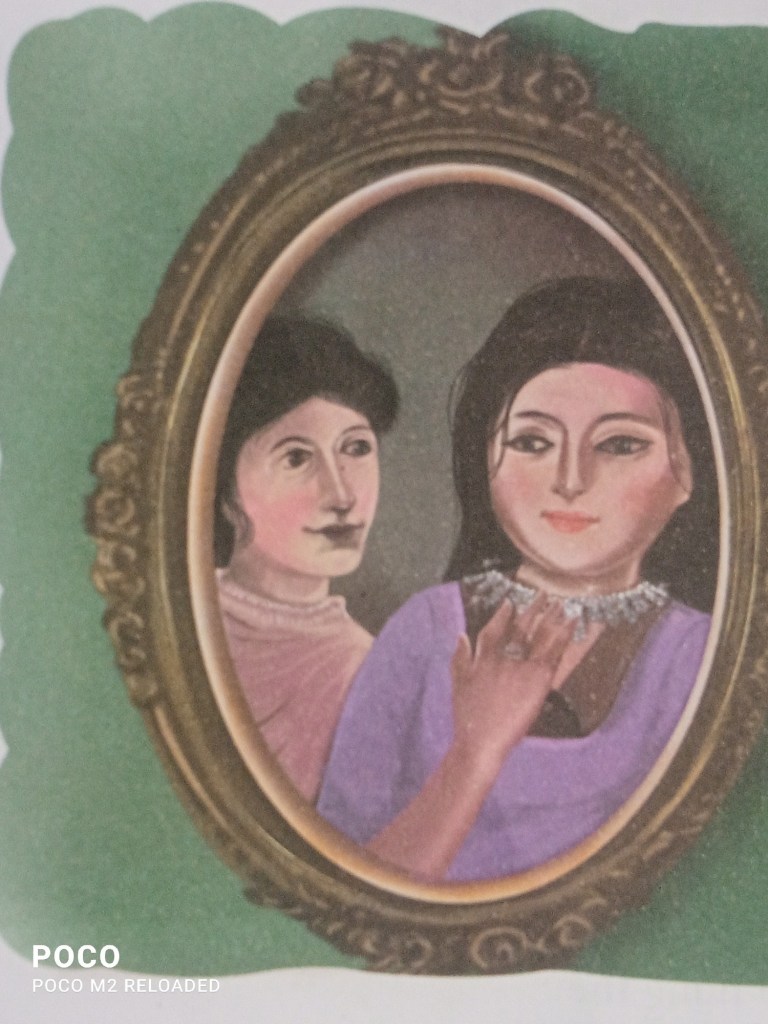
The Necklace, Lesson — 14, Subject — English, Class — VI

The Necklace

Choose the correct answer:

1. Why does the author say the little girl was meant for the best things in life?

Correct Answer: b) She was one of the most beautiful girls, and she had a natural grace attributed to rich people.

2. How did the girl’s dream of living a luxurious life break after marrying Loisel?

Correct Answer: a) Her husband was not very rich and could not spend too much money on her.

3. What kind of a man was Monsieur Loisel?

Correct Answer: b) He loved his wife and went to great lengths to keep her happy.

4. What kind of a woman was Madame Loisel?

Correct Answer: b) She was never satisfied and envied other people.

5. Why did Madame Loisel visit Madame Forestier?

Correct Answer: c) Madame Loisel wanted to borrow some jewellery from Madame Forestier.


Answer these questions:

1. Did Madame Loisel’s life become easier as she grew up from a small girl to a young woman? Why not?

Answer: No, Madame Loisel’s life did not become easier. She was dissatisfied with her modest lifestyle and constantly longed for luxury and wealth, which led to her unhappiness and struggles.

2. What gives the indication that Monsieur Loisel cared for his wife’s happiness?

Answer: Monsieur Loisel’s care for his wife’s happiness is shown by his willingness to sacrifice his comfort and savings to buy her a dress and support her desires, even when it caused financial strain on him.


3. Why was Madame Loisel always unhappy with her life?

Answer: Madame Loisel was unhappy because she was dissatisfied with her modest life. She longed for wealth, luxury, and a glamorous lifestyle, believing she was born for a life of elegance and riches.


4. Why could Monsieur and Madame Loisel have been sent to prison?

Answer: Monsieur and Madame Loisel could have been sent to prison if they had failed to repay the enormous debt they incurred to replace the lost necklace. They borrowed money from various lenders, and failure to repay debt during that time was a punishable offense.


5. What did Monsieur and Madame Loisel do when they could not find the necklace?

Answer: When they couldn’t find the necklace, Monsieur and Madame Loisel decided to replace it with an identical one. They borrowed a large sum of money and spent their savings to buy a replacement necklace.


6. How did Monsieur and Madame Loisel afford to buy a new necklace?

Answer: They borrowed money from multiple lenders, mortgaged their belongings, and used their savings. Monsieur Loisel also took on extra jobs, and Madame Loisel worked hard doing household chores for others to repay the debt.


7. How did Monsieur and Madame Loisel pay back thirty-six thousand francs?

Answer: They worked tirelessly for ten years to repay the debt. Monsieur Loisel worked additional jobs in the evenings, and Madame Loisel took up heavy household work, cleaning, and cooking for others.


8. What shock did Madame Loisel receive in the end when she met Madame Forestier?

Answer: Madame Loisel was shocked to learn from Madame Forestier that the necklace she had borrowed was fake and made of imitation diamonds. The replacement necklace, which cost them thirty-six thousand francs and years of hardship, was unnecessary.

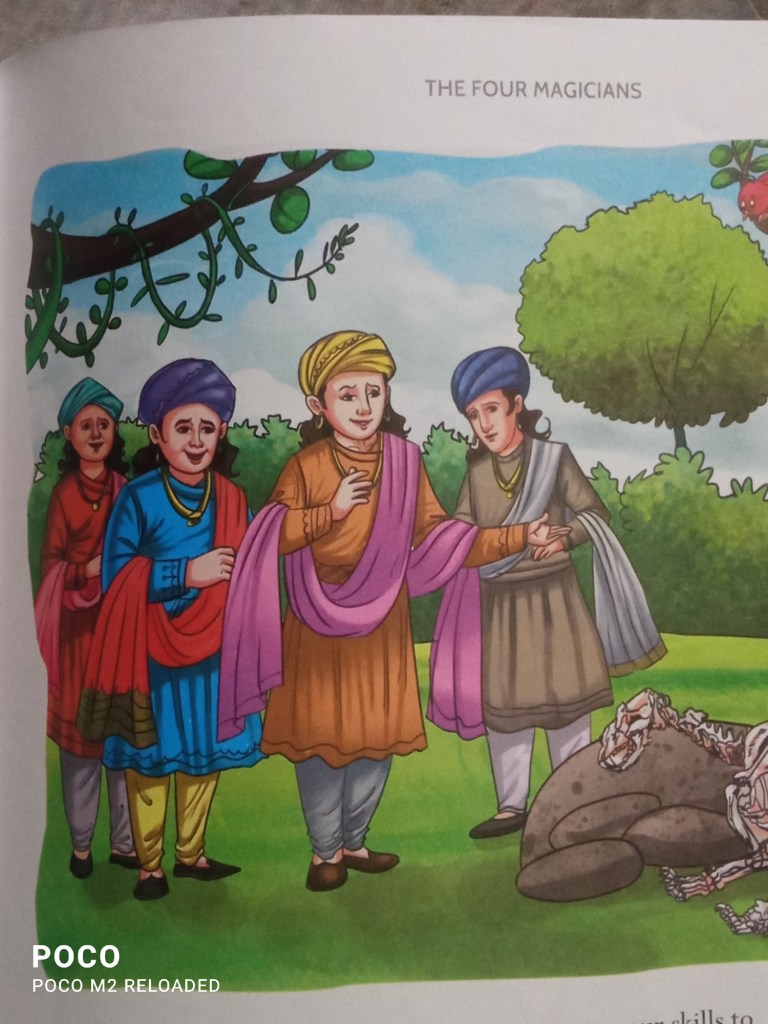
The Four Magicians,        Lesson- 11, Subject – English,


A. Reflect

1. Why were the brothers’ unpractical skills useless in the end?

Answer: The brothers’ skills were useless because they lacked wisdom and common sense, which led to their downfall despite their magical abilities.


2. What do you learn from this story?

Answer: The story teaches us that knowledge and wisdom are more important than mere technical skills.


3. If knowledge is important, do you think boycotting education is wise? Why?

Answer: No, boycotting education is not wise because education provides both knowledge and wisdom, helping us make better decisions in life.


4. Who was responsible for the death of the brothers? Why?

Answer: The brothers themselves were responsible because they acted recklessly and didn’t consider the consequences of their actions.


B. Understand

B1 Say whether the following sentences are true or false. Rewrite the false once correctly

1. The brothers decided to reunite at a fixed time and place after their studies. – True


2. The eldest brother decided to select the bones of an animal. – False

Correction: The eldest brother decided to assemble the bones of an animal.


3. The brothers’ skills proved to be useful. – False

Correction: The brothers’ skills proved to be useless because they lacked wisdom.


4. The moral of the story is that knowledge is more important than wisdom. – False

Correction: The moral of the story is that wisdom is more important than mere technical knowledge.

5. The brothers new that the bones that were lying scattered belong to a lion.

Correction: The brothers did not know that the bones that were lying scattered belong to a lion.

6.Vetaal could not go back to his tree because Vikramaditya gave the incorrect answer.

Correction: Vetaal could go back to his tree because Vikramaditya gave the correct answer.


B2. Complete the sentences in your own words

1. The children had to go to live with their maternal grandfather because…

their parents had passed away.


2. To deal with the problem at the ruined house, they decided…

to learn magical skills to improve their lives.


3. The first brother returned with the knowledge of…

assembling bones.

4. The second brother learnt how …….                 to at skin and hair of the animal after the flesh has been added to the bones.

5. The third brother could now………

Create the limbs of the animal.

6. The fourth brother was skilled in………

breathe life into animals.

C. Think

1. Which of the four brothers had learnt the most useful type of magic? Why was it the most useful?

Answer: None of the brothers’ magic was truly useful because they all lacked wisdom to apply their skills responsibly.


2. If you were in the brothers’ place, what would you have done? How would you use your magical powers?

Answer: I would have used my magical powers wisely, thinking about the consequences of my actions.


3. If you could have one magic power, what would it be? Why?

Answer:  I would choose the power to heal people because it would allow me to help others in need.


4. Write an alternative ending to the story.

Answer: The brothers realized the danger of reviving a wild animal and instead used their skills to help their village prosper.


Language in Use

Vocabulary – Replace the words in red with the given words and rewrite the sentences

tiring       died         survive          lessen          gained     land       sad      without

1. Both krishnaswami and his wife passed away while the children were still young.

Ans: Both krishnaswami and his wife died while the children were still young.

2. The boys we are left penniless.

Ans: The boys we are left without money.

3. This kind treatment started to wane.

Ans: This kind treatment started to lessen.

4. The brothers reached their grandfather’s house after a hard journey.

Ans: The brothers reached their grandfather’s house after a tiring journey.


5. The brothers sat together thinking about how to end this pathetic situation.

Ans: The brothers sat together thinking about how to end this sad situation.

6. They decided that it would be best if they acquired magic powers.

Ans: They decided that it would be best if they gained magic powers.

7. We should master some skills which will help us to earn a living.

Ans: We should master some skills which will help us to survive.

D2. Match the following words from the story with their opposites.

Answer: Discover —  hide

                 Scattered — gathered

                 Present —   past

                 Planned — unplanned

                 Clothed — undressed

                  added — removed

                  mutter — shout

                  display — conceal


—

The Vedic Age, Chapter – 5, Class – VI, Subject – Social Science

Section A: Multiple Choice Questions

1. Which is the oldest Veda?

(a) Rig Veda     (b) Sama Veda                               (c) yajur veda       (d)  Atharva Veda

Answer: (a)  Rig Veda

2. The vedic age lasted from:

(a)  2500 — 1500 BCE      (b)  1000 — 500  BCE              (c)  1500 — 1000  BCE     (d)  1500 — 500 BCE

Answer: (d)  1500 — 500 BCE
3. According to the concept of varnashrama, a man’s life was divided into four stages. Choose the correct order of these stages:
Answer: (c) Brahmacharya, grihastha, vanaprastha, sanyasa

4. The site of Inamgaon is in:

(a) Karnataka        (b)  Andhra Pradesh                       (c) Maharashtra    (d)Tamilnadu
Answer: (c) Maharashtra

5. An elaborate ceremony in which the king was coronated and supreme power was conferred on him is:

(a) Ashvamedha Yojna  (b) Vajapeya Yojna           (c) Rajasuya Yojana        (d)none of this
Answer: (c) Rajasuya yajna


—

Section B: True or False Statements

1. The Aryan society was divided into four groups. → True


2. The Vaishyas were engaged in menial jobs. → False


3. Iron was used in the Early Vedic period. → False


4. Megaliths are large stone boulders that were used to mark the burial sites. → True


5. Sanskrit belongs to the Austro-Asiatic family of languages. → False

Section C: Fill in the Blanks

1. Inamgaon is an important Chalcolithic site in Maharashtra.


2. The main source of information about the Neolithic, Chalcolithic, and Megalithic cultures is the archaeological evidence.


3. During the later Vedic period caste system became very rigid and hereditary.


4. The Aryan society was divided into social classes based on varna.


5. Sama Veda is mostly a rearrangement of the Rig Veda for musical rendering.


Section D: Very Short Answer Type Questions

1. What does the term Vedas mean?

Answer:  Vedas means knowledge or sacred wisdom.


2. What are the Brahmanas?

Answer: Brahmanas are texts that explain the rituals and ceremonies of the Vedic hymns.


3. What are the Puranas?

Answer:  Puranas are ancient texts that contain mythological stories, traditions, and historical events.


4. What were the four groups of people according to the varna system?

Answer: Brahmins, Kshatriyas, Vaishyas, and Shudras.


5. What was the first stage of a man’s life according to the concept of varnashrama?

Answer: Brahmacharya (student stage).


Section E: Short Answer Type Questions

1. Write a short note on the four Vedas.

Answer: The four Vedas are the Rig Veda, Sama Veda, Yajur Veda, and Atharva Veda. They are ancient texts that include hymns, rituals, spiritual teachings, and medicinal knowledge.


2. State some of the common features of all the burials.

Answer: Common features include burial pits, grave goods, pottery, and sometimes skeletal remains indicating burial rituals.


3. What is meant by Indo-European languages? Explain.

Answer: Indo-European languages refer to a family of languages spoken in Europe and parts of Asia, originating from a common ancestor. Examples include Sanskrit, Greek, and Latin.


4. Explain the concept of varnashrama.

Answer: Varnashrama is the division of a man’s life into four stages: Brahmacharya (student), Grihastha (householder), Vanaprastha (retirement), and Sanyasa (renunciation).


5. Examine the economic life of the Early Vedic people.

Answer:  Agriculture, cattle-rearing, trade, and barter system formed the economic backbone of Early Vedic society. They also practiced crafts like pottery and metalwork

Section F: Long answer type questions:

1. Write a note on the Aryans.

Answer: The Aryans were Indo-European-speaking nomadic tribes who migrated to India around 1500 BCE, settling in the Sapta Sindhu region. They lived in tribal groups led by chiefs called rajans. Their economy relied on agriculture, cattle-rearing, and trade, with cattle being a key measure of wealth.

They composed the Vedas, with the Rig Veda being the oldest. Their religion was centered around nature worship, and rituals played an essential role. Society was divided into four varnas: Brahmins, Kshatriyas, Vaishyas, and Shudras. Over time, their social and cultural practices shaped the foundation of ancient Indian civilization.

2. Describe the education system that was prevalent in the Vedic period.

Answer: Education in the Vedic period was imparted orally in gurukuls, where students lived with their teachers (gurus). Subjects included Vedic hymns, rituals, astronomy, philosophy, and warfare. Education emphasized discipline, morality, and spiritual growth.

Both boys and some girls, especially from noble families, received education. Women scholars like Gargi and Maitreyi are well-known. The Brahmacharya stage focused on building character and knowledge, laying a strong foundation for future responsibilities.

3. Describe the social life during the Early Vedic Age.

Answer: The Early Vedic society was tribal and patriarchal, with the kula (family) as the basic unit. The chief (rajan) led the tribe, and cattle were a measure of wealth. Women enjoyed respect, had educational opportunities, and participated in rituals.

People practiced agriculture, cattle-rearing, and trade. There was no rigid caste system, and social mobility was flexible. They worshipped nature gods like Indra, Agni, and Varuna, and rituals played a significant role in daily life.

4. Write about the religious practices followed by people in the Later Vedic Age.

Answer: The Later Vedic Age saw more complex rituals and grand sacrifices like Ashvamedha and Rajasuya. Brahmins became powerful, and sacrifices gained importance.

Deities like Vishnu and Rudra became prominent, and the concept of Brahman (universal soul) and Moksha (liberation) emerged. The Upanishads introduced deep spiritual ideas. The caste system became rigid, and women’s participation in rituals declined.

5. Write a note on Inamgaon.

Answer: Inamgaon, located in Maharashtra, is an important Chalcolithic site. Excavations revealed mud houses, burial pits, and agricultural tools. People cultivated crops like wheat and barley and domesticated animals such as cattle and goats.

Unique burial practices included burying the dead within houses with grave goods, suggesting beliefs in life after death. Artifacts like pottery and tools indicate trade and craftsmanship. Inamgaon provides key insights into early agricultural society in ancient India.

Section G: Differentiate Between

Answer: Sabha and Samiti:

Sabha: Council of elders; advisory body.

Samiti: General assembly of people.


2. Rig Veda and Atharva Veda:

Answer: Rig Veda: Hymns dedicated to gods.

Atharva Veda: Magical spells and remedies.


3. Puranas and Upanishads:

Answer: Puranas: Mythological stories and legends.

Upanishads: Philosophical texts on spirituality and knowledge.


4. Brahmacharya and Sanyasa:

Answer: Brahmacharya: Student life focused on education.

Sanyasa: Renounced life focused on spirituality.


Section H: Higher-Order Thinking Skills

1. Why did the tribes fight battles during the Early Vedic Age?

Tribes fought for cattle, land, and resources, which were primary measures of wealth and survival.


2. The Later Vedic Age is also known as the Epic Age. Why?

It is called the Epic Age because great epics like Ramayana and Mahabharata were composed during this period.

Project for Annual Exam, Subject — Social Science,by the students of Class — VIII, given by  Miss Deepa, Vidya Mandir Public School

A school project is an educational task or assignment given to students to help them explore, understand, and apply knowledge on a specific topic or subject. It often goes beyond traditional classroom activities and encourages independent research, creativity, problem-solving, and critical thinking.

Purposes of a School Project:

1. Reinforce Learning: Helps students apply concepts learned in class in practical or creative ways.

2. Develop Skills: Enhances research, teamwork, communication, and time-management skills.

3. Encourage Creativity: Allows students to express ideas in innovative ways.

4. Promote Critical Thinking: Encourages analysis, evaluation, and problem-solving.

5. Real-World Application: Connects academic knowledge to real-life situations or challenges.

6. Assessment Tool: Helps teachers evaluate students’ understanding of a topic.

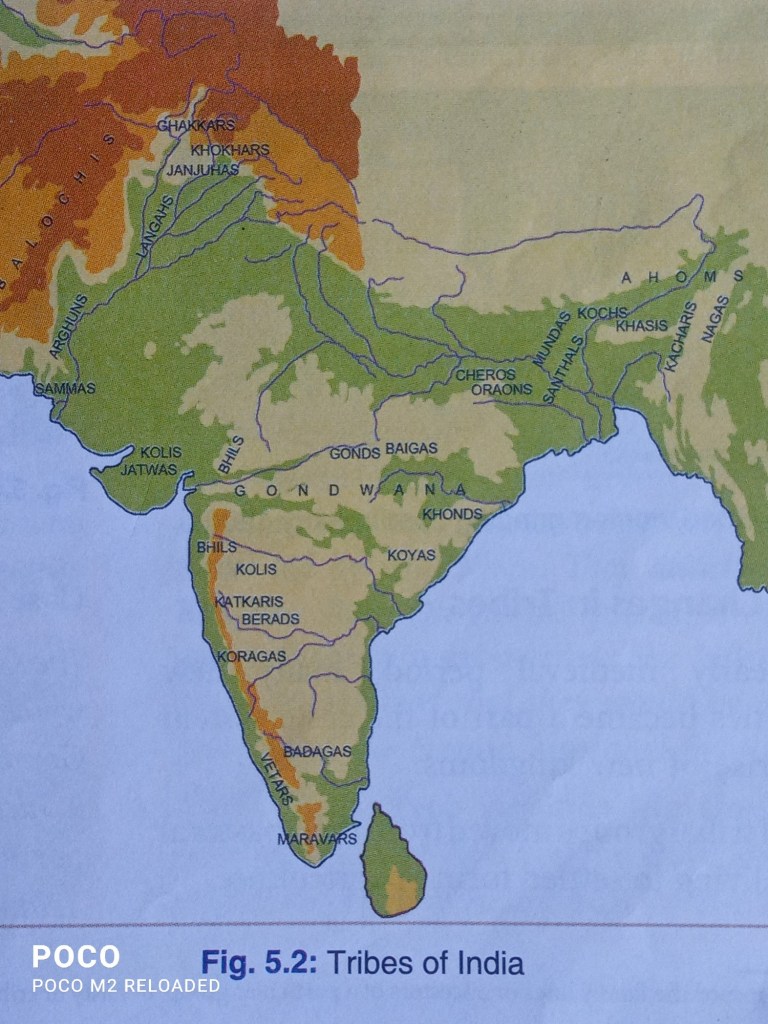
Tribal Communities, Chapter – 5, Subject – Social Science, Class – VII


A. Choose the correct answer:

1. The Khokhars and Ghakkars were powerful tribes in:

(a) Multan and Sindh        (b) Odisha and bangal

(c) North East                      (d) Punjab

Ans:  (d) Punjab

2.The Ghakkar chief,Kamal Khan, was made a mansabdar during the reign of:

(a) Babur    (b)  Akbar    (c) Jahangir                      (d) Shah Jahan


Ans: (b) Akbar

3. Raja Man Singh was the Mughal  general when the Mughal defeated the:


(a) Ahoms       (b)  Gonds    (c)   Cheros                 (d)    Todas

Ans:  (a) Ahoms

4. Rani Durgavati was a famous ruler of the:

(a)  Gonds     (b)   Ahoms    (c)  Bhils   (d)  Cheros


Ans: (c) Bhils

5. A barhot was made up of:
(a) 10 villages  (b) 12 villages   (c)  15 villages    (d)50 villages

Ans: (b) 12 villages

B. Write T for True and F for False statements:

1. T


2. F


3. T


4. T


5. F


C. Fill in the blanks:

1. The Delhi sultanate ruler  Alauddin Khilji had used the services of the Banjaras to transport grain to the city markets.


2. The Cholas embraced Nadu who had once been a tribal deity, as their royal family god.


3. The Gond clans worship a deity described as Persa Pen.


4. The first Ahom ruler was Sukapha.


5. The older political system of the Bhuyans was suppressed by the Ahoms to create a new state.

D. Very Short Answer Type Questions:

1. List two powerful tribes in Punjab. Which  tribal chief was made a mansabdar by Akbar?

Ans: Khokhars and Gakkhars were two powerful tribes in Punjab. Kamal Khan, a Ghakkhar chief, was made a mansabdar by Akbar.

2. What is shifting cultivation?


Ans: Shifting cultivation is a method of farming where land is cleared, cultivated, and then abandoned for a few years to allow it to regenerate naturally.

3. How did the folk artists make their living?


Ans: Folk artists earned their living by crafting and selling their artwork or performing traditional music, dances, and storytelling.

4. Who were the Gonds? In which region did they live?


Ans: The Gonds were a tribal group that lived in Madhya Pradesh, Chhattisgarh, and Andhra Pradesh regions.

5. Who were the Ahoms?


Ans: The Ahoms were an Assamese tribal group. They ruled over Kamrup, Darrang Nowgong, Sibsagar,  Lakhimpur and portions of the Sadiya frontier tract for nearly 600 years.

E. Short Answer Type Questions:

1. What are tribes?
Ans: Tribes are social groups comprising families or communities with a shared ancestry, language, culture, and customs. They generally live in specific territories and have a unique way of life distinct from mainstream society.

2. Mention the names of major tribes of India and the reasons where they live.


Ans: Major tribes of India and their regions:

Gonds: Madhya Pradesh and Chhattisgarh

Bhils: Rajasthan and Gujarat

Santhals: Jharkhand, Odisha, and West Bengal

Ahoms: Assam

F. Long Answer Type Questions:

1. Why is there not much information about tribal groups? How is information about them made available?
Ans: Tribal groups traditionally preserved their knowledge, customs, and history orally, passing it from one generation to another. As a result, they left behind limited written records. Information about them is gathered from folklore, local traditions, archaeological evidence, and records by outsiders like travelers and rulers.


2. Discuss the changes in the caste system during the medieval period.
Ans: During the medieval period, the caste system became more rigid. New groups, such as artisans and traders, were integrated into the system. Tribal societies were increasingly influenced by Brahmanical traditions, and many tribes adopted the hierarchical caste system. Some tribes like the Rajputs gained prominence by assimilating into Kshatriya status.


3. Write some similarities and differences between the Gonds and the Ahoms.

Ans: Similarities: Both tribes established powerful kingdoms and played significant roles in medieval Indian history. They assimilated local cultures and adopted Hindu practices over time.

Differences: The Gonds were concentrated in Central India, while the Ahoms ruled in Assam. The Ahoms established a strong administrative system, while the Gonds relied on tribal councils.


4. Classify different tribes based on their occupations:

Hunter-gatherers: Bhils and Santhals

Pastoralists: Banjaras

Settled agriculturists: Gonds

Craftsmen and traders: Ahoms

G. Differentiate between the following:

1. Garh and Khel

Garh: A large administrative unit used by the Gonds.

Khel: A unit of clan-based organization used by the Ahoms.


2. Chaurasi and Barhot

Chaurasi: A cluster of 84 villages under Gond administration.

Barhot: A cluster of 12 villages.


3. Artisans and Folk artists

Artisans: Skilled workers who make goods by hand, such as pottery or textiles.

Folk artists: Individuals who perform or create traditional art forms, including music, dance, and storytelling.


H. Higher-Order Thinking Skills:

1. How did the decline in forests affect the tribal groups during the medieval period?
Ans: The decline in forests disrupted the livelihood of tribal groups, who depended on forest resources for hunting, gathering, and shifting cultivation. It forced many tribes to adapt to new occupations like settled farming or artisan work and made them more vulnerable to external control by rulers.


2. What was the main factor for the growing power of the Ahoms?
Ans: The main factor for the Ahoms’ growing power was their well-organized administration, military strength, and the assimilation of local tribal groups into their kingdom. They also adopted Hindu traditions, which helped them consolidate power.


                       *********************

Create your own website, free on WordPress.com.Create your own website.
Start free