Human Resources, Class – 8, Subject – Social science (Geography ),solved exercises.


1. Answer the following questions

(i) Why are people considered a resource?

Answer:
People are considered a resource because they use their knowledge, skills and abilities to create goods and services and help in the development of a country.

(ii) What are the causes for the uneven distribution of population in the world?

Answer:
Uneven distribution of population is due to differences in climate, landforms, soil fertility, availability of water, minerals, industries, transport facilities and job opportunities.

(iii) The world population has grown very rapidly. Why?

Answer:
The world population has grown rapidly due to better medical facilities, improved sanitation, increased food production and a decline in death rate.

(iv) Discuss the role of any two factors influencing population change.

Answer:

Birth rate: High birth rate increases population.

Death rate: Low death rate due to better healthcare increases population.


(v) What is meant by population composition?

Answer:
Population composition refers to the structure of the population based on age, sex, literacy level, occupation and health.

(vi) What are population pyramids? How do they help in understanding the population of a country?

Answer:
Population pyramids are graphical representations showing the age and sex composition of a population.
They help us understand the size of working population, dependent population and future population growth.


2. Tick (โœ”) the correct answer

(i) Which does the term population distribution refer to?
โœ” (c) The way in which people are spread across a given area.

(ii) Which are three main factors that cause population change?
โœ” (b) Births, deaths and migration.

(iii) In 1999, the world population reached
โœ” (c) 6 billion.

(iv) What is a population pyramid?
โœ” (a) A graphical presentation of the age, sex composition of a population.


3. Complete the sentences

Words given: sparsely, favourable, fallow, artificial, fertile, natural, extreme, densely

1. When people are attracted to an area it becomes densely populated.


2. Factors that influence this include favourable climate; good supplies of natural resources and fertile land.

                               ***************

Tenali Raman and the Two Thieves,Class- 2, Subject – English, solved exercises.


A. Choose the correct answer

1. Tenali Raman used to work at the court of
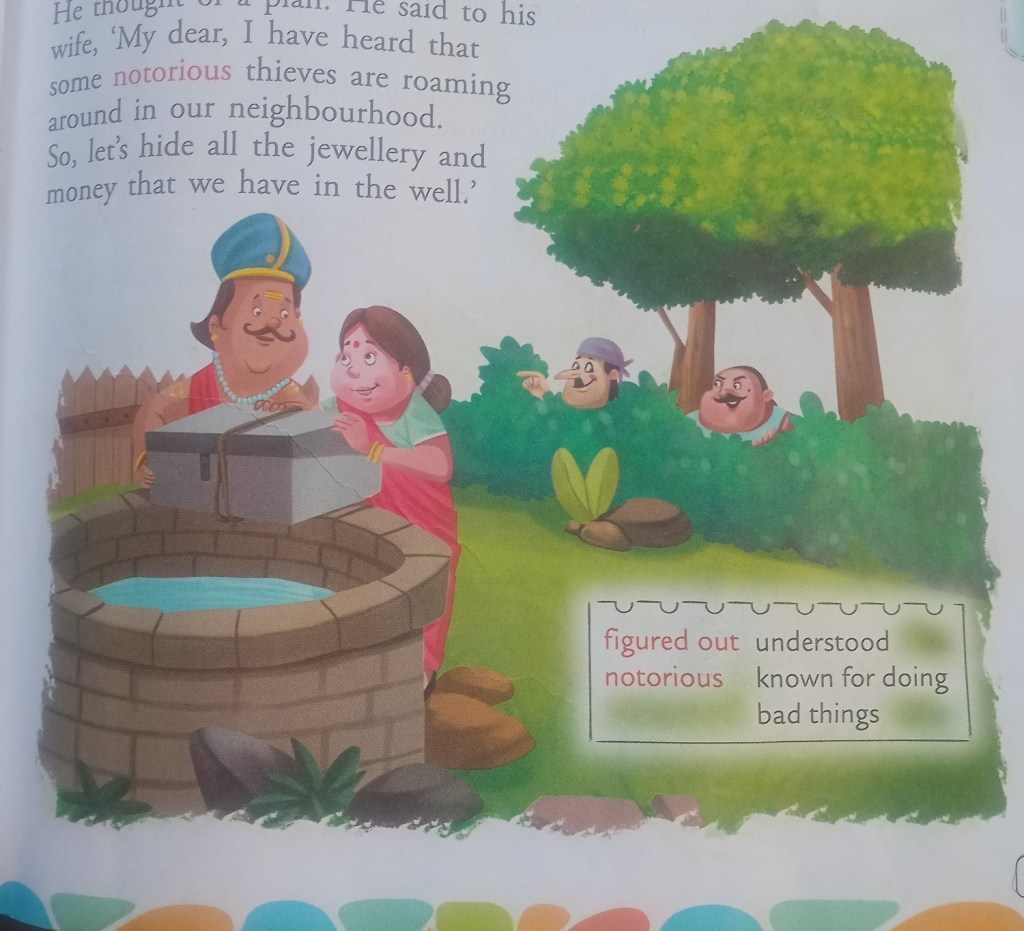
๐Ÿ‘‰ Emperor Krishnadevaraya


2. Tenali Raman heard the cry of a
๐Ÿ‘‰ rustling of leaves at night


3. The thieves were hiding in
๐Ÿ‘‰ the bushes


4. Tenali Raman and his wife filled the trunk with
๐Ÿ‘‰ stones


5. The thieves ______ Tenali Ramanโ€™s plans.
๐Ÿ‘‰ understood


B. Answer these questions

1. How did Tenali Raman know that some thieves were hiding in the bushes?
๐Ÿ‘‰ He heard the rustling of leaves on a hot night when there was no breeze.


2. What did Tenali Raman tell his wife?
๐Ÿ‘‰ He told her that thieves were planning to rob their house.


3. Why did Tenali Raman fill the trunk with stones?
๐Ÿ‘‰ To trick the thieves and make them believe the trunk had treasure.


4. Why did the thieves wait before drawing water from the well?
๐Ÿ‘‰ They wanted Tenali Raman and his wife to go inside and fall asleep.


5. Why did Tenali Raman thank the thieves?
๐Ÿ‘‰ Because they watered his plants by drawing water from the well all night.


A. Add โ€˜-ingโ€™ to these words

1. water + ing = watering


2. open + ing = opening


3. carry + ing = carrying


4. sleep + ing = sleeping


5. thank + ing = thanking


6. wait + ing = waiting


7. draw + ing = drawing


8. steal + ing = stealing


B. Unscramble the words and match with their meanings

No. Jumbled word Correct word Meaning (letter)

1. adbakery backyard e. moving about without any aim
2. tourc court c. the area in a palace where a king/queen talks to ministers and meets common people
3. stringul rustling g. noise made by leaves when one steps on them
4. runkt trunk a. a large box, usually made of metal
5. moringa morning f. early morning
6. dadispointpe disappointed b. upset
7. sauteerr treasure d. a thing of great value


A. Write the -ing forms of these words

1. hide + ing = hiding


2. promise + ing = promising


3. plan + ing = planning


4. forgive + ing = forgiving


5. drop + ing = dropping


6. manage + ing = managing


7. rustle + ing = rustling


8. rob + ing = robbing

The Mauryan Empire,Class – 6 Subject – Social science, solved exercises


A. Choose the correct answer

1. The rise of Chandragupta Maurya is described in:
(c) Mudrarakshasa


2. Ashoka was the son of:
(b) Bindusara


3. The founder of the Mauryan Empire was:
(d) Chandragupta


4. Ashokan inscriptions near Peshawar are written in:
(d) Kharosthi


5. Among the following, who were referred to as โ€œthe Greatโ€?
(b) Ashoka and Alexander


B. Write T for True and F for False

1. The last Mauryan ruler was Brihadratha. โ€” T


2. Ashoka defeated Seleucus Nicator. โ€” F


3. Chandragupta Maurya overthrew the Sungas to set up the Mauryan Empire. โ€” F


4. Tax on produce was fixed between one-fourth to one-sixth of the total produce. โ€” T


5. Indica was written by Megasthenes. โ€” T


C. Fill in the blanks

1. Chanakya is also known as Kautilya and Vishnugupta.


2. Megasthenes was sent as an envoy by Seleucus Nicator to Chandraguptaโ€™s court.


3. The Kalinga kingdom was brought under Mauryan rule by Ashoka.


4. Chandragupta Maurya defeated the Nandas to set up the Mauryan Empire.


5. Most of the Ashokan edicts were written in the kharosthi script.


D. Very Short Answer Type Questions (20โ€“30 words)

1. Who was the founder of the Mauryan Empire?

Answer:

Where did he set up his capital?
Chandragupta Maurya founded the Mauryan Empire. He established his capital at Pataliputra.


2. Who was Chanakya or Kautilya?

Answer:
Chanakya, also known as Kautilya or Vishnugupta, was Chandragupta Mauryaโ€™s chief advisor and the author of the Arthashastra. He helped establish the Mauryan Empire.


3. Who is considered the greatest of the Mauryan kings?

Answer:
Ashoka is considered the greatest Mauryan ruler. He expanded the empire, embraced Buddhism after the Kalinga War, and promoted dharma and non-violence.


4. How did the Kalinga battle influence Ashoka?

Answer:
The huge loss of life in the Kalinga War deeply shocked Ashoka. He gave up warfare, accepted Buddhism, and dedicated his life to spreading peace and dharma.


5. What is dhamma?

Answer:
Dhamma means moral teachings and righteous conduct. Ashokaโ€™s dhamma promoted kindness, non-violence, respect towards elders, and welfare of people.


E. Short Answer Type Questions (50โ€“60 words)

1. Discuss various sources available for studying the Mauryan period.

Answer:
The Mauryan period is known from literary sources like Arthashastra, Indica by Megasthenes, Buddhist texts, and the Mudrarakshasa. Archaeological sources such as Ashokan inscriptions, pillars, rock edicts, coins, and sculptures also give information about administration, society, economy, and religion during the Mauryan rule.


2. Write a note on Chandragupta Maurya.

Answer:
Chandragupta Maurya founded the Mauryan Empire with the guidance of Chanakya. He defeated the Nandas and united northern India. His capital was Pataliputra. He built a strong administration and army. After ruling successfully, he abdicated the throne and spent his last years at Shravanabelagola as a Jain monk.


3. Write a few lines about Bindusara.

Answer:
Bindusara was the son of Chandragupta Maurya. He extended the empire further south and maintained friendly relations with foreign rulers. His reign kept the empire stable and prosperous. Bindusara was the father of Ashoka, who later became the greatest Mauryan ruler.


4. Write a few lines on Ashokan edicts.

Answer:
Ashokan edicts are inscriptions engraved on rocks and pillars throughout his empire. Written mainly in Brahmi and Kharosthi scripts, they explain his dhamma, administrative orders, concern for welfare, and messages on peace and non-violence. They are valuable sources for understanding Ashokaโ€™s rule.


5. Examine the taxation system of the Mauryas.

Answer:
The Mauryan taxation system was well-organized. Farmers paid land revenue of about one-sixth of their produce. Taxes were also collected on goods, forests, mines, and trade. Artisans paid taxes in cash or goods. The revenue supported administration, army, public works, and welfare activities.


F. Long Answer Type Questions (80โ€“100 words)


1. Write some of the main principles of Ashokaโ€™s dhamma.

Answer:

Ashokaโ€™s dhamma was based on moral values meant to create a just and peaceful society. Its main principles included non-violence, respect for elders, kindness towards servants, and good behaviour towards family and neighbours. Ashoka encouraged tolerance towards all religions and discouraged useless rituals. He promoted truthfulness, purity of mind, and compassion towards animals. He also stressed the importance of charity, welfare works, and obedience to parents and teachers. The aim of dhamma was to improve peopleโ€™s conduct and ensure harmony in the empire.


2. What were the methods used by Emperor Ashoka to spread the message of dhamma?

Answer:

Ashoka used several effective methods to spread his dhamma. The most important was the engraving of edicts on rocks, pillars, and caves across the empire in different scripts and languages so people could read them easily. He appointed Dhamma Mahamatras, officials who travelled widely to teach moral behaviour. Ashoka also sent missionaries to different parts of India and foreign regions like Sri Lanka. He encouraged public welfare works, including building roads, planting trees, digging wells, and establishing rest houses, all of which reflected the spirit of dhamma.


3. Discuss the use of different scripts in different parts of the empire to spread Ashokaโ€™s message.

Answer:

Ashoka ruled a vast empire with people speaking many languages. To ensure everyone understood his message, he used different scripts in different regions. In most of north and central India, his edicts were written in the Brahmi script, which was widely used by common people. In the north-west regions like Peshawar and Afghanistan, he used the Kharosthi script, as it was locally understood. In far-off areas, especially near present-day Pakistan and Afghanistan, Greek and Aramaic scripts were used. This multilingual approach helped Ashoka reach all communities.


4. Describe the administration of the Mauryas in detail.

Answer:

The Mauryan administration was highly organized and efficient. The king was the supreme authority, assisted by a Council of Ministers. The empire was divided into provinces, each governed by princes or officials. Provinces were further divided into districts and villages. A large number of officials handled revenue, justice, trade, and public works. The Arthashastra mentions departments for mining, forests, agriculture, and defence. The capital, Pataliputra, had a city council with committees managing sanitation, roads, and security. A strong spy system kept the king informed. The Mauryan administration ensured peace and prosperity.


5. Discuss in detail the Mauryan art and architecture.

Answer:

Mauryan art and architecture represent one of the earliest examples of advanced craftsmanship in India. The most famous creations are the Ashokan pillars, made of polished sandstone, with beautifully carved capitals like the Lion Capital of Sarnath, now Indiaโ€™s national emblem. Ashoka also built rock-cut caves, such as the Barabar caves, used by monks for meditation. The Mauryan period saw the growth of stupas, including the great stupa at Sanchi. Their architecture shows high skill, smooth stone polishing, and symbolic carvings. Mauryan art reflected simplicity, strength, and religious values.


G. Differentiate between the following

1. Arthashastra and Indica

Arthashastra Indica

Written by Kautilya/Chanakya. Written by Megasthenes, the Greek ambassador.
Deals with administration, economy, politics, and governance. Describes Indian society, culture, and administration during Chandraguptaโ€™s reign.
A theoretical guidebook for rulers. A foreign account based on observation.


2. Purohita and Senapati

Purohita Senapati

The chief priest of the king. The commander-in-chief of the army.
Performed religious rituals and guided the king spiritually. Responsible for protecting the kingdom and leading the army.
Advised the king on dharma and ceremonies. Advised the king on military matters.


H. Higher-Order Thinking Skills

1. Why was Ashoka a changed man after the Kalinga War?

Ashoka was deeply shocked by the massive bloodshed and suffering caused by the Kalinga War. More than one lakh people were killed, and many were wounded or displaced. Seeing this misery, Ashoka felt regret and abandoned warfare. He adopted Buddhism and dedicated his life to non-violence, compassion, and moral living. This transformation made him a changed and humane ruler.


2. On most rock and pillar inscriptions Brahmi is used, but in a few Kharosthi, Greek, and Aramaic scripts are used. What could be the reason?

Ashokaโ€™s empire included people of many languages and cultures. Different regions used different scripts. Brahmi was common in northern and central India, so most edicts were written in it. In the north-west, especially present-day Pakistan and Afghanistan, people used Kharosthi, Greek, and Aramaic because of earlier Persian and Greek influence. Ashoka chose scripts understood by local people so that everyone could read and understand his message.
Major Water Bodies, Class -7, Subject – Social science, solved exercises


A. Choose the correct answer

1. Which of the following does not have freshwater?
Ans: (b) Ocean


2. What is the average salinity of ocean water?
Ans: (b) 35/1000


3. What is the fall of water in a wave called?
Ans: (a) Trough


4. Which of the following tides occurs on a new moon day?
Ans: (c) High tide


5. Which of the following is not a warm ocean current?
Ans: (c) Labrador


B. Fill in the blanks

1. The Pacific Ocean is connected to the Arctic Ocean through the narrow Bering Strait.


2. Dissolved salt in ocean water is mostly sodium chloride.


3. The horizontal distance between two crests is called wavelength.


4. The combined gravitational pull of the sun and the moon is the greatest on full moon.


5. Ocean currents affect the temperature of coastal areas.


C. Write T for True and F for False

1. Water cycle is caused by evaporation, condensation and precipitation. โ€” T


2. Oceans form 95% of the total sea bodies. โ€” F


3. Neap tides occur on full moon and new moon days. โ€” F


4. The energy of tides is used to generate electricity. โ€” T


5. Warm ocean currents flow from the poles towards the equator. โ€” F

D. Match the columns

Column A Column B Answer

1. Snow (e) Precipitation 1 โ€“ e
2. Freshwater (d) Groundwater 2 โ€“ d
3. Earthquake in the ocean (a) Tsunami 3 โ€“ a
4. Crest (b) Waves 4 โ€“ b
5. Neap tide (c) Half moon 5 โ€“ c


E. Very Short Answer Type Questions (20โ€“30 words)

1. Why is the total amount of water on the Earthโ€™s surface constant?

Because of the water cycle. Water keeps changing its form through evaporation, condensation and precipitation, but the total amount of water on Earth remains the same.

2. What do you understand by freshwater? List the uses of freshwater.

Freshwater is water that has very little salt. It is used for drinking, cooking, washing, farming and many industrial activities.

3. What is saline water?

Saline water contains a high amount of dissolved salts. Ocean water is saline because it has about 3.5% salt.

4. What are tides? How are they caused?

Tides are the rise and fall of sea level. They are caused by the gravitational pull of the moon and the sun on the Earth.

5. What is tidal energy?

Tidal energy is electricity generated by using the movement of tides. The rise and fall of water is used to run turbines.


F. Short Answer Type Questions (50โ€“60 words)

1. Describe the water cycle with the help of a labelled diagram.

The water cycle is the continuous movement of water on Earth. Water evaporates from oceans and lakes, forms clouds by condensation, and falls as rain or snow (precipitation). This water flows back into rivers, lakes and oceans.


2. Discuss the distribution of water across the surface of the Earth.

About 97% of Earthโ€™s water is in the oceans and is saline. Only 3% is freshwater. Most freshwater is locked in glaciers and ice caps; a small amount is found as groundwater, lakes, rivers and atmospheric moisture.

3. How do ocean currents affect coastal regions?

Warm currents raise the temperature of coastal areas, while cold currents lower it. They affect the climate, rainfall, and weather patterns along the coasts.

4. What are the four major divisions of oceans?

The four major divisions of oceans are the Pacific Ocean, Atlantic Ocean, Indian Ocean and Arctic Ocean. (Some books also include the Southern Ocean.)

5. Write a note on the Pacific Ocean.

The Pacific Ocean is the largest and deepest ocean on Earth. It covers one-third of the Earthโ€™s surface. It has many volcanic islands and is known for the โ€œRing of Fire.โ€ It also connects to the Arctic through the Bering Strait.


G. Long Answer Type Questions (80โ€“100 words)

1. Explain saline water in detail.

Saline water contains a large amount of dissolved salts, mainly sodium chloride. Ocean water is saline due to the continuous mixing of minerals from rivers and the seafloor. About 97% of the Earthโ€™s water is saline and cannot be used directly for drinking, farming or industrial needs. The salinity of ocean water varies from place to place due to temperature, evaporation and freshwater inflow. Desalination plants are used in some regions to convert saline water into freshwater.

2. Illustrate the significance of oceans.

Oceans play a vital role in regulating the Earth’s climate. They absorb heat, distribute it through currents and influence weather patterns. Oceans are home to a wide variety of marine life and form an important ecosystem. They also provide resources such as fish, salt, minerals and oil. Oceans are essential for trade and transport as major sea routes pass through them. They also support tourism and recreational activities.

3. Write a detailed note on waves.

Waves are rhythmic movements of ocean water mainly caused by wind. They have two main parts: the crest (top of the wave) and trough (bottom of the wave). Waves transfer energy from the wind to the surface of the water. Strong winds and storms create high waves. When waves approach shallow coastal areas, they become steeper and break on the shore. Waves shape coastlines through erosion and deposition and are used for surfing and recreation.

4. Discuss the importance of tides.

Tides help in navigation by allowing ships to enter and leave ports safely. They help in fishing because many fish follow tidal patterns. Tides also help in removing waste from coastal areas. Tidal energy can be used to generate electricity. Tides influence coastal ecosystems, help in the formation of tidal flats and support mangrove forests. They also play an important role in marine life cycles.

5. Enumerate the importance of ocean currents.

Ocean currents distribute heat across the Earth and regulate climate. Warm currents raise temperatures of coastal areas, while cold currents lower them. They affect rainfall, fog and weather patterns. Currents also help in navigation by affecting speed and direction of ships. They bring nutrients from the deep sea to the surface, supporting marine life. Currents influence the location of fisheries and impact global trade routes.


H. Higher-Order Thinking Skills

1. In spite of so much precipitation on Earth, the amount of water remains constant. Why is it so?

Because of the water cycle. Water evaporates, condenses to form clouds and falls back as rain or snow. This continuous cycle ensures that water keeps changing forms but its total amount remains constant.

2. Why is freshwater precious?

Freshwater is precious because it forms only about 3% of total water, and most of it is locked in ice caps. Only a very small portion is available for drinking, farming and daily uses. Without freshwater, life cannot exist.

The Polar Region, Chapter – 11, Subject – Social Studies, solved exercises


A. Tick the correct answer (with answers)

1. Which of the following is the most distinctive feature of the tundra?

Answer: Permafrost

2. How long do winters last in Greenland?

Answer: Nine months

3. Which of these animals are very important for the people of the tundra region?

Answer: Reindeers

4. Who are the natives of Greenland?

Answer: Inuits


B. Fill in the blanks (with answers)

1. The Inuits belong to the ______ race.

Answer: Mongoloid

2. ______ are the snowstorms that bring continuous heavy snowfall.

Answer: Blizzards

3. Most of the nomadic Inuits live in tents called ______.

Answer: Igloos

4. The official languages of Greenland are ______ and ______.

Answer: Greenlandic and Danish


C. Answer the following questions

1. Where are the polar regions located on the Earth?

Answer:
The polar regions are located around the North Pole (Arctic region) and the South Pole (Antarctic region) of the Earth.

2. Name the boundaries of Greenland.

Answer:
Greenland is bounded by the Arctic Ocean in the north, the Atlantic Ocean in the south, Baffin Bay in the west and the Greenland Sea in the east.


3. What are the two divisions of the polar regions? Explain.

Answer:
The two divisions of the polar regions are the Arctic and the Antarctic.

The Arctic lies around the North Pole and includes Greenland and the northern parts of continents.

The Antarctic lies around the South Pole and includes the continent of Antarctica.


4. Write briefly about the weather conditions that prevail in Greenland.

Answer:
Greenland has a very cold climate with long winters lasting about nine months. The temperature remains below freezing for most of the year. Summers are short and cool. Snowfall, blizzards and icy winds are very common.


D. Define the following

1. Sledges

Answer:
Sledges are vehicles without wheels used for travelling over snow and ice, usually pulled by dogs or reindeer.

2. Kayaks

Answer:
Kayaks are small, narrow boats used by the Inuits for hunting and travelling on water.

3. Umiaks

Answer:
Umiaks are large open boats made of animal skins, used by Inuits to carry families and goods.

4. Blizzards

Answer:
Blizzards are severe snowstorms accompanied by strong winds and very low visibility.

5. Harpoons

Answer:
Harpoons are long spears with sharp pointed metal tips used for hunting sea animals.


E. Give reasons

1. Very limited vegetation is found in tundra lowlands.

Reason:
Vegetation is limited because the climate is extremely cold, the soil remains frozen as permafrost, and the growing season is very short.

2. The people of Greenland are mainly meat-eaters.

Reason:
Due to the harsh climate, very few plants grow in Greenland. So people depend mainly on hunting animals and fishing for food.

3. Reindeers are the most important animals for the people of the tundra region.

Reason:
Reindeers provide meat, milk, skin for clothes, and are used for transportation. Hence, they are very useful for survival in the tundra region.


Activities โ€“ Observe and Answer

1. Igloo (Picture 1)

Answer: It is an igloo, a snow house used by Inuits during winter.

2. Dog Sledge (Picture 2)

Answer: It shows a dog sledge used for travelling on snow in the polar regions.


ย ย ย ย ย ย ย ย ย ย ย ย ย ย ย ย ย ย ย ย ย ย ย ย ย ย ย ย  *******************

Culture and Science, Class- VI,Subject- Social science,Solved exercises


B. Write T for True and F for False statements

1. The image of the main deity was placed at the mandapa of the temples.
โžก๏ธ False (It was placed in the garbhagriha.)


2. The Shore Temple is at Sanchi.
โžก๏ธ False (It is at Mahabalipuram.)


3. Aryabhatta and Varahamihira are two great mathematicians and astronomers of ancient India.
โžก๏ธ True


4. The Puranas contain stories about various gods and goddesses.
โžก๏ธ True


5. The Bhagavad Gita is a part of Ramayana.
โžก๏ธ False (It is part of the Mahabharata.)


C. Fill in the blanks

1. Manimekalai was composed by Sattanar.


2. The Ajanta caves are situated in Maharashtra.


3. Aryabhatta wrote Aryabhatiya.


4. Panchatantra is a set of animal fables composed by Vishnu Sharma.


5. The Five Rathas at Mamallapuram is an example of a free-st

D. Very Short Answer Type Questions (20โ€“30 words)

1. Who composed Manimekalai? What does it describe?

Answer:
Manimekalai was composed by Sattanar. It describes the story of the heroine Manimekalai and highlights Buddhist teachings and ideals.

2. Name two poems of Kalidasa.

Answer:
Two famous poems of Kalidasa are Meghaduta and Ritusamhara.

3. What is the meaning of Panchatantra?

Answer:
Panchatantra means โ€œFive Principlesโ€ or โ€œFive Strategies.โ€ It is a collection of short animal stories that teach moral lessons.

4. Which part of the temple is the garbhagriha?

Answer:
The garbhagriha is the innermost and most sacred chamber of a temple where the main deityโ€™s idol is placed.

5. Name two rock-cut temples.

Answer:
Two rock-cut temples are Ajanta Caves and Ellora Caves.


E. Short Answer Type Questions (50โ€“60 words)

1. Describe secular literature.

Answer:
Secular literature includes all writings that are not related to religion. It deals with subjects such as grammar, poetry, drama, astronomy, medicine, mathematics, and political science. These works provide knowledge about society, culture, and scientific achievements of ancient India.

2. Write a note on the two main Tamil epics.

Answer:
The two main Tamil epics are Silappadikaram and Manimekalai. Silappadikaram, written by Ilango Adigal, tells the story of Kannagi. Manimekalai, written by Sattanar, is a sequel to Silappadikaram and reflects Buddhist philosophy and teachings.

3. Who was Aryabhata? Appraise his contribution to science.

Answer:
Aryabhata was a great mathematician and astronomer of ancient India. He wrote the Aryabhatiya, explained the value of ฯ€, introduced the concept of zero, and stated that the Earth rotates on its axis. His discoveries greatly advanced mathematics and astronomy.

4. Distinguish between the Mahabharata and the Ramayana.

Answer:
The Mahabharata, written by Ved Vyasa, is the story of the conflict between the Kauravas and Pandavas and contains the Bhagavad Gita. The Ramayana, written by Valmiki, narrates the life and adventures of Lord Rama. Both are important epics but differ in theme and characters.

5. What do you understand by the Puranas?

Answer:
The Puranas are ancient Hindu religious texts containing stories about gods, goddesses, creation of the universe, kings, and traditions. They were written in simple language to spread religious ideas among common people. They also describe festivals and rituals.


F. Long Answer Type Questions (80โ€“100 words)

1. What was the valuable contribution of Indians in the field of medicine?

Answer:
Ancient Indians made remarkable contributions in medicine through the works of Charaka and Sushruta. Charaka is known as the father of Ayurveda and wrote the Charaka Samhita, explaining diagnosis, treatment, and prevention of diseases. Sushruta is considered the father of surgery. He wrote the Sushruta Samhita and described surgical instruments, plastic surgery, and operations like cataract removal. Their scientific methods laid the foundation of Indian medical science.

2. What are stupas? Describe the architecture of the stupas.

Answer:
Stupas are dome-shaped Buddhist structures built over relics of Buddha or Buddhist monks. A typical stupa consists of a hemispherical dome (anda), built on a circular base. It has a harmika (square railing on top), a yasti (central pillar), and chhatras (umbrella-like structures). Stupas are surrounded by a pradakshina patha for circumambulation. The gateways, or toranas, are beautifully carved.

3. Explain the salient features of the earliest Hindu temples. Give examples to support your Answer.
Answer: The earliest Hindu temples were simple Answer: structures made of bricks and stone. They usually had a garbhagriha for the deity, a mandapa for worshippers, and sometimes a shikhara above the sanctum. These temples had beautiful carvings and sculptures. Examples include the Dashavatara Temple at Deogarh and the rock-cut temples of Ellora and Mahabalipuram.

4. Elaborate on the development of painting in India. Give examples to support your answer.

Answer:
Indian painting developed significantly during ancient times. The Ajanta Caves contain beautiful murals illustrating the life of Buddha. The Ellora and Bagh caves show detailed frescoes. Early paintings used natural colours and depicted religious themes, nature, and daily life. They show Indiaโ€™s artistic skills and creativity. These artworks remain masterpieces of ancient Indian art.

5. There was no shortage of secular literature in Ancient India. Support this statement with examples.

Answer:
Ancient India produced a wide range of secular literature that was not connected to religion. Works on astronomy like Aryabhatiya, on medicine like Charaka Samhita and Sushruta Samhita, on grammar like Ashtadhyayi by Panini, and on politics like Arthashastra by Kautilya are important examples. Literary works like Meghaduta, Kalidasaโ€™s plays, and fables like Panchatantra further prove the richness of secular writing.


G. Differentiate between the following

1. The Jataka Tales and the Panchatantra

Jataka Tales Panchatantra

Answer:

Stories about previous births of Buddha. Collection of animal fables teaching moral lessons.
Buddhist religious literature. Secular literature.
Focus on moral values and karma. Focus on practical wisdom for life.


2. Rock-cut temples and free-standing temples

Rock-cut Temples Free-standing Temples

Answer:

Carved out of a single rock or hillside. Built by assembling stone blocks or bricks.
Example: Ajanta, Ellora. Example: Five Rathas, early stone temples.
More like caves with carvings. Independent structures with pillars and halls.


                              ****************

Understanding Our Criminal Justice,Class- 8, Subject- Social science,Solved exercises


1. What is the role of the police in investigating a crime?

Answer:

The police investigate any complaint about the commission of a crime.

Their role is to:

(i) Record statements of witnesses.

(ii) Collect evidence.

(iii) Make arrests if necessary.


(iv) The police must follow the law and cannot torture or force a person to confess.

(v) They must present the arrested person before a magistrate within 24 hours.


2. What is an FIR? Why is it important?

Answer:

FIR stands for First Information Report.

It is the written document prepared by the police when they receive information about a crime.

The FIR includes:

(i) Date, time, and place of the crime.

(ii) Details of the incident.

(iii) Name and address of the complainant.


It is important because:

(a) It marks the official start of the investigation.

(b) The complainant gets a free copy of the FIR for reference.


3. What is the role of the Public Prosecutor?

Answer:

The Public Prosecutor represents the State in the criminal case.

Their duty is to:

(i) Present the evidence collected by the police.

(ii) Argue the case in court on behalf of the State.

(iii) Ensure the trial is fair and impartial.


(iv) The Public Prosecutor does not take sides but helps the court to arrive at the truth.


4. What is the role of the Judge?

Answer:

The Judge conducts the trial in an open court.

They:

Listen to the statements of witnesses and examine evidence.

Ensure that the trial is fair.

Decide whether the accused is guilty or innocent.

Pronounce the judgment and decide the punishment if the person is found guilty.


5. What is a fair trial?

Answer: A fair trial means that:

The accused person is given a chance to defend themselves.

The trial is held in open court, where the public and media can attend.

Both sides โ€” the prosecution and the defense โ€” can present their evidence.

The judge is impartial and gives the decision based only on the evidence presented in court.

Everyone is treated equally before the law.


6. What are the rights of an arrested person?

Answer: According to the Constitution and Criminal Law, every arrested person has the following rights:

1. To be informed of the reasons for arrest.


2. To be presented before a magistrate within 24 hours.


3. Not to be ill-treated or tortured during arrest or custody.


4. To consult a lawyer of their choice.


5. To remain silent and not be forced to confess guilt.


7. Why do we need to understand the criminal justice system?

Answer:

Understanding the system helps citizens know their rights and duties.

It ensures that people are aware of the processes that should be followed in case of a crime.

It helps prevent misuse of power by police or other authorities.

It ensures that justice is fair and equal for all.


8. Who are the main functionaries of the criminal justice system?

Answer: The four key functionaries are:

1. Police โ€“ investigate the crime.


2. Public Prosecutor โ€“ represent the State in the court.


3. Defence Lawyer โ€“ defend the accused.


4. Judge โ€“ conduct the trial and give judgment.


9. What does Article 22 of the Constitution provide for?

Answer:

Article 22 provides protection to individuals in case of arrest and detention.

It ensures that:

The person is informed of the reason for arrest.

The person has the right to consult a lawyer.

The person must be presented before a magistrate within 24 hours.


10. Why should the police not decide whether a person is guilty or not?

Answer:

The policeโ€™s job is only to investigate the case and collect evidence.

The court has the authority to decide guilt or innocence based on evidence and witnesses.

This separation ensures that the trial is fair and prevents misuse of power by the police.

A Wholesale Market, Chapter- 9, Subject- Social science, solved exercises.


A. Choose the Correct Answer

1. Intermediaries try to buy the produce at cheap rates and pay about:
โœ… (b) 30%โ€“40% to the farmers


2. If a farmer sells his produce in a mandi directly without using an intermediaryโ€™s services, then:
โœ… (b) He will get the maximum profit


3. An organization of farmers where they jointly share their profits is called:
โœ… (c) Agricultural Cooperatives


4. Wholesale is the business of selling goods in:
โœ… (a) Large quantities at low prices


B. True or False

1. A wholesale market is dependent on retailers. โ€” โŒ False


2. The E-Choupal scheme was initiated by the Government of India. โ€” โŒ False


3. The Rural Godown Scheme supplies cold storage facilities to the farmers. โ€” โœ… True


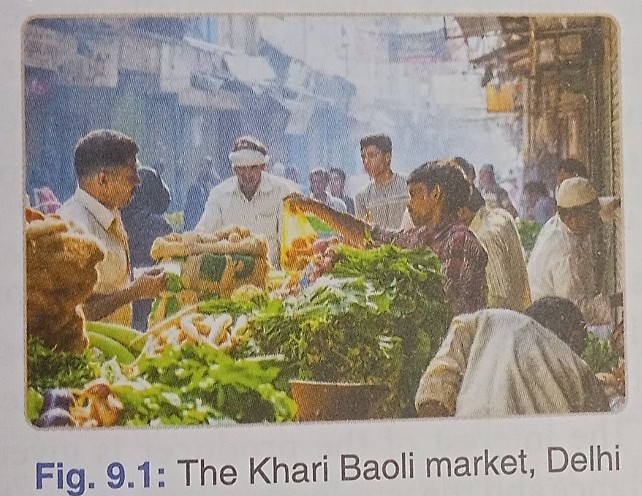
4. Khari Baoli is Asiaโ€™s largest wholesale spice and condiments market. โ€” โœ… True


C. Fill in the Blanks

1. Wholesale markets supply products in bulk to retailers and traders.


2.ย Wholesalers do not usually advertise their products or services.


3. Khari baoli is a 17th-century wholesale market.


4. Middlemen and intermediaries exploit farmers and make profits.


D. Very Short Answer Type Questions (20โ€“30 words)

1. What is wholesale business?
Answer:ย  It is the buying and selling of goods in large quantities at low prices, usually to retailers or traders rather than directly to consumers.


2. Who is the sanchalak in an E-Choupal?
Answer:ย  A sanchalak is a trained farmer who manages the E-Choupal and helps other farmers access information and services online.


3. What are cooperatives?
Answer:ย  Cooperatives are groups of people who come together voluntarily to meet common economic needs through a jointly owned and democratic organization.


4. Who makes agricultural cooperatives and why?
Answer:ย  Farmers form agricultural cooperatives to share resources, eliminate middlemen, and get fair prices for their produce.


E. Short Answer Type Questions (50โ€“60 words)

1. Is it beneficial for farmers to sell their produce in wholesale markets?
Answer: Yes, it helps farmers sell their produce in bulk directly to traders or retailers, ensuring better prices and avoiding middlemen. It also reduces the risk of spoilage and storage loss.


2. Discuss how the profit margins depend on the selling prices in a wholesale marketplace.
Answer: Profit margins depend on the difference between the cost price and selling price. When selling prices rise, profits increase; when prices fall due to oversupply or low demand, profits decrease.


3. What are the new trends in the marketplace?
Answer:ย  New trends include digital marketing, online trading, mobile-based price updates, direct farmer-to-consumer selling, and government-supported platforms like E-NAM and E-Choupal.


4. Write a note on E-Choupal.
Answer:ย  E-Choupal is an ITC initiative that provides farmers with internet access to market prices, weather forecasts, and best farming practices. It reduces the role of middlemen and ensures fair prices for farmers.


F. Long Answer Type Questions (80โ€“100 words)

1. Describe the functioning of the Khari Baoli market.
Answer:ย  Khari Baoli, located in Delhi, is Asiaโ€™s largest wholesale spice and dry fruit market. Established in the 17th century, it deals in spices, herbs, and dry fruits. Traders from across India buy in bulk here. Goods are sold at wholesale rates to retailers and exporters. It plays an important role in Indiaโ€™s spice trade and supports thousands of traders and workers.


2. Why do farmers receive the least share of profit? Explain the role of intermediaries in it.
Answer:ย  Farmers get a low share of profit because intermediaries buy produce at cheap rates and sell it at higher prices in cities. These middlemen take a large portion of the profit. Due to lack of transport, storage, and market access, farmers depend on them and end up receiving only 30โ€“40% of the final selling price.


3. Discuss the efforts initiated by the government to protect the farmersโ€™ interest.
Answer: The government has taken steps like setting up regulated mandis, fixing Minimum Support Prices (MSP), and promoting cooperatives. Schemes such as the Rural Godown Scheme, E-NAM, and E-Choupal help farmers store produce, access fair markets, and get better prices. These measures aim to reduce the control of intermediaries and improve farmersโ€™ income.


ย ย ย ย ย ย ย ย ย ย ย ย ย ย ย ย ย ย ย ย ย ย ย  ******************

Indian Constitution,Chapter- 16, Subject- Social studies.


A. Tick the correct answer

1. Which country has the longest written constitution in the world?
โœ… India


2. When did the Constitution of India come into effect?
โœ… January 26, 1950


3. Which term means that people have the right to choose their own government?
โœ… Democratic


4. How many Fundamental Rights have been provided by the Constitution of India?
โœ… Six


B. Match the columns

Column A Column B Correct Match

1. Equality —– (d) No discrimination
2. Citizens must follow —– (b) Ideals of Constitution
3. Slavery —— (a) Offence in our country
4. Citizens must respect —– (c) National Flag and National Anthem


C. Answer the following questions

1. What do you mean by Constitution?
Answer:  A Constitution is a set of rules and principles according to which a country is governed.


2. List the six Fundamental Rights guaranteed by the Indian Government to its citizens.

Answer: The six fundamental rights are :         (i) Right to Equality

(ii) Right to Freedom

(iii) Right against Exploitation

(iv) Right to Freedom of Religion

(v) Cultural and Educational Rights

(vi) Right to Constitutional Remedies


3. Mention any four Fundamental Duties to be performed by every citizen of our country.

Answer: (a) To respect the National Flag and the National Anthem

(b) To protect public property

(c) To defend the country

(d) To promote harmony and the spirit of common brotherhood


4. Who framed the Constitution of India?
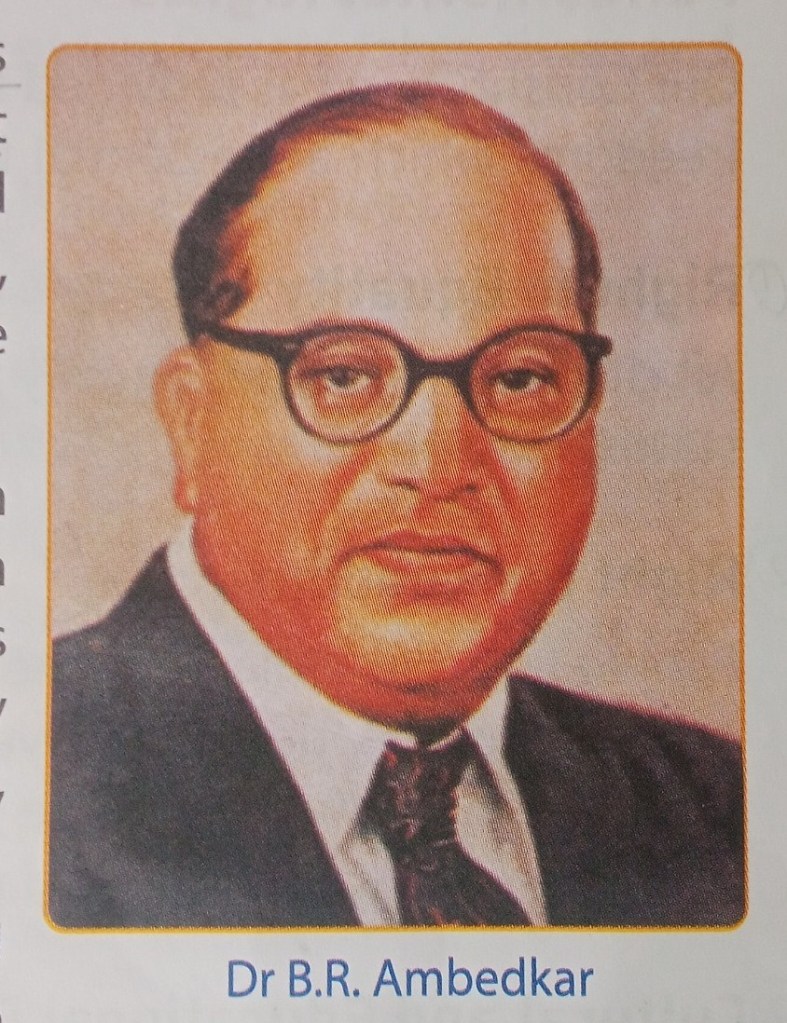
Answer:  The Constituent Assembly of India, under the chairmanship of Dr. B. R. Ambedkar, framed the Constitution.


D. Write short notes on the following

1. Right to Equality
โ†’ It ensures that all citizens are equal before the law and prohibits discrimination based on religion, race, caste, sex, or place of birth.


2. Right to Freedom
โ†’ It gives citizens the freedom of speech and expression, movement, profession, and the right to live anywhere in India.


3. Right to Freedom of Religion
โ†’ It allows every person to follow, practise, and propagate any religion of their choice.


4. Cultural and Educational Rights
โ†’ These rights protect the interests of minorities and ensure that they can preserve their language, culture, and establish educational institutions.


ย ย ย ย ย ย ย ย ย ย ย ย ย ย ย ย ย ย ย ย ย ย ย ย ย ย ย  ******************

The Post Mauryan Period, Class- 6, Subject- Social Science,solved exercises.

A.Choose the correct answer:

1. The most important Kushana king was:
(a) Gondophernes
(b) Alexander
(c) Rudradaman
(d) Kanishka โœ…


2. Which country was the first to make silk?
(a) China โœ…
(b) Japan
(c) India
(d) Sri Lanka


3. Gautamiputra Satakarni was the famous ruler of the:
โœ… (c) Satavahanas


4. The idea of bhakti finds mention in the:
โœ… (a) Bhagavad Gita


5. Which kingโ€™s mother composed an inscription for him?
โœ… (d) Gautamiputra Satakarni


B. Write T for True and F for False statements

1. Menander converted to Hinduism. โ†’ โŒ False (He converted to Buddhism.)


2. Kanishka organized a Buddhist council at Kashmir. โ†’ โœ… True


3. Ashvaghosha wrote Buddhacharita. โ†’ โœ… True


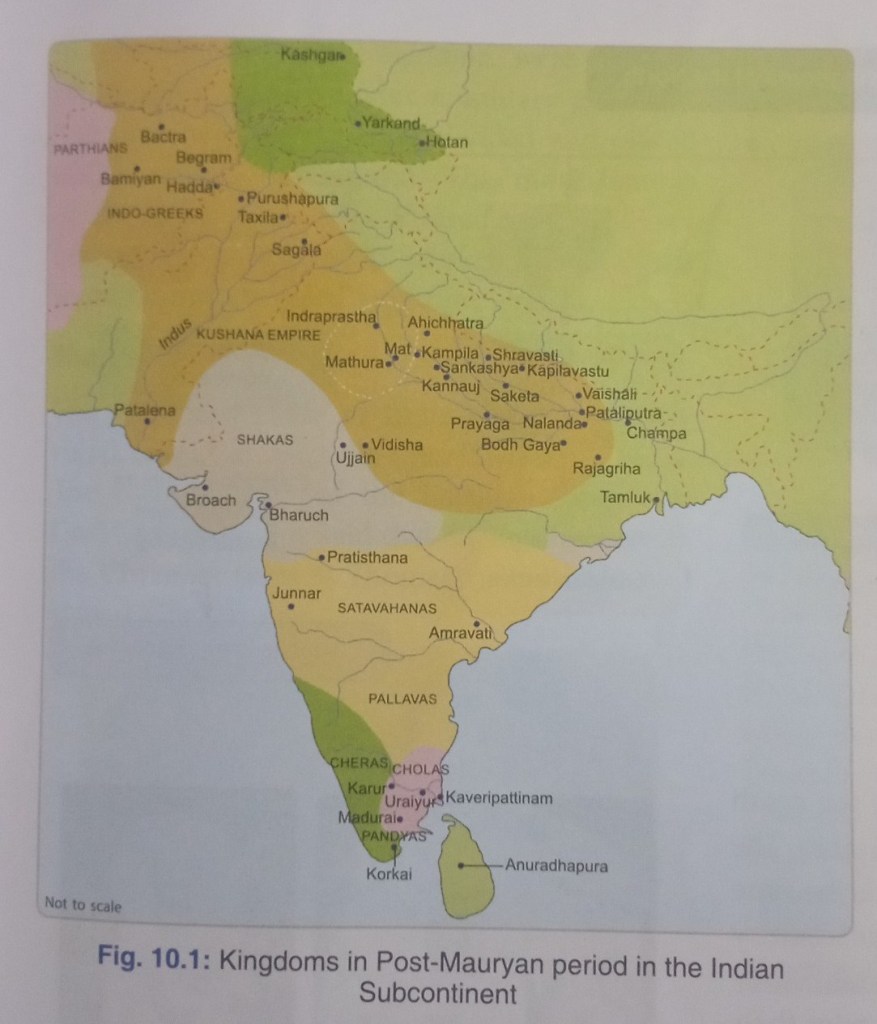
4. Kaveripattinam was the important port city of the Cheras. โ†’ โŒ False (It was of the Cholas.)


5. The Kushanas were among the earliest rulers to issue gold coins in the Indian subcontinent. โ†’ โœ… True


C. Fill in the blanks

1. The most famous Chola king was Karikala.


2. The Chinese pilgrim Fa-Hien came to India in the 5th century CE.


3. The Cheras were also referred to as Keralaputras.


4. The Satavahana rulers were referred to as Andhras.


5. Hiuen Tsang came to India during the reign of Harsha.


D. Very Short Answer Type Questions (20โ€“30 words each)

1. Which were the important kingdoms of South India?
Answer: The important kingdoms of South India were the Cholas, Cheras, and Pandyas. They were powerful dynasties known for trade, administration, and cultural development.


2. What is Mahayana Buddhism?
Answer: Mahayana Buddhism is a branch of Buddhism that believes Buddha is a divine being and that anyone can attain salvation through faith and devotion.


3. What is the idea of Bhakti?
Answer: The idea of Bhakti means devotion to a personal god or goddess with love and faith, without any need for elaborate rituals.


4. Why is the Silk Route so called?
Answer: The Silk Route is so called because silk was the main item traded along this route between China and other countries, including India and Rome.


5. Name the Chinese pilgrims who came to India.
Answer: The famous Chinese pilgrims who came to India were Fa-Hien, Hiuen Tsang, and Itsing.


E. Short Answer Type Questions (50โ€“60 words each)

1. Describe the Chola rule in South India.
Answer: The Cholas were powerful rulers of South India known for their strong navy, efficient administration, and promotion of art and architecture. Karikala Chola was their most famous king. Their capital was Kaveripattinam, and they built magnificent temples like the Brihadeshwara Temple.


2. Write about the Cheras.
Answer: The Cheras ruled over the present-day Kerala region. Their capital was Vanji. They controlled the western coast and were famous for their trade with Romans and Arabs, exporting spices and ivory. They were also known as Keralaputras.


3. Write a few lines on the Pandyas.
Answer: The Pandyas ruled over the southern part of Tamil Nadu with Madurai as their capital. They were famous for their Sangam literature, pearl fishing, and trade with foreign countries like Rome.


4. Write a short note on the Indo-Greeks.
Answer: The Indo-Greeks were Greek rulers who settled in north-western India after Alexanderโ€™s invasion. Menander (Milinda) was their most famous king who later adopted Buddhism. They helped in spreading Indian art and culture, especially Gandhara art.


ย ย ย ย ย ย ย ย ย ย ย ย ย ย ย ย ย ย ย ย ย ย ย ย ย ย ย ย  ****************

Design a site like this with WordPress.com
Get started