Into the Future,Lesson – 7,

Class- V , Subject- English

B 1. Complete the following sentences in your own words .

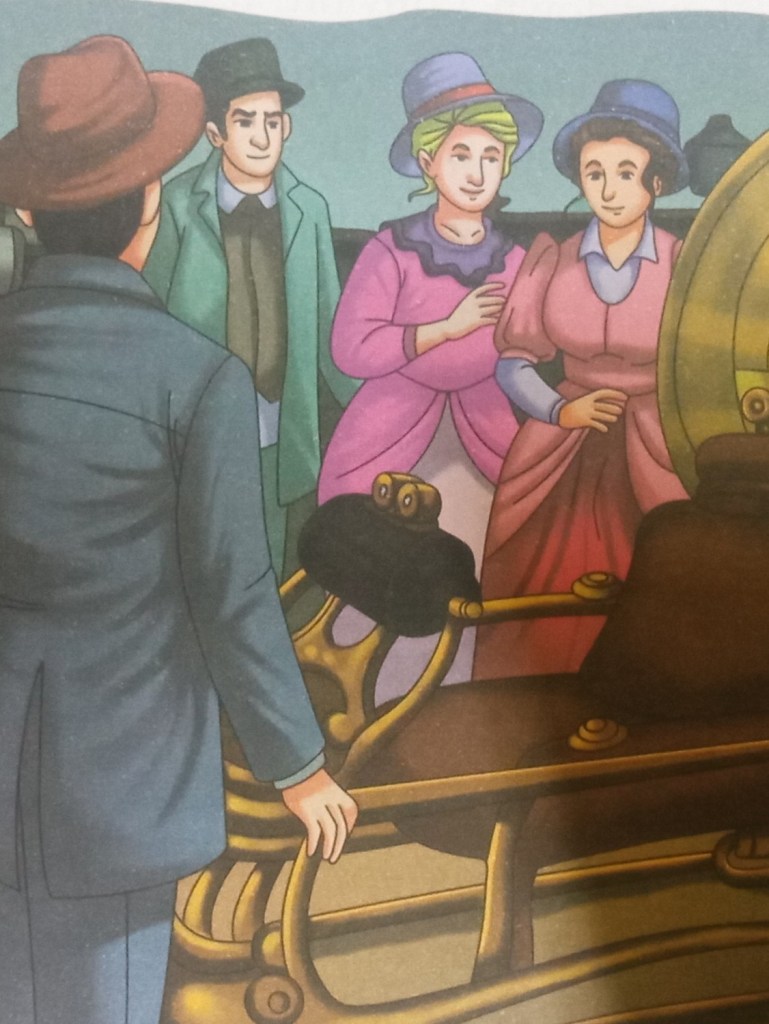
1. The machine that the narrator showed his friends was different from the model he had shown them earlier as it was twenty times larger and fully functional.


2. The chair was special as it allowed the traveler to sit comfortably while using the time machine to move through time.


3. The narrator invited his friendsย  to test the chair and show them the fully built time machine and explain how it worked.


4. When the narrator sat in the chair for the first test flight, the time was nineteen minutes past four.


5. The first flight took him several hours in the future, but to him, the time felt much shorter.


6. By mentioning the blinking lights, the narrator wants to say that time was passing rapidly, with days and nights flashing by in quick succession as he traveled into the future.


B2: Answer these questions

1. Where did the narrator want to travel to? Why?

Answer: The narrator wanted to travel to the future. He was most interested in the unknown and wanted to see what would happen next in time.


2. What instructions did the narrator give his maid?

Answer: The narrator instructed his maid to cook the best dinner she could make for his friends next week and also handed her a note to give them when they arrived.


3. How did the narrator start the machine? Was it difficult to operate? Give reasons for your answer.

Answer: The narrator started the machine by pulling a lever. It was not very difficult to operate because he only had to push the lever up and then pull it back. However, once he started traveling through time, he found the experience enormous and initially frightening.


4. What made the narrator think that his machine was a failure? Was he right? Give reasons for your answer.

Answer: The narrator initially thought the machine was a failure because he felt dizzy and confused when he started the journey. He also saw strange visual effects, like the changing light, and feared something had gone wrong. However, he was wrong because the machine was actually working, and he was successfully traveling through time.


5. Though the narrator could see the maid working, why could she not see him?

Answer: The maid could not see him because he was moving forward in time at an extremely fast rate.


6. What does the windows darkening and brightening signify?

Answer: The darkening and brightening of the windows signify the passing of day and night at an accelerated speed. Since the narrator was moving rapidly through time, he could see days and nights flashing by in quick succession.


7. Why did he pull hard at the lever? What happened as a result of this?

Answer: He pulled hard at the lever because he was frightened by the rapid movement and strange sensations. As a result, the machine slowed down, and he found himself in a completely different time period, far into the future.


8. Why does the narrator make this remark: “A fine welcome… a man travels over 800,000 years for a visit, and this is the greeting he gets”?

Ans: The narrator makes this remark because, after traveling an immense distance into the future, he expected to be welcomed or greeted with curiosity. Instead, he likely faced ill feeling , making him feel unappreciated in spite of his incredible journey.

Sheem, the Wolf – Boy

Lesson – 15, Class – VI, Subject – English


B 2. Complete the following sentences:

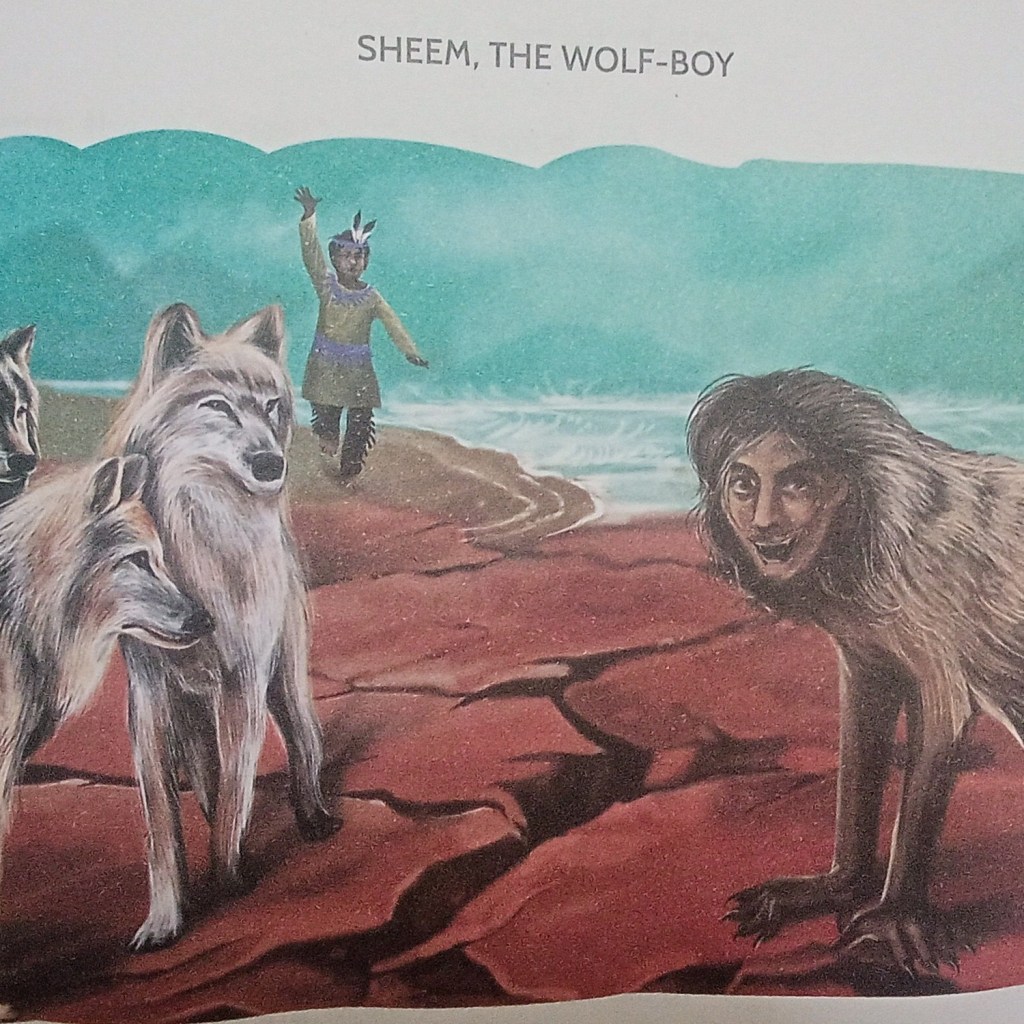
1. The dying father made his children promise to take care of each other and stay together.


2. The family lived a difficult life because they were poor and had limited resources to survive.


3. The youngest brother was left alone because his elder brother and sister abandoned him due to hardships.


4. When left alone, the little brother survived eating whatever he could find in the forest, including berries and food from the wolves.


5. The little brother felt sad because he was abandoned by his own family and left to survive on his own.


6. The elder brother in the end tried to catch hold of the younger brother when he realized his mistake, but the younger brother had already accepted the wolves as his family.


B 3. Answer these questions:

1.What are the responsibilities of good family members?

Answer:ย  The responsibilities of good family members include caring for one another, staying together in difficult times, supporting each other emotionally and physically, and keeping promises made to loved ones.

2. Why did the elder sister and brother leave their youngest brother alone?


Answer:ย  The elder sister and brother left their youngest brother alone because they were struggling to survive and felt that they could not take care of him anymore.

3. How do you think the little brother would have felt when he was abandoned?


Answer:ย  The little brother would have felt lonely, abandoned, scared, and betrayed by his own family. He might have also felt hopeless but later found comfort among the wolves.

4. How did the youngest brother survive in the winters


Answer:ย  The youngest brother survived in the winters by living with the wolves, who provided him with warmth, food, and protection.

5. Who proved to be a real family to the youngest brother?Why?


Answer:  The wolves proved to be the real family to the youngest brother because they cared for him, fed him, and treated him as one of their own, unlike his human family, who abandoned him.

Panchayati Raj, Class-VI,Subject- Social Science


C. Fill in the blanks

1. Gram Sabha elects people who form the Gram Panchayat.


2. The head of the Gram Panchayat is the Sarpanch.


3. In 2009, the reservation of seats for women in the Panchayats was increased from 33% to 50%.


4. A Secretary is appointed by the State government who records all the proceedings of the Gram Sabha and the Gram Panchayat.


5. The members of the Gram Panchayat are elected for 5 years.


D. Very Short Answer Type Questions (20โ€“30 words)
1.What is the Panchayati Raj system?
Answer: The Panchayati Raj system is a decentralized form of government in which local self-governing bodies operate at the village, block, and district levels to ensure local development.

2.What is a Gram Panchayat?
Answer:ย  A Gram Panchayat is the local governing body in a village or a group of villages responsible for development, welfare, and governance at the grassroots level.

3. Who heads the Gram panchayat?
Answer: The Sarpanch heads the Gram Panchayat and is responsible for implementing government schemes, presiding over meetings, and addressing local issues.

4. Name the middle level of the Panchayati Raj system?
Answer: The middle level of the Panchayati Raj system is the Block Samiti (Panchayat Samiti), which coordinates the work of several Gram Panchayats in a block.
5.Mention the body at the apex of the Panchayati Raj system.

Answer:ย  The body at the apex of the Panchayati Raj system is the Zila Parishad, which oversees the administration of all Panchayat Samitis within a district.


E. Short Answer Type Questions (50โ€“60 words)

1.Explain the functions of the Gram Panchayat.

Answer: The functions of the Gram Panchayat include maintaining village infrastructure, implementing government schemes, ensuring sanitation, resolving disputes, and promoting social welfare.
2. Discuss the sources of funds for the Gram Panchayat.

Answer:The funds for the Gram Panchayat come from state and central government grants, local taxes, and contributions from villagers. These funds are used for development projects and welfare schemes.

3. Describe the importance of the Panchayati Raj.
Answer:ย  The Panchayati Raj is important because it empowers local governance, promotes democratic participation, improves rural development, and ensures that peopleโ€™s voices are heard in decision-making.
4. What is the role of the Sarpanch?

Answer: The Sarpanch is the elected head of the Gram Panchayat and is responsible for leading meetings, implementing decisions, and representing the village in administrative matters.

5. What are wards?
Answer:Wards are divisions within a village for administrative convenience, each represented by a Ward Member (Panch), who helps in governance and decision-making.


F. Long Answer Type Questions (80โ€“100 words)

1.Examine the role woman play in the functioning of the Panchayat.

Answer: Women play a crucial role in Panchayati Raj by participating in decision-making, addressing gender-related issues, and ensuring better implementation of welfare schemes. The 50% reservation for women in Panchayats has led to increased female leadership and empowerment in rural governance.

2. Write a note on Block Samiti.

Answer: A Block Samiti (Panchayat Samiti) is the middle-tier of the Panchayati Raj system, responsible for coordinating the work of Gram Panchayats in a block. It implements development projects, monitors schemes, and acts as a link between the village and district administration.
3. Explain the need for Nyaya Panchayat and explain it’s importance.

Answer: Nyaya Panchayat is a judicial body at the village level that resolves minor disputes and legal matters without lengthy court procedures. It ensures quick, cost-effective justice for villagers.

4. Discuss the structure and composition of the Gram Panchayat.
4. The Gram Panchayat consists of elected members from the village, including the Sarpanch and Ward Members. It is responsible for village administration, development work, and implementing government policies.


G. Differentiate between the following

1. Gram Sabha and Gram Panchayat

Answer: Gram Sabha: A general body of all adult members in a village that discusses and approves village matters.

Gram Panchayat: An elected body responsible for governance and administration in the village.


2. Sarpanch and Secretary

Answer:Sarpanch: An elected head of the Gram Panchayat, responsible for decision-making and implementation of policies.

Secretary: An appointed official who records proceedings and assists in administrative tasks.


H. Higher-Order Thinking Skills

1.What is the need for people to get involved in local self – government?

Answer: People should get involved in local self-government to ensure better governance, transparency, and participation in decision-making. It helps in addressing local issues efficiently and promotes community development.
2. What is your opinion regarding involvement of woman in local self- government?

Answer: Womenโ€™s involvement in local self-government is essential for gender equality, better decision-making, and addressing women-centric issues. It enhances rural development and brings diverse perspectives to governance.

Rain in Summer, Lesson– 16, Class- IV, Subject- English


1. Answer the following questions:

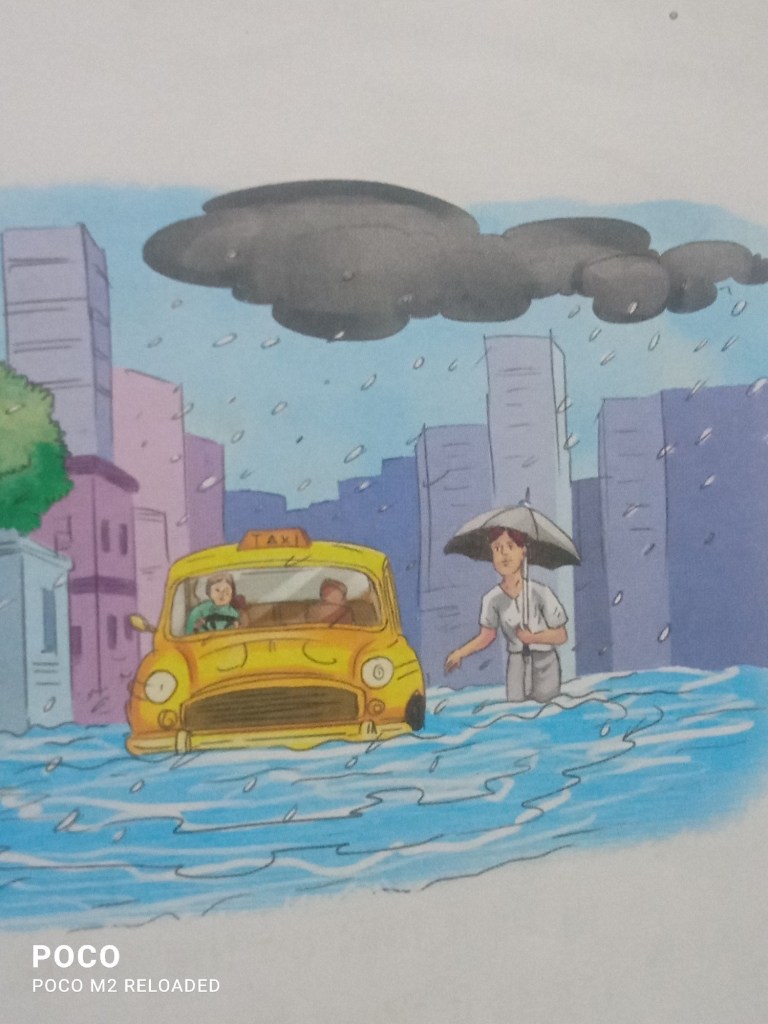
(a) Why does the poet think that the rain is beautiful in the narrow lane as well as in the broad street?
Answer: The poet finds the rain beautiful everywhere, whether in the narrow lane or the broad street, because it brings freshness, coolness, and joy.

(b) What sound does the rain make:

(i) as it falls on the roof?
Answer: The rain clatters on the roof, making a continuous rattling sound, like the trampling of hooves.

(ii) as it flows from the overflowing spout?
Answer: The rain gushes out forcefully from the spout, creating a rushing and splashing sound.

(iii) as it flows down the gutter?
Answer: The rain roars as it flows like a river down the gutter, making a loud and continuous noise.

(c) Do you agree with the poet that the rain is always welcome when it pours and pours? Give your own experience of a day of continuous heavy rainfall.
Answer: Yes, I agree with the poet that rain is always welcome because it cools down the surroundings, nourishes nature, and creates a refreshing atmosphere. However, continuous heavy rainfall can sometimes cause waterlogging and inconvenience.


2. Word Practice:

(a) Do you like to be indoors when it rains?
Answer: Yes, I like to be indoors when it rains because I can enjoy the sound of raindrops, read a book, or sip a hot drink while watching the rain outside.

(b) What do you prefer to do on such days?
Answer: On rainy days, I prefer to stay indoors, watch movies, listen to music, or read a book. Sometimes, I also enjoy going for a walk with an umbrella or playing in the rain.

(c) Do you like to have hot drinks?
Answer: Yes, I love having hot drinks like tea, coffee, or hot chocolate on rainy days. It makes me feel warm and cozy.

(d) Is it fun to wear a raincoat and experience the rain outside?
Answer: Yes, it is fun to wear a raincoat and step outside in the rain. Walking in the drizzle, splashing in puddles, and feeling the cool raindrops is an enjoyable experience.

(e) What happens in nature when it pours?
Answer: When it pours heavily, nature looks fresh and green. The trees and plants absorb water and appear more vibrant. Rivers and ponds fill up, birds seek shelter, and the air becomes cool and refreshing. However, sometimes heavy rain can cause floods and disrupt daily life.

Republic Day Speech

Good morning to everyone present here.

Today, we gather to celebrate the 26th of January, a day that holds immense significance in the history of our great nation. On this day in 1950, India became a sovereign, democratic republic, and the Constitution of India came into effect. It is a moment to honor the vision and sacrifices of those who fought tirelessly to make India a free and independent nation.

Republic Day is not just a celebration of our Constitution; it is a tribute to the values of justice, equality, liberty, and fraternity enshrined in it. Our Constitution, drafted under the leadership of Dr. B.R. Ambedkar, is a beacon of hope and guidance, ensuring the rights and duties of every citizen of this country.

As we hoist the tricolor today, let us remember the sacrifices of freedom fighters like Mahatma Gandhi, Bhagat Singh, Subhas Chandra Bose, and countless others who laid the foundation of our independence. It is their determination and selflessness that inspire us to uphold the ideals they stood for.

India has made remarkable progress over the years in various fieldsโ€”science, technology, education, and economy. Yet, challenges remain. As responsible citizens, it is our duty to contribute to the nation’s growth, promote harmony, and ensure that the values of democracy are upheld at all times.

Let us take a pledge today to work towards a better, brighter Indiaโ€”a nation where every individual has equal opportunities, where diversity is celebrated, and where we continue to march forward with unity and pride.

On this Republic Day, let us also remember our armed forces, who work tirelessly to protect our sovereignty and ensure our safety. Their dedication and courage remind us of the value of freedom and peace.

In conclusion, as we celebrate this day, let us strive to build a nation that our future generations will be proud of. Together, let us uphold the spirit of the Constitution and the essence of being Indian.

Jai Hind!

Republic Day Speech

Good morning everyone,
Today, we gather to celebrate the 76th Republic Day of India, a day that reminds us of the adoption of our Constitution on January 26, 1950. This document, crafted with vision and dedication, laid the foundation for our democracy, ensuring justice, equality, and liberty for all.

As proud citizens, let us honor the sacrifices of our freedom fighters and the architects of our Constitution. Their efforts gave us a nation that thrives on unity in diversity.

On this occasion, letโ€™s pledge to uphold the values of democracy, contribute to the progress of our country, and work together to build a brighter future.

Letโ€™s celebrate not just the day but the spirit of being Indian.
Thank you.

Maps and Map  Reading,Class-6,Subject -Social science,Questions and answers for Maps and Map Reading


Fill in the Blanks

1. Scale is the ratio between the distance of two places on a map and the distance of these two places on the ground.


2. A thematic map is based on some theme or specific information.


3. A plan is always drawn to scale and shows accurate dimensions.


4. The four main directions are called cardinal directions.


5. Symbols represent features that cannot be drawn on a map.


Match the Columns

1. Model of the Earth โ†’ Globe (e)


2. South โ†’ Cardinal direction (d)


3. Magnetic compass โ†’ North-south direction (a)


4. Rough drawing โ†’ Sketch (b)


5. Signs or characters โ†’ Symbols (c)


Very Short Answer Questions (20โ€“30 Words)

1. List the types of maps.

Answer: Physical maps

Political maps

Thematic maps


2. What are the components of a map?

Answer:  (i) Title

                   (ii) Scale

                   (iii) Compass (directions)

                   (iv) Symbols


3. Symbols help read maps. Explain how.
Answer: Symbols represent real-life objects and features like roads, buildings, or rivers. They simplify complex information for easy understanding.


4. What is a sketch?
Answer: A sketch is a rough, freehand drawing of a place or object that is not drawn to scale.


5. What is a plan?
Answer: A plan is a detailed map drawn to scale, showing small areas like a house or garden accurately.

Short Answer Type Questions (50โ€“60 Words)

1. Briefly explain the physical map.
Answer: A physical map shows natural features of the Earth like mountains, rivers, plains, and plateaus. It helps in understanding the terrain and geography of a region.


2. What is a scale? Classify maps based on scales.
Answer: A scale is the ratio between the distance on the map and the actual distance on the ground.

Large-scale maps: Show small areas in detail.

Small-scale maps: Show large areas with less detail.


3. What are cardinal directions and intermediate directions? Explain.

Answer: Cardinal directions: North, South, East, and West.

Intermediate directions: Northeast, Southeast, Northwest, and Southwest.


4. A compass helps to find out the main directions. Explain.
Answer: A compass is a navigational tool with a magnetic needle pointing toward the north. It helps in determining directions like North, South, East, and West.


5. Explain the advantages of maps over the globe.

Answer: Maps are portable and easy to carry.

They provide detailed information about specific regions.

Maps can represent themes like climate, population, or roads.


Long Answer Type Questions (80โ€“100 Words)

1. Explain three types of maps in detail.

Answer: Physical maps: Depict natural features like mountains, rivers, and plains.

Political maps: Show boundaries of countries, states, and cities.

Thematic maps: Focus on specific themes like climate, population, or resources.


2. Discuss the components of a map in detail.

Answer: Title: Indicates the purpose of the map.

Scale: Represents the ratio of map distance to real-world distance.

Compass: Shows directions.

Symbols: Represent features like roads and landmarks.


3. What do you understand by directions?
Answer: Directions are guidelines to determine the position of one place from another. The four cardinal directions (North, South, East, and West) and intermediate directions (e.g., Northeast) help in navigation.


4. What are symbols? How do they help to read maps?
Answer: Symbols are graphical representations of real-world features. They simplify complex geographical information, making it easier to understand features like rivers, roads, or buildings.


5. Differentiate between a sketch and a plan.

Answer: Sketch: A rough drawing not to scale, showing an area or object.

Plan: A detailed, scaled map showing small areas accurately.

Media and Democracy,class-7,Subject- Social Science,Questions and answers for Media and Democracy.

The Nirbhaya Incident

B. Fill in the blanks:

1. Cinema, TV, radio, newspaper, and magazine are collectively called mass media.

2. Freedom of speech and expression is a right, but not an absolute right.

3. The Ministry of Information and Broadcasting provides information to the citizens through the Press Information Bureau, Public division, and Prasar Bharati.

4. RTI came into force in the year 2005.

C. Match the columns:

1. Press Council of India – (d) 1966

2. Right to Information – (a) Public Information Officer

3. Right to freedom of speech and expression – (b) Article 19(1)(a) of the Constitution

4. Censorship – (e) Movies, TV serials, advertisements

5. Public opinion – (c) Expression of feelings

D. Very Short Answer Type Questions:

1. What is meant by the term “media”?
Answer: Media refers to various means of communication like newspapers, television, radio, and the internet, which provide information to the public.

2. What is mass media?
Answer: Mass media refers to platforms like television, radio, newspapers, and online media that deliver information to a large audience.

3. Define public opinion.
Answer: Public opinion is the collective views and ideas of the general public on various social, political, and economic issues.

4. What is the Right to Information (RTI) Act?
Answer: The Right to Information (RTI) Act, 2005, enables citizens to access information held by public authorities to promote transparency and accountability.

E. Short Answer Type Questions (50โ€“60 words):

1. Why is it important for the political class to pay attention to public opinion?
Answer: Public opinion reflects the collective mindset of citizens and serves as a guide for the political class to address their needs and concerns. Ignoring public opinion can lead to dissatisfaction, protests, or a loss of trust in governance. Politicians rely on it to formulate policies and win electoral support.

2. Explain the importance of media in a democracy.
Answer: Media is vital in a democracy as it informs citizens, ensures transparency, and acts as a watchdog against corruption. It facilitates informed decision-making by providing news and analysis. Media also serves as a bridge between the government and the people, promoting accountability and freedom of expression.

3. Is freedom of speech absolute? Describe the legal checks on it.
Answer: Freedom of speech is not absolute. Article 19(1)(a) of the Indian Constitution guarantees this right but is subject to reasonable restrictions. These include concerns of sovereignty, national security, public order, decency, morality, and incitement to offenses. Laws like defamation and sedition also regulate speech to balance freedom with responsibility.

4. Discuss the significance of the Right to Information.
Answer: The Right to Information (RTI) Act empowers citizens to access government records, promoting transparency and accountability. It helps combat corruption by holding officials responsible for their actions. RTI also ensures public participation in decision-making and strengthens democracy by enabling informed discussions on policies and governance.

5. What is censorship? Evaluate its necessity in India.
Answer: Censorship refers to restricting or suppressing content deemed harmful, obscene, or a threat to public order. In India, it ensures national security, prevents communal violence, and upholds moral standards. However, excessive censorship can hinder freedom of expression and creativity. Hence, it must strike a balance between regulation and democratic rights.

Long Answer Type Questions (F)

1. Elaborate on the relationship between public opinion and media.
Answer: Media plays a significant role in shaping public opinion by providing information, news, and diverse viewpoints. It acts as a bridge between the government and the people, influencing attitudes and decisions on social, political, and economic issues. Public opinion, in turn, affects how media prioritizes content, ensuring a dynamic interaction. However, biased or sensationalized media can mislead public opinion.


2. What are the responsibilities of the media?
The media is responsible for:

Answer: Providing accurate, balanced, and unbiased information.

Acting as a watchdog to hold authorities accountable.

Promoting social awareness and education.

Representing diverse viewpoints and respecting cultural values.

Avoiding sensationalism or misinformation that could harm societal harmony.


3. What are the legal checks placed on the Indian media?                                                Answer: In India, media operates under legal frameworks like:

Press Council of India Act: To maintain journalistic ethics.

Information Technology Act: To regulate digital media.

Defamation Laws: Preventing misuse of freedom of speech.

Censorship Laws: Restricting content that could harm public order or morality.

Contempt of Court Act: Preventing interference with judicial proceedings.


4. Discuss the history of the RTI movement. Give two examples of its use.
Answer: The Right to Information (RTI) movement in India emerged in the 1990s, driven by activists like Aruna Roy. The RTI Act was enacted in 2005 to empower citizens to access public records, ensuring transparency and accountability.
Examples of RTI use:

Exposing corruption in government schemes (e.g., MNREGA fund mismanagement).

Demanding transparency in infrastructure projects like road construction budgets.


Atmosphere Lesson -5, Subject – Social Science, Class -VII.

Food carnival festival held on 7th January 2025 atย  Vidya Mandir Public School

A. Choose the correct answer:

1. Which is gas causes the greenhouse effect?    Answer: (b) Carbon dioxide

2. Which is the lowest layer of the atmosphere?  Answer:  (d) Troposphere

3. Radio waves are transmitted back to earth by:                                                                      Answer: (c) Thermosphere

4. Which is is the coldest layer of the atmosphere?                                                     Answer: (c) Mesosphere

5. The stratosphere is also called:                        Answer: (b) Ozonosphere

B. Fill in the blanks:

1. The main gases present in the atmosphere areย nitrogen and oxygen.

2. Theย troposphere is the lowest layer of the atmosphere.

3. Temperature in theย mesosphere layer of the atmosphere decreases with an increase in altitude.

4. Ozone absorbs the harmfulย ultraviolet rays of the sun.

5. The narrow boundary that separates the stratosphere from the mesosphere is called the stratopouse.

C. Write T for True and F for False statements:

1. Oxygen in the atmosphere creates the greenhouse effect.                               False

2. Plants absorb carbon dioxide during photosynthesis.                                     True

3. The Earth’s gravitational pull holds the atmosphere close to it.                       True

4. The atmosphere can be divided into six concentric layers.                                True

5. As altitude increases the atmosphere becomes thinner.                                 True


E. Very Short Answer Type Questions:

1. List the layers of the atmosphere.
Troposphere, Stratosphere, Mesosphere, Thermosphere, Exosphere.


2. Describe the composition of the atmosphere.
Answer: The atmosphere is composed of 78% nitrogen, 21% oxygen, and 1% other gases such as carbon dioxide, argon, and trace gases.


3. What do you understand by the term “atmospheric gases”?
Answer: Atmospheric gases are the mixture of different gases, such as nitrogen, oxygen, carbon dioxide, and trace gases, that make up Earth’s atmosphere.


4. What are the benefits of the ozone layer?
Answer: The ozone layer absorbs harmful ultraviolet (UV) radiation from the sun, protecting living organisms from its damaging effects.


5. Which gases are found in the exosphere?
Answer: Hydrogen and helium are the primary gases found in the exosphere.


F. Short Answer Type Questions:

1. Discuss the thermosphere.
Answer: The thermosphere is the fourth layer of the atmosphere, extending from about 80 km to 700 km above Earth’s surface. It has high temperatures because it absorbs solar radiation, and it is where auroras occur and satellites orbit.


2. Write a note on the stratosphere.
Answer: The stratosphere is the second layer of the atmosphere, lying above the troposphere and extending up to 50 km. It contains the ozone layer, which absorbs UV radiation, and is characterized by stable weather conditions and increasing temperatures with altitude.


3. In which layer do meteors burn up? Why do they burn?
Answer: Meteors burn up in the mesosphere because of friction with the atmospheric particles. This friction generates heat, causing the meteors to incinerate.


4. Write a note on the exosphere.
Answer: The exosphere is the outermost layer of the atmosphere, extending from about 700 km to 10,000 km. It merges with outer space and contains very low-density gases like hydrogen and helium.


5. Which layer allows long-distance wireless communication, and how?
Answer: The thermosphere allows long-distance wireless communication because it contains the ionosphere, a region filled with charged particles that reflect radio waves back to Earth.


G. Long Answer Type Questions:


1. With the help of a diagram, explain the structure of our atmosphere.
Answer: The atmosphere consists of five layers:


Troposphere (0โ€“12 km): Weather occurs here.

Stratosphere (12โ€“50 km): Contains the ozone layer.

Mesosphere (50โ€“80 km): Meteors burn up here.

Thermosphere (80โ€“700 km): Satellites orbit; auroras occur.

Exosphere (700โ€“10,000 km): Transition to outer space.


2. Write a note on the composition of atmospheric gases.
The Earth’s atmosphere consists mainly of:

Nitrogen (78%): Maintains balance by diluting oxygen and reducing combustion.

Oxygen (21%): Supports respiration and combustion.

Other Gases (1%): Includes argon, carbon dioxide (important for photosynthesis and heat regulation), water vapor, and trace gases.


3. Differentiate between the mesosphere and the thermosphere.

Mesosphere:

Third layer of the atmosphere (50โ€“80 km).

Coldest layer; temperature decreases with altitude.

Meteors burn up here.


Thermosphere:

Fourth layer (80โ€“700 km).

Temperature increases with altitude due to solar radiation absorption.

Contains the ionosphere; facilitates radio communication.

I am Nirupoma teaching in Vidya Mandir public school๐ŸŽ’๐Ÿ“š

Major Landforms, chapter- 4,Class -7,Subject- Social Science


A. Choose the correct answer

1. What are large gorges called?
โ†’ (c) Canyons


2. What are loops of rivers called?
โ†’ (b) Meanders


3. Which one of the following agents forms a cave?
โ†’ (a) Sea wave


4. Accumulation of sediments by glacier is called
โ†’ (c) Moraine


5. Glaciers are slow-moving ______.
โ†’ (b) Mountains


B. Fill in the blanks

1. Breaking up of rocks on the Earthโ€™s surface is called weathering.


2. When sea waves cut through a cliff, a sea cave is formed.


3. Delta is the triangular landforms created at the mouths of the river.


4. Glacial lakes are called tarn.


5. In deserts hills of sand are called sand dunes.


C. Write T for True and F for False statements

1. The source of a river is called its mouth. โ†’ F


2. A lagoon is a landform created by a sea cliff being worn down. โ†’ F


3. Rivers of ice are called waterfalls. โ†’ F


4. Mushroom rocks have narrow bases and broad tops. โ†’ T


5. The valley of a glacier is U-shaped. โ†’ T


D. Match the columns

1. Loess – (e) Sand particles deposited by wind


2. Cirque – (d) Hollow in a mountain


3. Sea waves – (a) Sea arch


4. Meanders – (c) River loops


5. Weathering – (b) Decomposition of rocks


E. Very Short Answer Type Questions (20โ€“30 words)

1. What is weathering?
Answer: Weathering is the breaking down of rocks into smaller particles by natural forces like temperature changes, water, wind, and chemical processes.


2. Name the three stages of the course of a river.
Answer: The three stages of the course of a river are:

Upper course

Middle course

Lower course


3. What is a V-shaped valley?
Answer:A V-shaped valley is a deep valley with steep sides formed by the erosional activity of a river in its upper course.


4. What are waterfalls?
Answer: Waterfalls are steep drops of water where a river flows over hard rocks, creating a vertical fall.


5. What is an oasis?
Answer: An oasis is a fertile area in a desert with water, often supplied by underground springs.


F. Short Answer Type Questions (50โ€“60 words)

1. Differentiate between degradation and aggradation.

Answer: Degradation: The process of lowering landforms by erosion.

Aggradation: The process of raising the land surface by the deposition of materials like silt, sand, or gravel.


2. Explain meanders and oxbow lakes.

Answer: Meanders: Curved or looped patterns of a river in the middle course.

Oxbow lakes: U-shaped lakes formed when meanders are cut off from the river due to deposition.


3. Discuss the formation of a delta.
Answer: A delta is formed when a river deposits sediments at its mouth as it meets a body of standing water like a sea, slowing its flow and creating a triangular-shaped landform.


4. What is an estuary?
Answer: An estuary is the wide mouth of a river where it meets the sea, and tidal waters mix with river water.


5. Describe how lagoons are formed.
Answer: Lagoons are shallow bodies of water separated from the sea by sandbars, spits, or coral reefs, formed by the deposition of sediments along coastal areas.


G. Long Answer Type Questions (80โ€“100 words)

1. Differentiate between weathering and erosion.

Answer: Weathering: The breakdown of rocks into smaller particles by physical, chemical, or biological processes without movement.

Erosion: The removal and transportation of weathered materials by agents like water, wind, or ice.


2. Discuss various erosional and depositional features formed by a river in its upper and lower course.

Answer: Upper Course: Erosional features like V-shaped valleys, waterfalls, and rapids.

Lower Course: Depositional features like floodplains, deltas, and levees.


3. Describe the landforms created by sea waves.

Answer: Erosional: Sea cliffs, arches, stacks, and caves.

Depositional: Beaches, sandbars, and spits.


4. Illustrate the landforms formed by moving ice.
Answer: Moving ice (glaciers) forms landforms like cirques, moraines, U-shaped valleys, and drumlins through erosion and deposition.


5. How are mushroom rocks formed?
Answer: Mushroom rocks are formed in deserts when wind erosion erodes the lower parts of rocks more than the upper parts, creating a mushroom-like shape.


H. Higher-Order Thinking Skills

1. How does a river play a major role in shaping the Earthโ€™s surface?
Answer: A river shapes the Earthโ€™s surface through erosion, transportation, and deposition, creating various landforms like valleys, deltas, floodplains, and gorges. It also supports ecosystems and human activities.


2. Why is the river most active in its upper course?
Answer: A river is most active in its upper course due to steep gradients that increase velocity, causing intense erosion and the formation of landforms like waterfalls and V-shaped valleys.

Design a site like this with WordPress.com
Get started