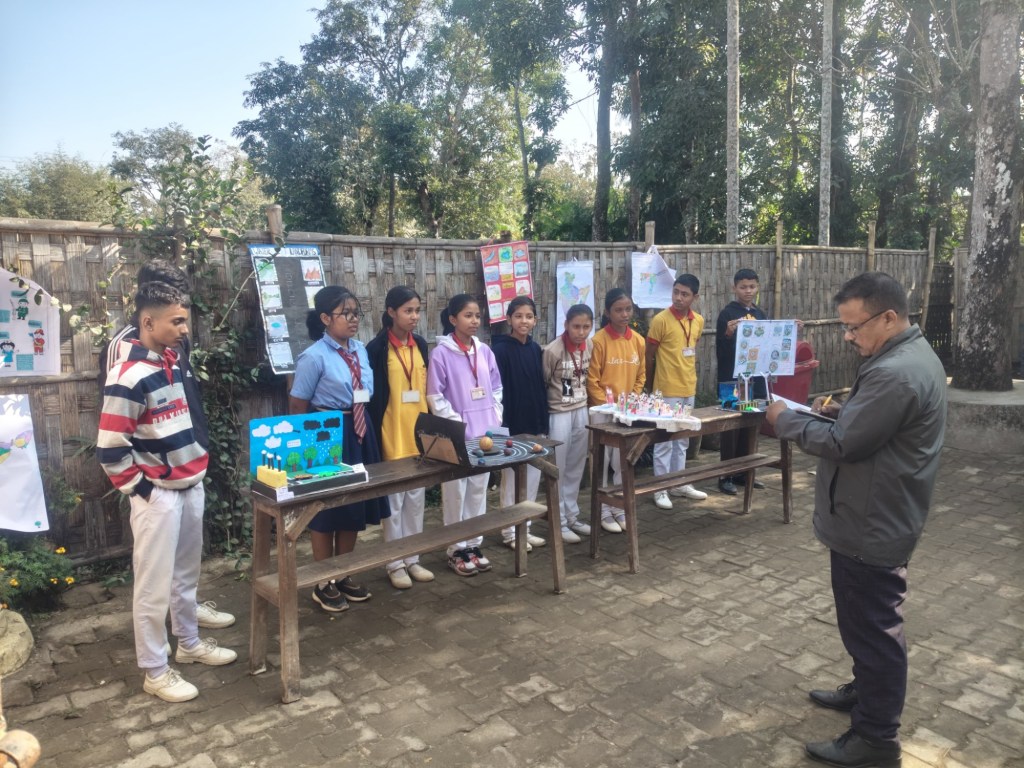
Good morning everyone,
Today, we gather to celebrate the 76th Republic Day of India, a day that reminds us of the adoption of our Constitution on January 26, 1950. This document, crafted with vision and dedication, laid the foundation for our democracy, ensuring justice, equality, and liberty for all.
As proud citizens, let us honor the sacrifices of our freedom fighters and the architects of our Constitution. Their efforts gave us a nation that thrives on unity in diversity.
On this occasion, let’s pledge to uphold the values of democracy, contribute to the progress of our country, and work together to build a brighter future.
Let’s celebrate not just the day but the spirit of being Indian.
Thank you.
Maps and Map Reading,Class-6,Subject -Social science,Questions and answers for Maps and Map Reading
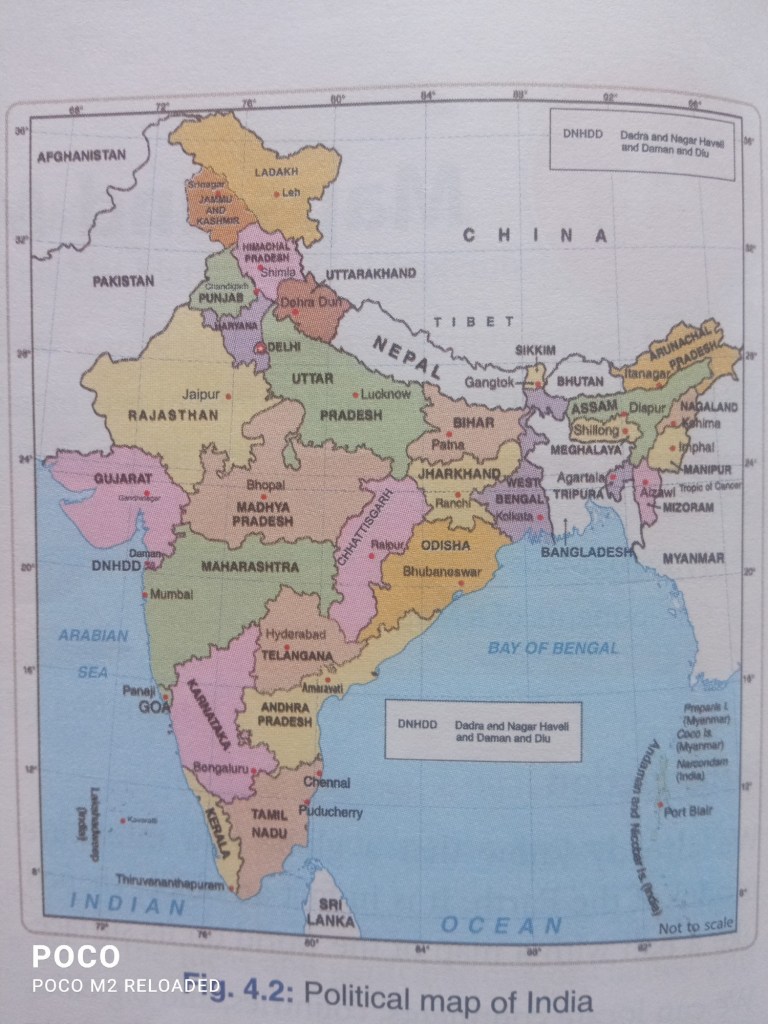
Fill in the Blanks
1. Scale is the ratio between the distance of two places on a map and the distance of these two places on the ground.
2. A thematic map is based on some theme or specific information.
3. A plan is always drawn to scale and shows accurate dimensions.
4. The four main directions are called cardinal directions.
5. Symbols represent features that cannot be drawn on a map.
Match the Columns
1. Model of the Earth → Globe (e)
2. South → Cardinal direction (d)
3. Magnetic compass → North-south direction (a)
4. Rough drawing → Sketch (b)
5. Signs or characters → Symbols (c)
Very Short Answer Questions (20–30 Words)
1. List the types of maps.
Answer: Physical maps
Political maps
Thematic maps
2. What are the components of a map?
Answer: (i) Title
(ii) Scale
(iii) Compass (directions)
(iv) Symbols
3. Symbols help read maps. Explain how.
Answer: Symbols represent real-life objects and features like roads, buildings, or rivers. They simplify complex information for easy understanding.
4. What is a sketch?
Answer: A sketch is a rough, freehand drawing of a place or object that is not drawn to scale.
5. What is a plan?
Answer: A plan is a detailed map drawn to scale, showing small areas like a house or garden accurately.
Short Answer Type Questions (50–60 Words)
1. Briefly explain the physical map.
Answer: A physical map shows natural features of the Earth like mountains, rivers, plains, and plateaus. It helps in understanding the terrain and geography of a region.
2. What is a scale? Classify maps based on scales.
Answer: A scale is the ratio between the distance on the map and the actual distance on the ground.
Large-scale maps: Show small areas in detail.
Small-scale maps: Show large areas with less detail.
3. What are cardinal directions and intermediate directions? Explain.
Answer: Cardinal directions: North, South, East, and West.
Intermediate directions: Northeast, Southeast, Northwest, and Southwest.
4. A compass helps to find out the main directions. Explain.
Answer: A compass is a navigational tool with a magnetic needle pointing toward the north. It helps in determining directions like North, South, East, and West.
5. Explain the advantages of maps over the globe.
Answer: Maps are portable and easy to carry.
They provide detailed information about specific regions.
Maps can represent themes like climate, population, or roads.
Long Answer Type Questions (80–100 Words)
1. Explain three types of maps in detail.
Answer: Physical maps: Depict natural features like mountains, rivers, and plains.
Political maps: Show boundaries of countries, states, and cities.
Thematic maps: Focus on specific themes like climate, population, or resources.
2. Discuss the components of a map in detail.
Answer: Title: Indicates the purpose of the map.
Scale: Represents the ratio of map distance to real-world distance.
Compass: Shows directions.
Symbols: Represent features like roads and landmarks.
3. What do you understand by directions?
Answer: Directions are guidelines to determine the position of one place from another. The four cardinal directions (North, South, East, and West) and intermediate directions (e.g., Northeast) help in navigation.
4. What are symbols? How do they help to read maps?
Answer: Symbols are graphical representations of real-world features. They simplify complex geographical information, making it easier to understand features like rivers, roads, or buildings.
5. Differentiate between a sketch and a plan.
Answer: Sketch: A rough drawing not to scale, showing an area or object.
Plan: A detailed, scaled map showing small areas accurately.
Media and Democracy,class-7,Subject- Social Science,Questions and answers for Media and Democracy.
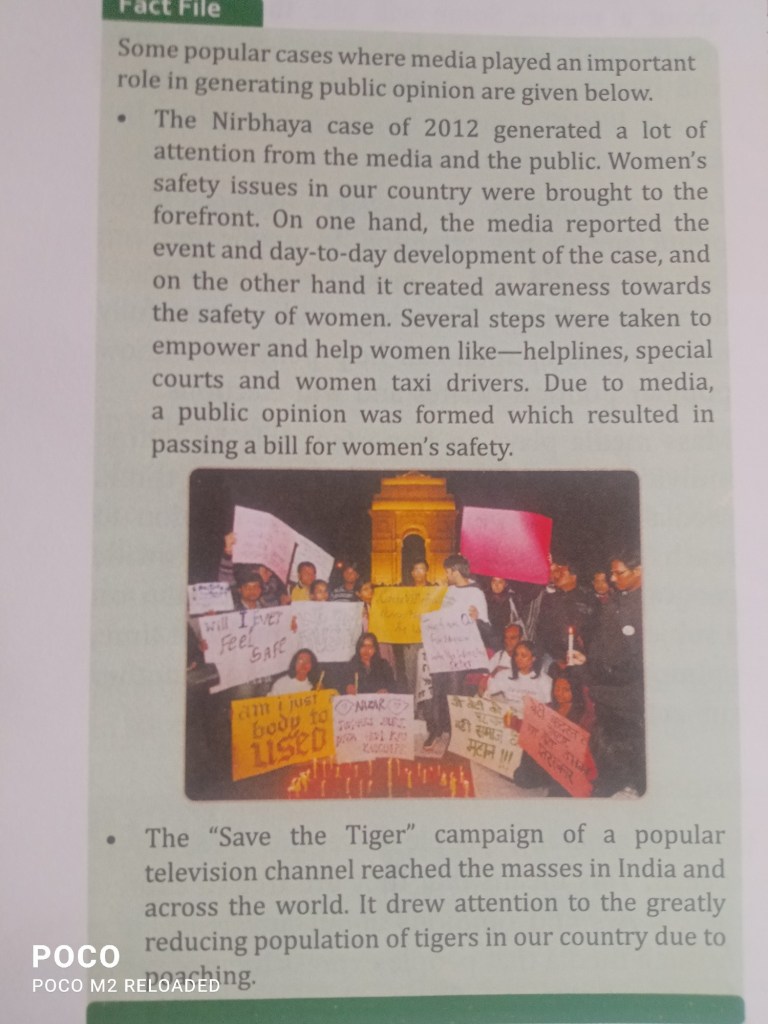
B. Fill in the blanks:
1. Cinema, TV, radio, newspaper, and magazine are collectively called mass media.
2. Freedom of speech and expression is a right, but not an absolute right.
3. The Ministry of Information and Broadcasting provides information to the citizens through the Press Information Bureau, Public division, and Prasar Bharati.
4. RTI came into force in the year 2005.
C. Match the columns:
1. Press Council of India – (d) 1966
2. Right to Information – (a) Public Information Officer
3. Right to freedom of speech and expression – (b) Article 19(1)(a) of the Constitution
4. Censorship – (e) Movies, TV serials, advertisements
5. Public opinion – (c) Expression of feelings
D. Very Short Answer Type Questions:
1. What is meant by the term “media”?
Answer: Media refers to various means of communication like newspapers, television, radio, and the internet, which provide information to the public.
2. What is mass media?
Answer: Mass media refers to platforms like television, radio, newspapers, and online media that deliver information to a large audience.
3. Define public opinion.
Answer: Public opinion is the collective views and ideas of the general public on various social, political, and economic issues.
4. What is the Right to Information (RTI) Act?
Answer: The Right to Information (RTI) Act, 2005, enables citizens to access information held by public authorities to promote transparency and accountability.
E. Short Answer Type Questions (50–60 words):
1. Why is it important for the political class to pay attention to public opinion?
Answer: Public opinion reflects the collective mindset of citizens and serves as a guide for the political class to address their needs and concerns. Ignoring public opinion can lead to dissatisfaction, protests, or a loss of trust in governance. Politicians rely on it to formulate policies and win electoral support.
2. Explain the importance of media in a democracy.
Answer: Media is vital in a democracy as it informs citizens, ensures transparency, and acts as a watchdog against corruption. It facilitates informed decision-making by providing news and analysis. Media also serves as a bridge between the government and the people, promoting accountability and freedom of expression.
3. Is freedom of speech absolute? Describe the legal checks on it.
Answer: Freedom of speech is not absolute. Article 19(1)(a) of the Indian Constitution guarantees this right but is subject to reasonable restrictions. These include concerns of sovereignty, national security, public order, decency, morality, and incitement to offenses. Laws like defamation and sedition also regulate speech to balance freedom with responsibility.
4. Discuss the significance of the Right to Information.
Answer: The Right to Information (RTI) Act empowers citizens to access government records, promoting transparency and accountability. It helps combat corruption by holding officials responsible for their actions. RTI also ensures public participation in decision-making and strengthens democracy by enabling informed discussions on policies and governance.
5. What is censorship? Evaluate its necessity in India.
Answer: Censorship refers to restricting or suppressing content deemed harmful, obscene, or a threat to public order. In India, it ensures national security, prevents communal violence, and upholds moral standards. However, excessive censorship can hinder freedom of expression and creativity. Hence, it must strike a balance between regulation and democratic rights.
Long Answer Type Questions (F)
1. Elaborate on the relationship between public opinion and media.
Answer: Media plays a significant role in shaping public opinion by providing information, news, and diverse viewpoints. It acts as a bridge between the government and the people, influencing attitudes and decisions on social, political, and economic issues. Public opinion, in turn, affects how media prioritizes content, ensuring a dynamic interaction. However, biased or sensationalized media can mislead public opinion.
2. What are the responsibilities of the media?
The media is responsible for:
Answer: Providing accurate, balanced, and unbiased information.
Acting as a watchdog to hold authorities accountable.
Promoting social awareness and education.
Representing diverse viewpoints and respecting cultural values.
Avoiding sensationalism or misinformation that could harm societal harmony.
3. What are the legal checks placed on the Indian media? Answer: In India, media operates under legal frameworks like:
Press Council of India Act: To maintain journalistic ethics.
Information Technology Act: To regulate digital media.
Defamation Laws: Preventing misuse of freedom of speech.
Censorship Laws: Restricting content that could harm public order or morality.
Contempt of Court Act: Preventing interference with judicial proceedings.
4. Discuss the history of the RTI movement. Give two examples of its use.
Answer: The Right to Information (RTI) movement in India emerged in the 1990s, driven by activists like Aruna Roy. The RTI Act was enacted in 2005 to empower citizens to access public records, ensuring transparency and accountability.
Examples of RTI use:
Exposing corruption in government schemes (e.g., MNREGA fund mismanagement).
Demanding transparency in infrastructure projects like road construction budgets.
Atmosphere Lesson -5, Subject – Social Science, Class -VII.
A. Choose the correct answer:
1. Which is gas causes the greenhouse effect? Answer: (b) Carbon dioxide
2. Which is the lowest layer of the atmosphere? Answer: (d) Troposphere
3. Radio waves are transmitted back to earth by: Answer: (c) Thermosphere
4. Which is is the coldest layer of the atmosphere? Answer: (c) Mesosphere
5. The stratosphere is also called: Answer: (b) Ozonosphere
B. Fill in the blanks:
1. The main gases present in the atmosphere are nitrogen and oxygen.
2. The troposphere is the lowest layer of the atmosphere.
3. Temperature in the mesosphere layer of the atmosphere decreases with an increase in altitude.
4. Ozone absorbs the harmful ultraviolet rays of the sun.
5. The narrow boundary that separates the stratosphere from the mesosphere is called the stratopouse.
C. Write T for True and F for False statements:
1. Oxygen in the atmosphere creates the greenhouse effect. False
2. Plants absorb carbon dioxide during photosynthesis. True
3. The Earth’s gravitational pull holds the atmosphere close to it. True
4. The atmosphere can be divided into six concentric layers. True
5. As altitude increases the atmosphere becomes thinner. True
E. Very Short Answer Type Questions:
1. List the layers of the atmosphere.
Troposphere, Stratosphere, Mesosphere, Thermosphere, Exosphere.
2. Describe the composition of the atmosphere.
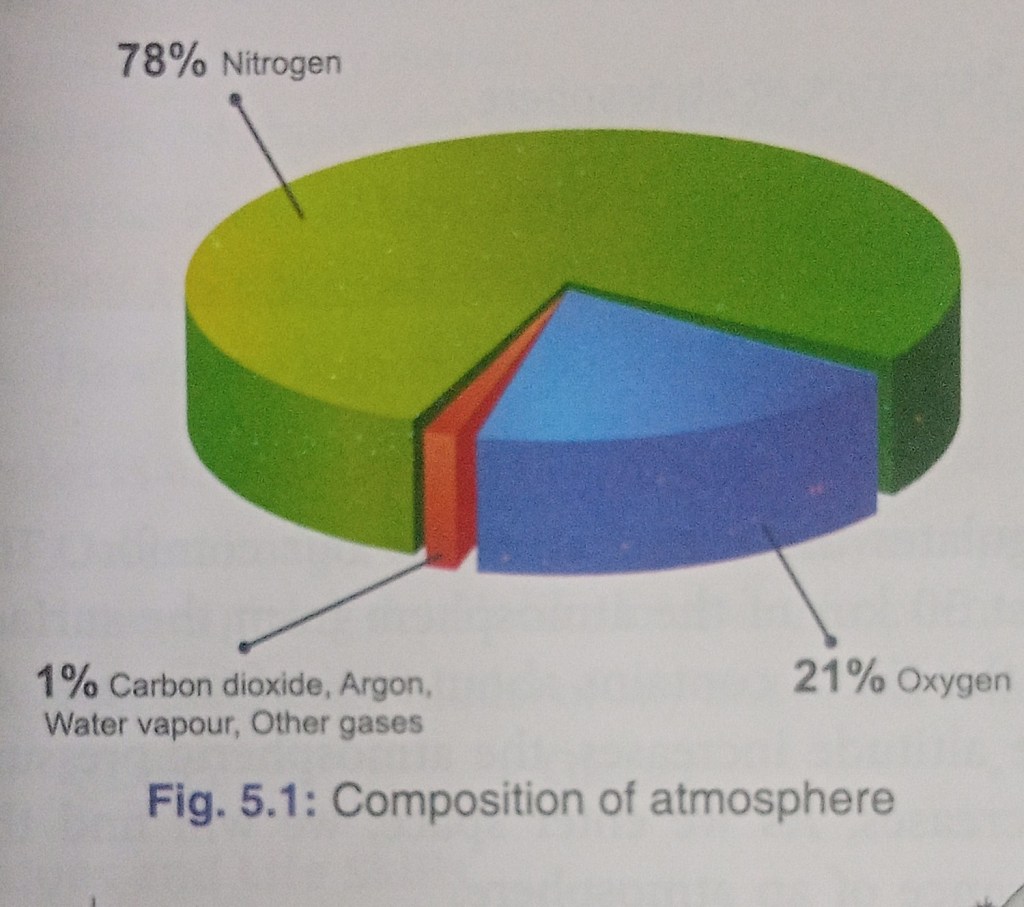
Answer: The atmosphere is composed of 78% nitrogen, 21% oxygen, and 1% other gases such as carbon dioxide, argon, and trace gases.
3. What do you understand by the term “atmospheric gases”?
Answer: Atmospheric gases are the mixture of different gases, such as nitrogen, oxygen, carbon dioxide, and trace gases, that make up Earth’s atmosphere.
4. What are the benefits of the ozone layer?
Answer: The ozone layer absorbs harmful ultraviolet (UV) radiation from the sun, protecting living organisms from its damaging effects.
5. Which gases are found in the exosphere?
Answer: Hydrogen and helium are the primary gases found in the exosphere.
F. Short Answer Type Questions:
1. Discuss the thermosphere.
Answer: The thermosphere is the fourth layer of the atmosphere, extending from about 80 km to 700 km above Earth’s surface. It has high temperatures because it absorbs solar radiation, and it is where auroras occur and satellites orbit.
2. Write a note on the stratosphere.
Answer: The stratosphere is the second layer of the atmosphere, lying above the troposphere and extending up to 50 km. It contains the ozone layer, which absorbs UV radiation, and is characterized by stable weather conditions and increasing temperatures with altitude.
3. In which layer do meteors burn up? Why do they burn?
Answer: Meteors burn up in the mesosphere because of friction with the atmospheric particles. This friction generates heat, causing the meteors to incinerate.
4. Write a note on the exosphere.
Answer: The exosphere is the outermost layer of the atmosphere, extending from about 700 km to 10,000 km. It merges with outer space and contains very low-density gases like hydrogen and helium.
5. Which layer allows long-distance wireless communication, and how?
Answer: The thermosphere allows long-distance wireless communication because it contains the ionosphere, a region filled with charged particles that reflect radio waves back to Earth.
—
G. Long Answer Type Questions:
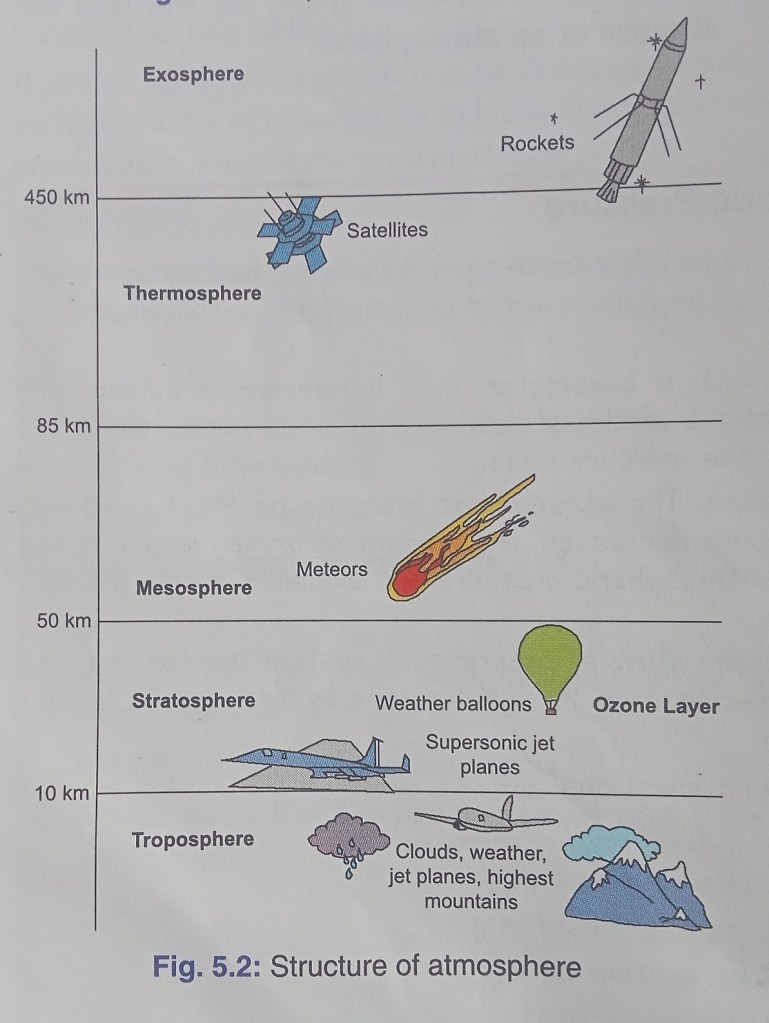
1. With the help of a diagram, explain the structure of our atmosphere.
Answer: The atmosphere consists of five layers:
Troposphere (0–12 km): Weather occurs here.
Stratosphere (12–50 km): Contains the ozone layer.
Mesosphere (50–80 km): Meteors burn up here.
Thermosphere (80–700 km): Satellites orbit; auroras occur.
Exosphere (700–10,000 km): Transition to outer space.
2. Write a note on the composition of atmospheric gases.
The Earth’s atmosphere consists mainly of:
Nitrogen (78%): Maintains balance by diluting oxygen and reducing combustion.
Oxygen (21%): Supports respiration and combustion.
Other Gases (1%): Includes argon, carbon dioxide (important for photosynthesis and heat regulation), water vapor, and trace gases.
3. Differentiate between the mesosphere and the thermosphere.
Mesosphere:
Third layer of the atmosphere (50–80 km).
Coldest layer; temperature decreases with altitude.
Meteors burn up here.
Thermosphere:
Fourth layer (80–700 km).
Temperature increases with altitude due to solar radiation absorption.
Contains the ionosphere; facilitates radio communication.
Major Landforms, chapter- 4,Class -7,Subject- Social Science
—
A. Choose the correct answer
1. What are large gorges called?
→ (c) Canyons
2. What are loops of rivers called?
→ (b) Meanders
3. Which one of the following agents forms a cave?
→ (a) Sea wave
4. Accumulation of sediments by glacier is called
→ (c) Moraine
5. Glaciers are slow-moving ______.
→ (b) Mountains
—
B. Fill in the blanks
1. Breaking up of rocks on the Earth’s surface is called weathering.
2. When sea waves cut through a cliff, a sea cave is formed.
3. Delta is the triangular landforms created at the mouths of the river.
4. Glacial lakes are called tarn.
5. In deserts hills of sand are called sand dunes.
—
C. Write T for True and F for False statements
1. The source of a river is called its mouth. → F
2. A lagoon is a landform created by a sea cliff being worn down. → F
3. Rivers of ice are called waterfalls. → F
4. Mushroom rocks have narrow bases and broad tops. → T
5. The valley of a glacier is U-shaped. → T
D. Match the columns
1. Loess – (e) Sand particles deposited by wind
2. Cirque – (d) Hollow in a mountain
3. Sea waves – (a) Sea arch
4. Meanders – (c) River loops
5. Weathering – (b) Decomposition of rocks
E. Very Short Answer Type Questions (20–30 words)
1. What is weathering?
Answer: Weathering is the breaking down of rocks into smaller particles by natural forces like temperature changes, water, wind, and chemical processes.
2. Name the three stages of the course of a river.
Answer: The three stages of the course of a river are:
Upper course
Middle course
Lower course
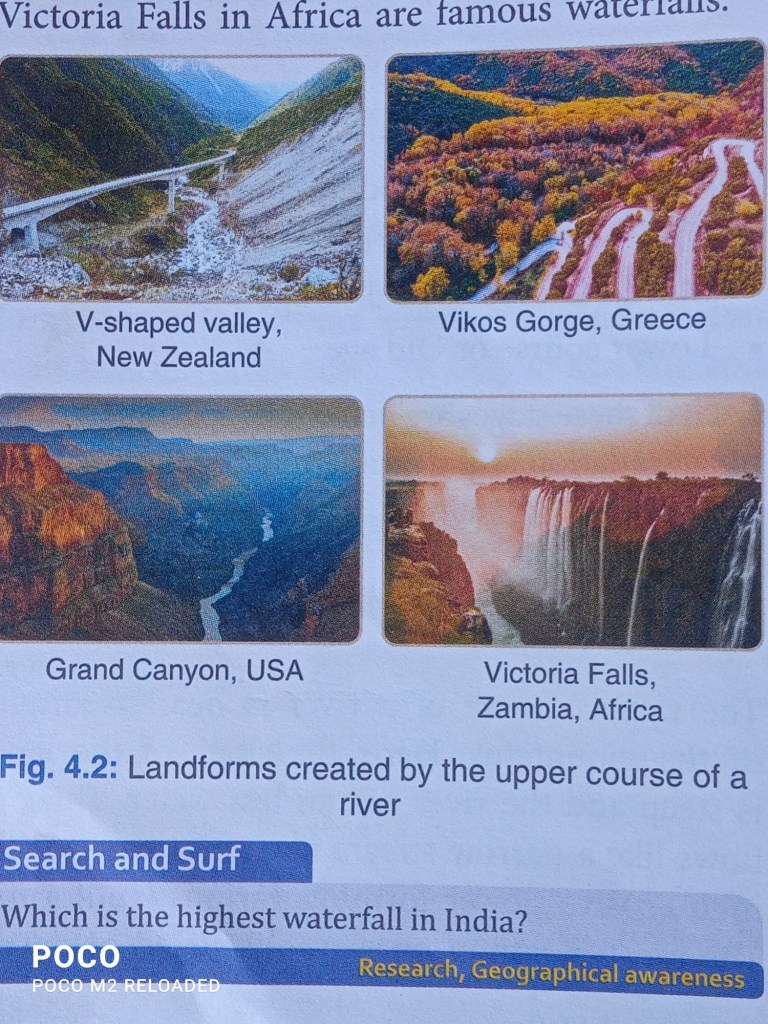
3. What is a V-shaped valley?
Answer:A V-shaped valley is a deep valley with steep sides formed by the erosional activity of a river in its upper course.
4. What are waterfalls?
Answer: Waterfalls are steep drops of water where a river flows over hard rocks, creating a vertical fall.
5. What is an oasis?
Answer: An oasis is a fertile area in a desert with water, often supplied by underground springs.
F. Short Answer Type Questions (50–60 words)
1. Differentiate between degradation and aggradation.
Answer: Degradation: The process of lowering landforms by erosion.
Aggradation: The process of raising the land surface by the deposition of materials like silt, sand, or gravel.
2. Explain meanders and oxbow lakes.
Answer: Meanders: Curved or looped patterns of a river in the middle course.
Oxbow lakes: U-shaped lakes formed when meanders are cut off from the river due to deposition.
3. Discuss the formation of a delta.
Answer: A delta is formed when a river deposits sediments at its mouth as it meets a body of standing water like a sea, slowing its flow and creating a triangular-shaped landform.
4. What is an estuary?
Answer: An estuary is the wide mouth of a river where it meets the sea, and tidal waters mix with river water.
5. Describe how lagoons are formed.
Answer: Lagoons are shallow bodies of water separated from the sea by sandbars, spits, or coral reefs, formed by the deposition of sediments along coastal areas.
G. Long Answer Type Questions (80–100 words)
1. Differentiate between weathering and erosion.
Answer: Weathering: The breakdown of rocks into smaller particles by physical, chemical, or biological processes without movement.
Erosion: The removal and transportation of weathered materials by agents like water, wind, or ice.
2. Discuss various erosional and depositional features formed by a river in its upper and lower course.
Answer: Upper Course: Erosional features like V-shaped valleys, waterfalls, and rapids.
Lower Course: Depositional features like floodplains, deltas, and levees.
3. Describe the landforms created by sea waves.
Answer: Erosional: Sea cliffs, arches, stacks, and caves.
Depositional: Beaches, sandbars, and spits.
4. Illustrate the landforms formed by moving ice.
Answer: Moving ice (glaciers) forms landforms like cirques, moraines, U-shaped valleys, and drumlins through erosion and deposition.
5. How are mushroom rocks formed?
Answer: Mushroom rocks are formed in deserts when wind erosion erodes the lower parts of rocks more than the upper parts, creating a mushroom-like shape.
H. Higher-Order Thinking Skills
1. How does a river play a major role in shaping the Earth’s surface?
Answer: A river shapes the Earth’s surface through erosion, transportation, and deposition, creating various landforms like valleys, deltas, floodplains, and gorges. It also supports ecosystems and human activities.
2. Why is the river most active in its upper course?
Answer: A river is most active in its upper course due to steep gradients that increase velocity, causing intense erosion and the formation of landforms like waterfalls and V-shaped valleys.
The Mauryan Empire,Chapter -8,Class-VI,Subject-Social Science
A. Choose the correct answer
1. The rise of Chandragupta Maurya is described in:
(c) Mudrarakshasa
2. Ashoka was the son of:
(b) Bindusara
3. The founder of the Mauryan Empire was:
(d) Chandragupta
4. Ashokan inscriptions near Peshawar are written in:
(d) Kharosthi
5. Among the following, which kings were referred to as “the Great”?
(b) Ashoka and Alexander
B. Write T for True and F for False statements
1. The last Mauryan ruler was Brihadratha.
True
2. Ashoka defeated Seleucus Nicator.
False
3. Chandragupta Maurya overthrew the Sungas to set up the Mauryan Empire.
False (He defeated the Nandas.)
4. Tax on produce was fixed between one-fourth to one-sixth of the total produce.
True
5. Indika was written by Megasthenes.
True
C. Fill in the blanks
1. Chanakya is also known as Kautilya and Vishnugupta.
2. Megasthenes was sent as an envoy by Seleucus Nicator to Chandragupta’s court.
3. The Kalinga kingdom was brought under Mauryan rule by Ashoka.
4. Chandragupta Maurya defeated the Nandas to set up the Mauryan Empire.
5. Most of the Ashokan edicts were written in the Kharosthi script.
D. Very Short Answer Type Questions (20–30 words)
1. Who was the founder of the Mauryan Empire? Where did he set up his capital?
Answer: Chandragupta Maurya founded the Mauryan Empire and set up his capital at Pataliputra (modern-day Patna).
2. Who was Chanakya or Kautilya?
Answer: Chanakya, also known as Kautilya or Vishnugupta, was a teacher, economist, and advisor to Chandragupta Maurya. He authored the Arthashastra.
3. Who is considered as the greatest of the Mauryan kings? Write a few lines about him.
Answer: Ashoka is considered the greatest Mauryan king. He adopted Buddhism after the Kalinga War, promoted non-violence, and spread Buddhist teachings across Asia through edicts and inscriptions.
4. How did the Kalinga battle influence Ashoka?
Answer: The Kalinga battle caused immense suffering, leading Ashoka to renounce violence and embrace Buddhism. He adopted a policy of Dhamma and worked for the welfare of his people.
5. What is dhamma?
Answer: Dhamma refers to Ashoka’s principles of moral and ethical living, emphasizing non-violence, kindness, tolerance, and respect for all life forms.
E. Short Answer Type Questions (50–60 words)
1. Discuss various sources available for studying the Mauryan period.
Answer: The Mauryan period is studied through literary sources like Arthashastra and Indika, inscriptions like Ashokan edicts, archaeological remains, coins, and accounts of foreign travelers like Megasthenes.
2. Write a note on Chandragupta Maurya.
Answer: Chandragupta Maurya was the founder of the Mauryan Empire. With the guidance of Chanakya, he defeated the Nandas and established his capital at Pataliputra. He later embraced Jainism.
3. Write a few lines about Bindusara.
Answer: Bindusara, the son of Chandragupta Maurya, was the second Mauryan ruler. Known as Amitraghata (Slayer of Enemies), he expanded the empire further south and maintained peace.
4. Write a few lines on Ashokan edicts.
Answer: Ashokan edicts are inscriptions engraved on rocks and pillars. They propagate his policies of Dhamma, non-violence, and welfare. These inscriptions are found in Brahmi, Kharosthi, and Greek scripts.
5. Examine the taxation system of the Mauryas.
Answer: The Mauryan taxation system was well-organized. Farmers paid a tax ranging from one-fourth to one-sixth of their produce. Taxes were also levied on trade, crafts, and land revenue. The income was used for administration and welfare.
F. Long Answer Type Questions (80–100 words)
1. Write some of the main principles of Ashoka’s dhamma.
Answer: Ashoka’s dhamma emphasized non-violence, compassion, and tolerance. It advocated respect for all religions, kindness towards animals, and proper treatment of servants. Ashoka encouraged truthfulness, generosity, and good behavior. His dhamma sought to promote harmony and unity among people. It focused on moral and ethical living instead of rituals and sacrifices, aiming for societal welfare and peace.
2. What were the methods used by Emperor Ashoka to spread the message of dhamma?
Answer: Ashoka spread his dhamma through inscriptions on rocks and pillars written in scripts like Brahmi and Kharosthi. He appointed dhamma mahamatras (officials) to teach these principles. He sent emissaries to neighboring kingdoms, including Sri Lanka and Southeast Asia, to promote dhamma. Additionally, he conducted public welfare works like building roads, hospitals, and rest houses.
3. Discuss the use of different scripts in different parts of the empire to spread Ashoka’s message.
Answer: Ashoka used Brahmi script in most parts of India and Kharosthi in the northwest, as these were the regional scripts of their respective areas. For areas with Greek and Aramaic influence, such as Afghanistan, Ashoka inscribed his messages in these languages to make them understandable. This ensured the widespread reach of his dhamma.
4. Describe the administration of the Mauryan art and architecture in detail.
Answer: The Mauryan administration was centralized and efficient, with a strong bureaucracy. Art and architecture flourished under their reign, evident in structures like the Ashokan pillars, stupas, and rock-cut caves. The pillars were polished, carved with inscriptions, and topped with animal capitals like the Lion Capital at Sarnath. The stupas, like Sanchi, served as important religious monuments.
G. Differentiate between the following
1. Arthashastra and Indika
Arthashastra: Written by Chanakya, it is a treatise on statecraft, economics, and governance.
Indika: Written by Megasthenes, it is an account of Mauryan society, culture, and administration.
2. Purohita and Senapati
Purohita: The royal priest responsible for religious ceremonies and advising the king on spiritual matters.
Senapati: The military commander-in-chief responsible for the empire’s defense and leading the army.
H. Higher-Order Thinking Skills
1. Why was Ashoka a changed man after the Kalinga War?
The Kalinga War caused widespread destruction and immense suffering, resulting in over 100,000 deaths. Witnessing this brutality deeply affected Ashoka. He renounced violence, embraced Buddhism, and adopted the policy of dhamma, focusing on peace, non-violence, and welfare.
The Gifts of Wali Dad, Lesson – Seventeen, Subject – English, Class – VI.
B Understand
B1. Here are some statements on the different characters of the play. Give evidence from the Play to support this statements. Use your own words.
1. Wali Dad was a practical man and did not believe in wasting money.
True. Wali Dad lived a simple life and was content with what he had. When he realized he had extra money, he chose to give it away rather than spend it on luxuries for himself.
2. Evidence of Wali Dad’s simple life is that he did not spend more than he needed to and served the purpose of his life.
True. Wali Dad saved his extra money, lived frugally, and used his wealth to bring happiness to others instead of indulging in unnecessary expenses.
3. The bracelet Wali Dad asked the merchant to give to the queen was a very expensive gift.
True. The bracelet was exchanged for all the money Wali Dad had saved, showing its significant value.
4. The merchant was an honest man.
True. The merchant carried out Wali Dad’s requests faithfully and delivered the gifts to the intended recipients without any deceit.
5. The queen was pleased with the gift of Wali Dad and wanted to reward him.
True. The queen appreciated the gift and, in turn, sent an even grander gift back to Wali Dad.
6. By the time the king and the queen received the second set of gifts, they were suspicious of each other.
True. The repeated exchange of gifts led to confusion and suspicion, as both the king and queen started wondering about the true sender’s intentions.
7. Both the king and the queen wanted to establish that they were richer and more generous than each other.
True. Their desire to outdo each other in generosity contributed to the escalating exchange of extravagant gifts.
8.Wali Dad believed that people should get what they deserved.
Evidence: Wali Dad believed that everyone should receive what they truly deserved.
9. Wali Dad had a big heart and was humble.
Evidence: Wali Dad was kind-hearted and humble, always thinking of others before himself.
C1: Think
1. Why do you think the peris said that everything was the way it should be?
Answer: The peris might have said this because they believed Wali Dad’s selfless actions and humble nature created a balance in the world. His generosity and kindness made everything fall into place as it was intended.
2. Why did the gifts sent by the queen of Khaistan and the king of Nekabad get more elaborate?
Answer: The gifts became more elaborate because both the queen and the king tried to outdo each other, showing their gratitude and trying to match the increasing grandeur of the previous gifts.
3. Are people in real life so unselfish and generous like Wali Dad? Why?
Answer: While some people are genuinely unselfish and generous like Wali Dad, such qualities are rare in today’s world. People often act out of self-interest rather than pure kindness.
—
D1: Vocabulary (Circle the Odd One Out)
1. warm – hot -a red – hot – sleek – blistering
2. famous – ancient – popular – well liked – celebrated
3. hard – tough – thorough – texing – formidable
4. strong – powerful – robust – recent – potent
5. exotic – great – tremendous – elephantine – gigantic
6.sad – pitiful – pious – glum – woeful
7. funny – comical – amusing – skinny – hilarious
8. tiny – silly – small – little – miniscule
D2: Words Ending in “-ery” with the help of the given clues.
1. Kitchen recipes etc — Cookery
2. fooling people — Trickery
3. needle work designs — Embroidery
4. ornaments — Jewellery
5. clay on a wheel — Pottery
6. ridiculous acts — Mockery
7. Mechanical system in a factory — Machinery
8. Act of stealing — Theft
9. Finding out — Discovery
10. Biscuits cakes in a shop — Pastries
Uncle Tom – II, Chapter – 28, Class – 4, Subject – English
1. Answer the following questions:
(a) What interesting things was Uncle Tom making?
Answer: Uncle Tom was making little baskets out of cherry-stones, drawing funny faces on nut-shells, and making whistles out of small pieces of stick.
(b) What surprised Eva very much?
Answer: Eva was surprised when Uncle Tom said he did not know where he was going after being sold at the slave market.
(c) Why did she say she would ask her father to buy Uncle Tom?
Answer: Eva said she would ask her father to buy Uncle Tom because she wanted him to have good times with them.
(d) How did the accident happen to Eva?
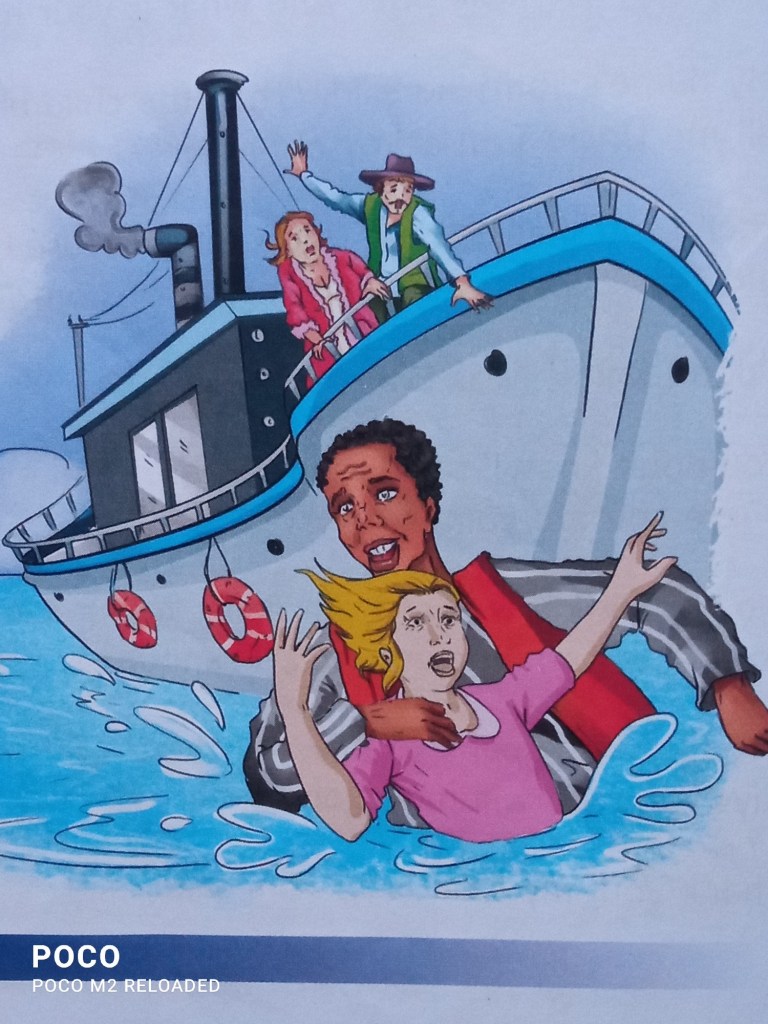
Answer: Eva accidentally slipped over the side of the boat and fell into the water.
(e) How was she rescued?
Answer: Uncle Tom, who was a good swimmer, quickly jumped into the water and rescued Eva.
(f) How did Eva’s father show his thanks to Uncle Tom?
Answer: Eva’s father showed his thanks by buying Uncle Tom from the slave merchant and making him his most trusted servant and coachman.
2. Word Practice
(a) Use each of the following words and phrases in sentences of your own:
1. on board – The passengers were safely on board before the ship departed.
2. dive and drowned – The boy tried to dive into the river, but he nearly drowned because he couldn’t swim.
3. coachman – The coachman waited patiently for his passengers to return.
4. in danger of – The hiker was in danger of falling off the cliff.
5. with a jerk – He pulled the rope with a jerk to secure the tent.
(b) Rewrite the sentences in the present tense:
Eva sat,Tom spoke, Eva stood, Eva said. The verbs in these sentences are all in the past tense. Put each of them into the present tense, as though the actions are going on at this moment.
1. Eva sits.
2. Tom speaks.
3. Eva stands.
4. Eva says.
(c) Write these sentences in full. What do we call the sign which tells us that letters have been left out?
Answer: The sign is called an apostrophe (‘).
1. I do not know, I’m sure.
2. You’ll read the story.
(d) Fill in the blanks with words from the story:
1. I slipped into the tank. When I came out, my clothes were dripped with water.
2. I chased the thief and caught him. I had him in my strong grasp.
3. My servant looks after my house when I am away. I leave the house to him because he is splendid.
4. The fisherman in the boat hauled up their nets which were full of fish.
The Necklace, Lesson — 14, Subject — English, Class — VI
Choose the correct answer:
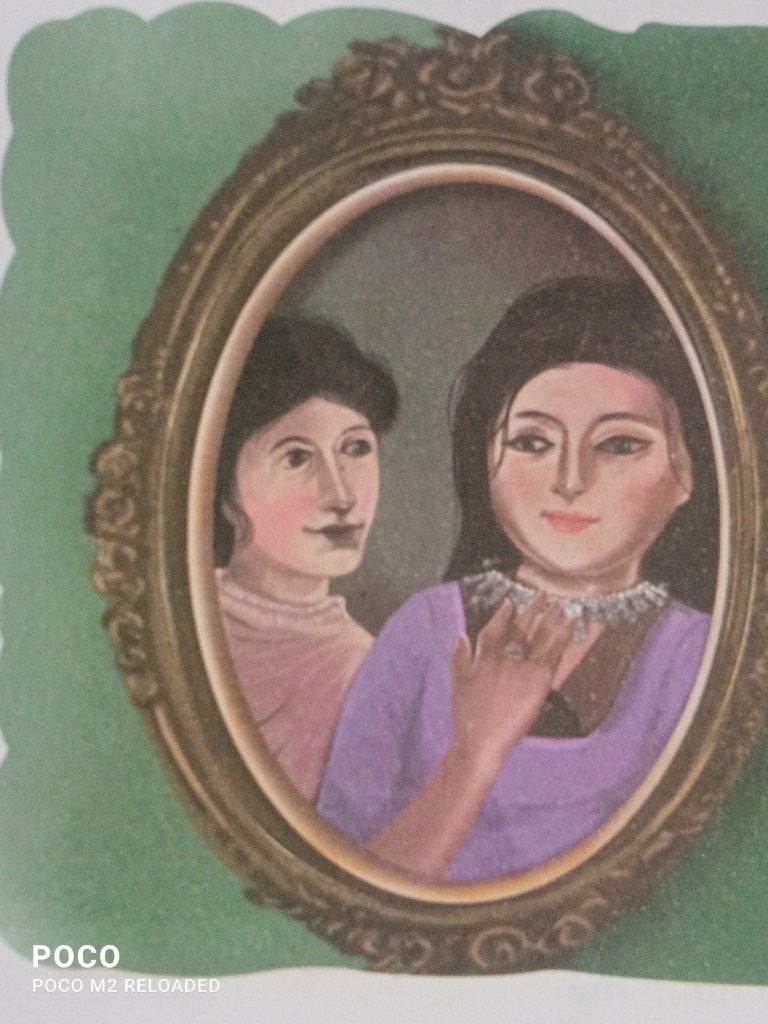
1. Why does the author say the little girl was meant for the best things in life?
Correct Answer: b) She was one of the most beautiful girls, and she had a natural grace attributed to rich people.
2. How did the girl’s dream of living a luxurious life break after marrying Loisel?
Correct Answer: a) Her husband was not very rich and could not spend too much money on her.
3. What kind of a man was Monsieur Loisel?
Correct Answer: b) He loved his wife and went to great lengths to keep her happy.
4. What kind of a woman was Madame Loisel?
Correct Answer: b) She was never satisfied and envied other people.
5. Why did Madame Loisel visit Madame Forestier?
Correct Answer: c) Madame Loisel wanted to borrow some jewellery from Madame Forestier.
Answer these questions:
1. Did Madame Loisel’s life become easier as she grew up from a small girl to a young woman? Why not?
Answer: No, Madame Loisel’s life did not become easier. She was dissatisfied with her modest lifestyle and constantly longed for luxury and wealth, which led to her unhappiness and struggles.
2. What gives the indication that Monsieur Loisel cared for his wife’s happiness?
Answer: Monsieur Loisel’s care for his wife’s happiness is shown by his willingness to sacrifice his comfort and savings to buy her a dress and support her desires, even when it caused financial strain on him.
3. Why was Madame Loisel always unhappy with her life?
Answer: Madame Loisel was unhappy because she was dissatisfied with her modest life. She longed for wealth, luxury, and a glamorous lifestyle, believing she was born for a life of elegance and riches.
4. Why could Monsieur and Madame Loisel have been sent to prison?
Answer: Monsieur and Madame Loisel could have been sent to prison if they had failed to repay the enormous debt they incurred to replace the lost necklace. They borrowed money from various lenders, and failure to repay debt during that time was a punishable offense.
5. What did Monsieur and Madame Loisel do when they could not find the necklace?
Answer: When they couldn’t find the necklace, Monsieur and Madame Loisel decided to replace it with an identical one. They borrowed a large sum of money and spent their savings to buy a replacement necklace.
6. How did Monsieur and Madame Loisel afford to buy a new necklace?
Answer: They borrowed money from multiple lenders, mortgaged their belongings, and used their savings. Monsieur Loisel also took on extra jobs, and Madame Loisel worked hard doing household chores for others to repay the debt.
7. How did Monsieur and Madame Loisel pay back thirty-six thousand francs?
Answer: They worked tirelessly for ten years to repay the debt. Monsieur Loisel worked additional jobs in the evenings, and Madame Loisel took up heavy household work, cleaning, and cooking for others.
8. What shock did Madame Loisel receive in the end when she met Madame Forestier?
Answer: Madame Loisel was shocked to learn from Madame Forestier that the necklace she had borrowed was fake and made of imitation diamonds. The replacement necklace, which cost them thirty-six thousand francs and years of hardship, was unnecessary.
The Four Magicians, Lesson- 11, Subject – English,
A. Reflect
1. Why were the brothers’ unpractical skills useless in the end?
Answer: The brothers’ skills were useless because they lacked wisdom and common sense, which led to their downfall despite their magical abilities.
2. What do you learn from this story?
Answer: The story teaches us that knowledge and wisdom are more important than mere technical skills.
3. If knowledge is important, do you think boycotting education is wise? Why?
Answer: No, boycotting education is not wise because education provides both knowledge and wisdom, helping us make better decisions in life.
4. Who was responsible for the death of the brothers? Why?
Answer: The brothers themselves were responsible because they acted recklessly and didn’t consider the consequences of their actions.
B. Understand
B1 Say whether the following sentences are true or false. Rewrite the false once correctly
1. The brothers decided to reunite at a fixed time and place after their studies. – True
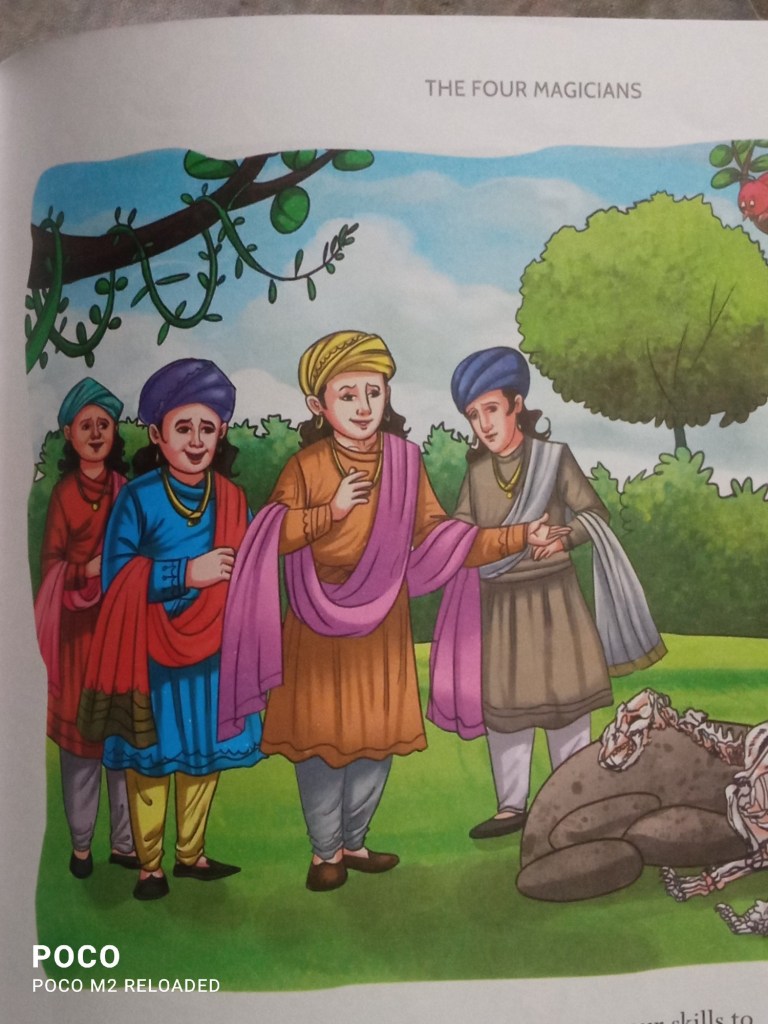
2. The eldest brother decided to select the bones of an animal. – False
Correction: The eldest brother decided to assemble the bones of an animal.
3. The brothers’ skills proved to be useful. – False
Correction: The brothers’ skills proved to be useless because they lacked wisdom.
4. The moral of the story is that knowledge is more important than wisdom. – False
Correction: The moral of the story is that wisdom is more important than mere technical knowledge.
5. The brothers new that the bones that were lying scattered belong to a lion.
Correction: The brothers did not know that the bones that were lying scattered belong to a lion.
6.Vetaal could not go back to his tree because Vikramaditya gave the incorrect answer.
Correction: Vetaal could go back to his tree because Vikramaditya gave the correct answer.
B2. Complete the sentences in your own words
1. The children had to go to live with their maternal grandfather because…
their parents had passed away.
2. To deal with the problem at the ruined house, they decided…
to learn magical skills to improve their lives.
3. The first brother returned with the knowledge of…
assembling bones.
4. The second brother learnt how ……. to at skin and hair of the animal after the flesh has been added to the bones.
5. The third brother could now………
Create the limbs of the animal.
6. The fourth brother was skilled in………
breathe life into animals.
C. Think
1. Which of the four brothers had learnt the most useful type of magic? Why was it the most useful?
Answer: None of the brothers’ magic was truly useful because they all lacked wisdom to apply their skills responsibly.
2. If you were in the brothers’ place, what would you have done? How would you use your magical powers?
Answer: I would have used my magical powers wisely, thinking about the consequences of my actions.
3. If you could have one magic power, what would it be? Why?
Answer: I would choose the power to heal people because it would allow me to help others in need.
4. Write an alternative ending to the story.
Answer: The brothers realized the danger of reviving a wild animal and instead used their skills to help their village prosper.
Language in Use
Vocabulary – Replace the words in red with the given words and rewrite the sentences
tiring died survive lessen gained land sad without
1. Both krishnaswami and his wife passed away while the children were still young.
Ans: Both krishnaswami and his wife died while the children were still young.
2. The boys we are left penniless.
Ans: The boys we are left without money.
3. This kind treatment started to wane.
Ans: This kind treatment started to lessen.
4. The brothers reached their grandfather’s house after a hard journey.
Ans: The brothers reached their grandfather’s house after a tiring journey.
5. The brothers sat together thinking about how to end this pathetic situation.
Ans: The brothers sat together thinking about how to end this sad situation.
6. They decided that it would be best if they acquired magic powers.
Ans: They decided that it would be best if they gained magic powers.
7. We should master some skills which will help us to earn a living.
Ans: We should master some skills which will help us to survive.
D2. Match the following words from the story with their opposites.
Answer: Discover — hide
Scattered — gathered
Present — past
Planned — unplanned
Clothed — undressed
added — removed
mutter — shout
display — conceal
—
 Site 𝓝𝓲𝓻𝓾'𝓼𝓫𝓵𝓸𝓰