Mr Mocking-bird and His Prize Song Lesson -1, English,Class-6, By Royal Dixon


B1. Answer these questions:

1. Why did woodchuckย  first think that the baby squirrel wanted his food?
Answer:The woodchuck thought that the baby squirrel wanted his food because he arrived early chattering quickly and excitedly.

2. Was Mr Mockingbird truly making fun of the baby squirrel?
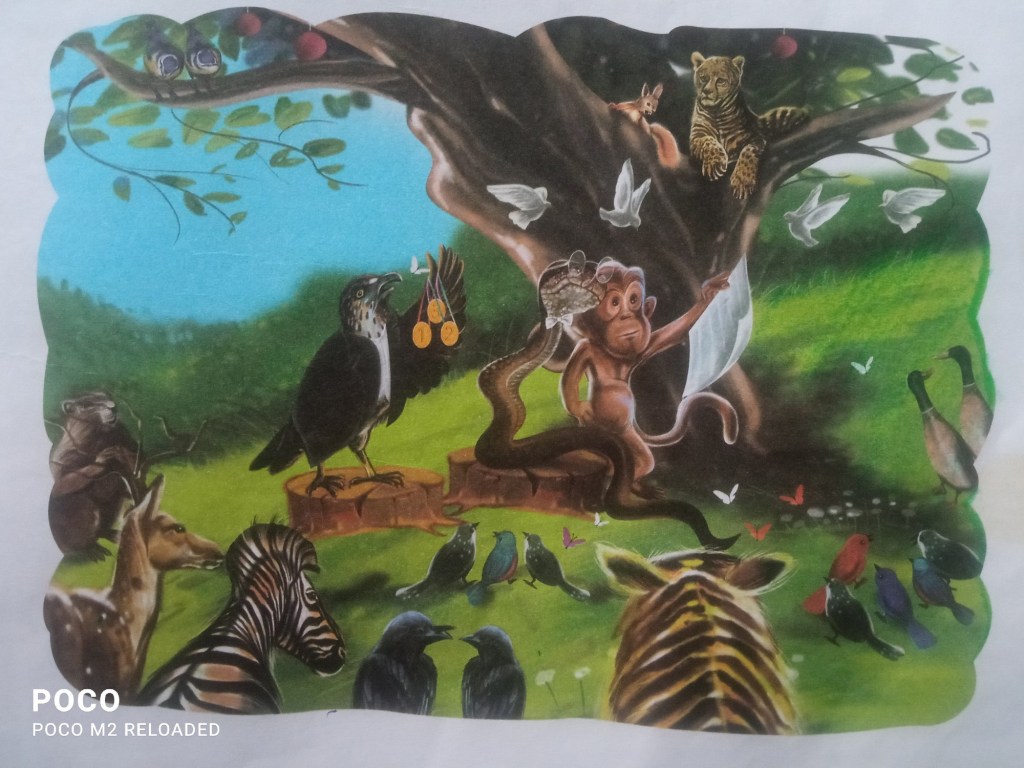
Answer:Mr. Mockingbird was not truly making fun of the baby squirrel. He was simply repeating the sounds he heard, which is his natural way of singing. The baby squirrel misunderstood and thought he was being mocked.

3. What was the consequence of Mr Mockingbirdโ€™s ability to repeat every song he heard?
Answer:The consequence was that he could remember and repeat every birdโ€™s song, which eventually helped resolve the conflict among birds about which song was the best. His ability made him the best singer in the world.


C1. Think carefully and answer in detail:

1. Find out the definitions of the following:
a) conflict โ€“ A serious disagreement or argument, typically a prolonged one.
b) peace โ€“ A state or period in which there is no war or conflict; harmony.

2. Identify different types of conflicts (for example, family conflict).

Personal conflict (within oneself)

Interpersonal conflict (between individuals)

Family conflict

Community conflict

Environmental conflict

Political or international conflict


3. How did the advice of the woodchuck ensure that there was peace between the baby squirrel and Mr Mockingbird?
Answer:The woodchuck advised the baby squirrel to learn more and inquire rather than jump to conclusions. This led the squirrel to understand that the mocking-bird wasnโ€™t mocking him, but simply singing. This understanding brought peace.


5. How did the actions of the mocking-bird help to secure peace?
Answer:By remembering and singing all the birdsโ€™ songs, the mocking-bird reminded them of their individuality and beauty, leading them to stop competing and appreciate each otherโ€™s uniqueness.

D1. Use a physical or online dictionary to find out the meanings of the following words and use them in sentences of your own.

Vocabulary:

1. Ignore โ€“ To deliberately pay no attention to something.
Sentence — She chose to ignore the rude comment and walked away calmly.


2. Redirect โ€“ To change the direction or focus of something.
Sentence — The teacher redirected the conversation to the main topic.


3. Reassure โ€“ To comfort or give confidence to someone.
Sentence — He reassured his friend that everything would be fine.


4. Passive โ€“ Accepting things without active response or resistance.
Sentence — She remained passive during the argument.


5. Aggressive โ€“ Ready or likely to attack or confront.
Sentence — His aggressive tone scared the younger students.


6. Assertive โ€“ Confident and forceful without being aggressive.
Sentence — Being assertive helps in expressing your thoughts clearly.


7. Perspective โ€“ A particular attitude or way of viewing something.
Sentence — Try to see the problem from a different perspective.


8. Compromise โ€“ A mutual agreement where each side gives up something.
Sentence –They reached a compromise to settle the disagreement.


9. Assumption โ€“ A thing that is accepted as true without proof.
Sentence — His assumption about her behavior was wrong.


10. Avoidance โ€“ The act of keeping away from something.
Sentence — Avoidance of difficult tasks leads to stress.


Conflict-related Phrases:

1. Conflict resolution โ€“ Finding a peaceful solution to a disagreement.
Sentence – Good communication is key to conflict resolution.


2. Win-win conflict resolution โ€“ A solution where all parties benefit.
Sentence – They used win-win conflict resolution to divide the project fairly.


3. Be accepting โ€“ To welcome or tolerate different views.
Sentence – We must be accepting of othersโ€™ opinions during a discussion.


4. Setting expectations โ€“ Clearly stating what is hoped for or required.
Sentence – Setting expectations early prevents misunderstandings.


5. Suggest alternatives โ€“ Offer different options or solutions.
Sentence – She suggested alternatives when the original plan failed.


6. Rolling eyes โ€“ A gesture of annoyance or disbelief.
Sentence – He rolled his eyes when asked to clean up again.


7. Looking down โ€“ To think someone is less important or worthy.
Sentence – Itโ€™s not kind to look down on people because of their job.
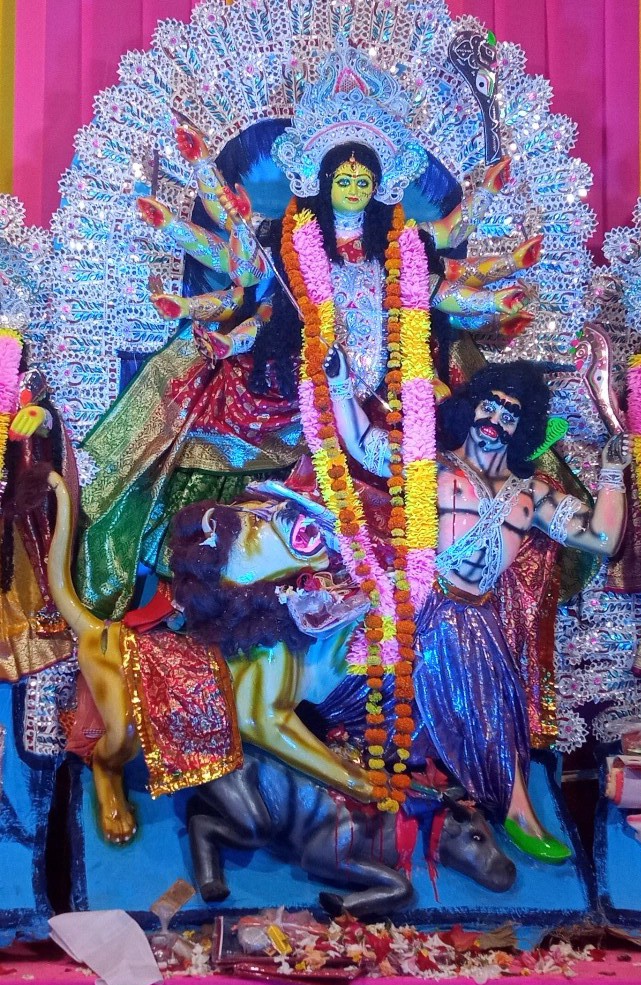
How to celebrate  Durga Puja in Assam

Pandal of Gandhinagar (Kabuganj,Assam)

This is an artist group came from another  village

The Bishnupriya Manipuri community celebrates Durga Puja with a unique blend of Bengali, Assamese, and Manipuri cultural influences, deeply rooted in their Vaishnavite traditions and devotional lifestyle. Hereโ€™s an overview of how they typically observe Durga Puja:


1. Pre-Puja Preparations

  • Cleaning and decorating homes โ€“ like in many Indian communities, the festival begins with preparing the household.
  • Setting up pandals (temporary shrines) โ€“ in community areas or temples.
  • Idol installation โ€“ In some areas, traditional clay idols of Maa Durga are installed, though in smaller towns or villages, symbolic worship may be more common.

2. Rituals and Worship

  • Bishnupriya Manipuris follow Vaishnavism, so Durga Puja is sometimes observed with a devotional twistโ€”offering prayers not only to Goddess Durga but also integrating rituals for Lord Krishna or Vishnu.
  • Chanting and bhajans โ€“ Devotional songs are sung in the Bishnupriya Manipuri language, often blending Vaishnavite themes.
  • Offerings (Bhog) โ€“ Special vegetarian dishes, fruits, sweets (like kheer, luchi, halwa), and sometimes traditional Manipuri dishes are offered.
  • Aarti โ€“ With conch shells (shankha) and incense, especially in the evening.

3. Cultural Programs

  • Dance performances โ€“ Classical Raas Leela or Manipuri dance might be performed during the evenings.
  • Drama and natak โ€“ Local clubs or youth groups may perform mythological stories.
  • Community feasts โ€“ The community gathers for meals, especially on Maha Ashtami and Navami.

4. Immersion or Conclusion

  • On Dashami (the last day), if there’s an idol, the immersion (Visarjan) takes place in a local water body, accompanied by music and chants.
  • Some communities end with Sindoor Khela (sindoor play among married women), though this is more prominent in Bengali celebrations.

Unique Aspects in Bishnupriya Manipuri Style:

  • Language and songs used are in the Bishnupriya Manipuri dialect.
  • Fusion of Vaishnavite rituals with Durga Puja traditions.
  • More devotional simplicity in rural areas compared to the grandeur seen in urban Bengali communities.

Would you like a sample itinerary or celebration plan if you’re organizing a Bishnupriya Manipuri-style Durga Puja? I can help draft one!

Ten lines about my parents

Today I’m very happy to write about my parents,

This is my love and respect to my parents,though they are passed away,but they alive in my heart forever,lov you maa and papa.

1. My parents are my greatest source of inspiration and support.


2. They work hard to provide for our family and always prioritize our happiness.


3. My father is kind, disciplined, and a great role model.


4. My mother is caring, loving, and always ready to help others.


5. They teach me the importance of honesty and respect.


6. My parents encourage me to follow my dreams and never give up.


7. They always listen to my problems and give the best advice.


8. Our family enjoys spending time together and creating beautiful memories.


9. They have taught me the value of education and hard work.


10. I am truly grateful for their unconditional love and support.


Into the Future,Lesson – 7,

Class- V , Subject- English

B 1. Complete the following sentences in your own words .

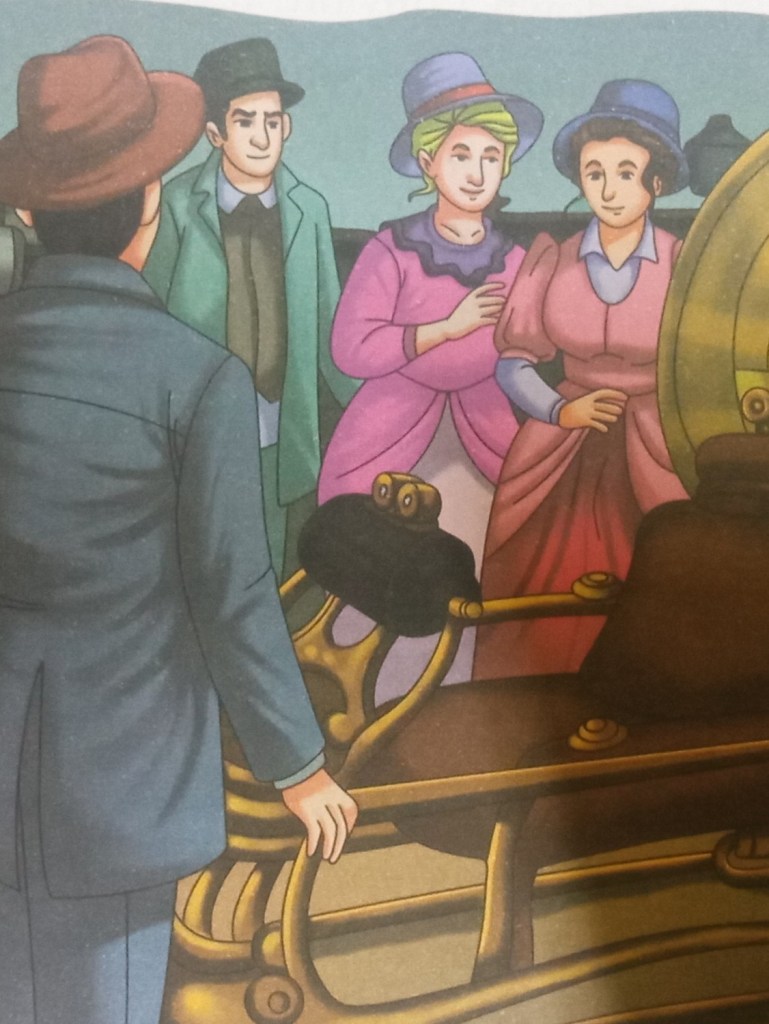
1. The machine that the narrator showed his friends was different from the model he had shown them earlier as it was twenty times larger and fully functional.


2. The chair was special as it allowed the traveler to sit comfortably while using the time machine to move through time.


3. The narrator invited his friendsย  to test the chair and show them the fully built time machine and explain how it worked.


4. When the narrator sat in the chair for the first test flight, the time was nineteen minutes past four.


5. The first flight took him several hours in the future, but to him, the time felt much shorter.


6. By mentioning the blinking lights, the narrator wants to say that time was passing rapidly, with days and nights flashing by in quick succession as he traveled into the future.


B2: Answer these questions

1. Where did the narrator want to travel to? Why?

Answer: The narrator wanted to travel to the future. He was most interested in the unknown and wanted to see what would happen next in time.


2. What instructions did the narrator give his maid?

Answer: The narrator instructed his maid to cook the best dinner she could make for his friends next week and also handed her a note to give them when they arrived.


3. How did the narrator start the machine? Was it difficult to operate? Give reasons for your answer.

Answer: The narrator started the machine by pulling a lever. It was not very difficult to operate because he only had to push the lever up and then pull it back. However, once he started traveling through time, he found the experience enormous and initially frightening.


4. What made the narrator think that his machine was a failure? Was he right? Give reasons for your answer.

Answer: The narrator initially thought the machine was a failure because he felt dizzy and confused when he started the journey. He also saw strange visual effects, like the changing light, and feared something had gone wrong. However, he was wrong because the machine was actually working, and he was successfully traveling through time.


5. Though the narrator could see the maid working, why could she not see him?

Answer: The maid could not see him because he was moving forward in time at an extremely fast rate.


6. What does the windows darkening and brightening signify?

Answer: The darkening and brightening of the windows signify the passing of day and night at an accelerated speed. Since the narrator was moving rapidly through time, he could see days and nights flashing by in quick succession.


7. Why did he pull hard at the lever? What happened as a result of this?

Answer: He pulled hard at the lever because he was frightened by the rapid movement and strange sensations. As a result, the machine slowed down, and he found himself in a completely different time period, far into the future.


8. Why does the narrator make this remark: “A fine welcome… a man travels over 800,000 years for a visit, and this is the greeting he gets”?

Ans: The narrator makes this remark because, after traveling an immense distance into the future, he expected to be welcomed or greeted with curiosity. Instead, he likely faced ill feeling , making him feel unappreciated in spite of his incredible journey.

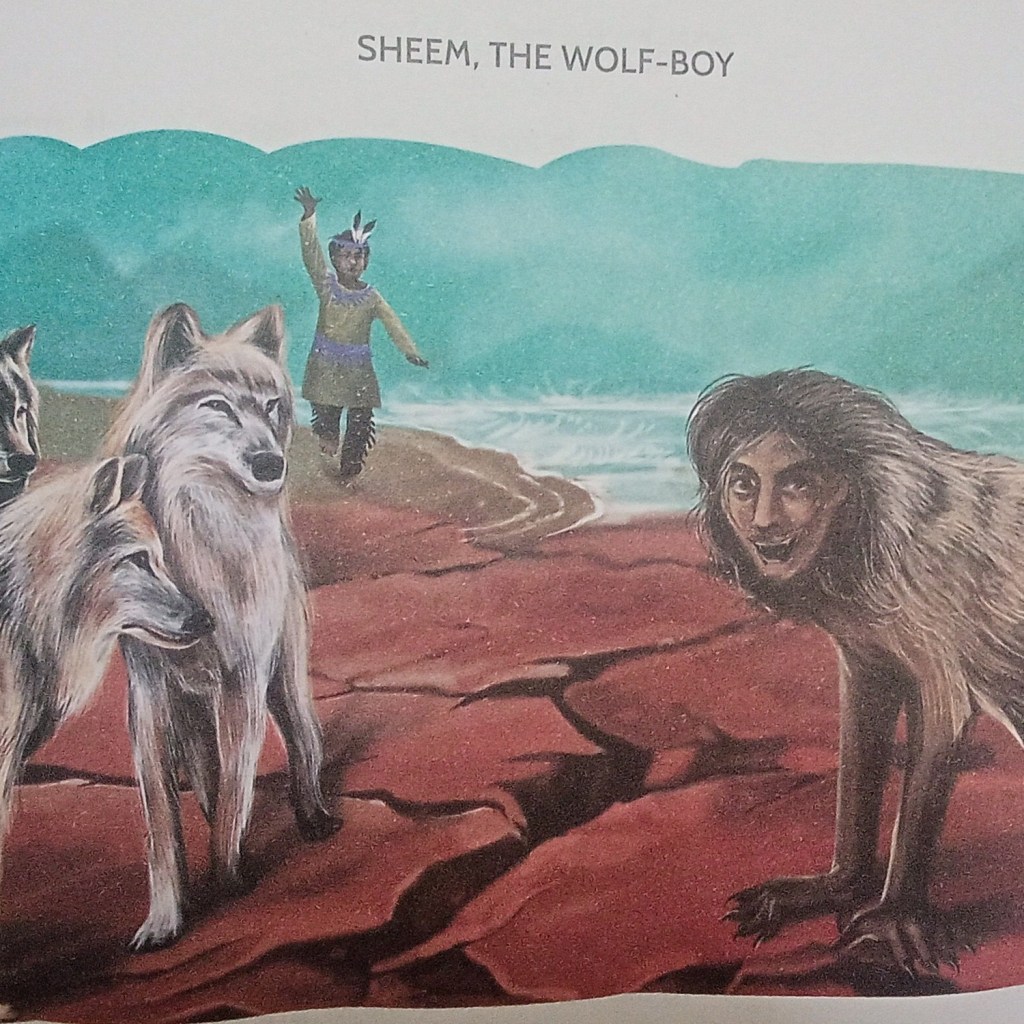
Sheem, the Wolf – Boy

Lesson – 15, Class – VI, Subject – English


B 2. Complete the following sentences:

1. The dying father made his children promise to take care of each other and stay together.


2. The family lived a difficult life because they were poor and had limited resources to survive.


3. The youngest brother was left alone because his elder brother and sister abandoned him due to hardships.


4. When left alone, the little brother survived eating whatever he could find in the forest, including berries and food from the wolves.


5. The little brother felt sad because he was abandoned by his own family and left to survive on his own.


6. The elder brother in the end tried to catch hold of the younger brother when he realized his mistake, but the younger brother had already accepted the wolves as his family.


B 3. Answer these questions:

1.What are the responsibilities of good family members?

Answer:ย  The responsibilities of good family members include caring for one another, staying together in difficult times, supporting each other emotionally and physically, and keeping promises made to loved ones.

2. Why did the elder sister and brother leave their youngest brother alone?


Answer:ย  The elder sister and brother left their youngest brother alone because they were struggling to survive and felt that they could not take care of him anymore.

3. How do you think the little brother would have felt when he was abandoned?


Answer:ย  The little brother would have felt lonely, abandoned, scared, and betrayed by his own family. He might have also felt hopeless but later found comfort among the wolves.

4. How did the youngest brother survive in the winters


Answer:ย  The youngest brother survived in the winters by living with the wolves, who provided him with warmth, food, and protection.

5. Who proved to be a real family to the youngest brother?Why?


Answer:  The wolves proved to be the real family to the youngest brother because they cared for him, fed him, and treated him as one of their own, unlike his human family, who abandoned him.

Panchayati Raj, Class-VI,Subject- Social Science


C. Fill in the blanks

1. Gram Sabha elects people who form the Gram Panchayat.


2. The head of the Gram Panchayat is the Sarpanch.


3. In 2009, the reservation of seats for women in the Panchayats was increased from 33% to 50%.


4. A Secretary is appointed by the State government who records all the proceedings of the Gram Sabha and the Gram Panchayat.


5. The members of the Gram Panchayat are elected for 5 years.


D. Very Short Answer Type Questions (20โ€“30 words)
1.What is the Panchayati Raj system?
Answer: The Panchayati Raj system is a decentralized form of government in which local self-governing bodies operate at the village, block, and district levels to ensure local development.

2.What is a Gram Panchayat?
Answer:ย  A Gram Panchayat is the local governing body in a village or a group of villages responsible for development, welfare, and governance at the grassroots level.

3. Who heads the Gram panchayat?
Answer: The Sarpanch heads the Gram Panchayat and is responsible for implementing government schemes, presiding over meetings, and addressing local issues.

4. Name the middle level of the Panchayati Raj system?
Answer: The middle level of the Panchayati Raj system is the Block Samiti (Panchayat Samiti), which coordinates the work of several Gram Panchayats in a block.
5.Mention the body at the apex of the Panchayati Raj system.

Answer:ย  The body at the apex of the Panchayati Raj system is the Zila Parishad, which oversees the administration of all Panchayat Samitis within a district.


E. Short Answer Type Questions (50โ€“60 words)

1.Explain the functions of the Gram Panchayat.

Answer: The functions of the Gram Panchayat include maintaining village infrastructure, implementing government schemes, ensuring sanitation, resolving disputes, and promoting social welfare.
2. Discuss the sources of funds for the Gram Panchayat.

Answer:The funds for the Gram Panchayat come from state and central government grants, local taxes, and contributions from villagers. These funds are used for development projects and welfare schemes.

3. Describe the importance of the Panchayati Raj.
Answer:ย  The Panchayati Raj is important because it empowers local governance, promotes democratic participation, improves rural development, and ensures that peopleโ€™s voices are heard in decision-making.
4. What is the role of the Sarpanch?

Answer: The Sarpanch is the elected head of the Gram Panchayat and is responsible for leading meetings, implementing decisions, and representing the village in administrative matters.

5. What are wards?
Answer:Wards are divisions within a village for administrative convenience, each represented by a Ward Member (Panch), who helps in governance and decision-making.


F. Long Answer Type Questions (80โ€“100 words)

1.Examine the role woman play in the functioning of the Panchayat.

Answer: Women play a crucial role in Panchayati Raj by participating in decision-making, addressing gender-related issues, and ensuring better implementation of welfare schemes. The 50% reservation for women in Panchayats has led to increased female leadership and empowerment in rural governance.

2. Write a note on Block Samiti.

Answer: A Block Samiti (Panchayat Samiti) is the middle-tier of the Panchayati Raj system, responsible for coordinating the work of Gram Panchayats in a block. It implements development projects, monitors schemes, and acts as a link between the village and district administration.
3. Explain the need for Nyaya Panchayat and explain it’s importance.

Answer: Nyaya Panchayat is a judicial body at the village level that resolves minor disputes and legal matters without lengthy court procedures. It ensures quick, cost-effective justice for villagers.

4. Discuss the structure and composition of the Gram Panchayat.
4. The Gram Panchayat consists of elected members from the village, including the Sarpanch and Ward Members. It is responsible for village administration, development work, and implementing government policies.


G. Differentiate between the following

1. Gram Sabha and Gram Panchayat

Answer: Gram Sabha: A general body of all adult members in a village that discusses and approves village matters.

Gram Panchayat: An elected body responsible for governance and administration in the village.


2. Sarpanch and Secretary

Answer:Sarpanch: An elected head of the Gram Panchayat, responsible for decision-making and implementation of policies.

Secretary: An appointed official who records proceedings and assists in administrative tasks.


H. Higher-Order Thinking Skills

1.What is the need for people to get involved in local self – government?

Answer: People should get involved in local self-government to ensure better governance, transparency, and participation in decision-making. It helps in addressing local issues efficiently and promotes community development.
2. What is your opinion regarding involvement of woman in local self- government?

Answer: Womenโ€™s involvement in local self-government is essential for gender equality, better decision-making, and addressing women-centric issues. It enhances rural development and brings diverse perspectives to governance.

Rain in Summer, Lesson– 16, Class- IV, Subject- English


1. Answer the following questions:

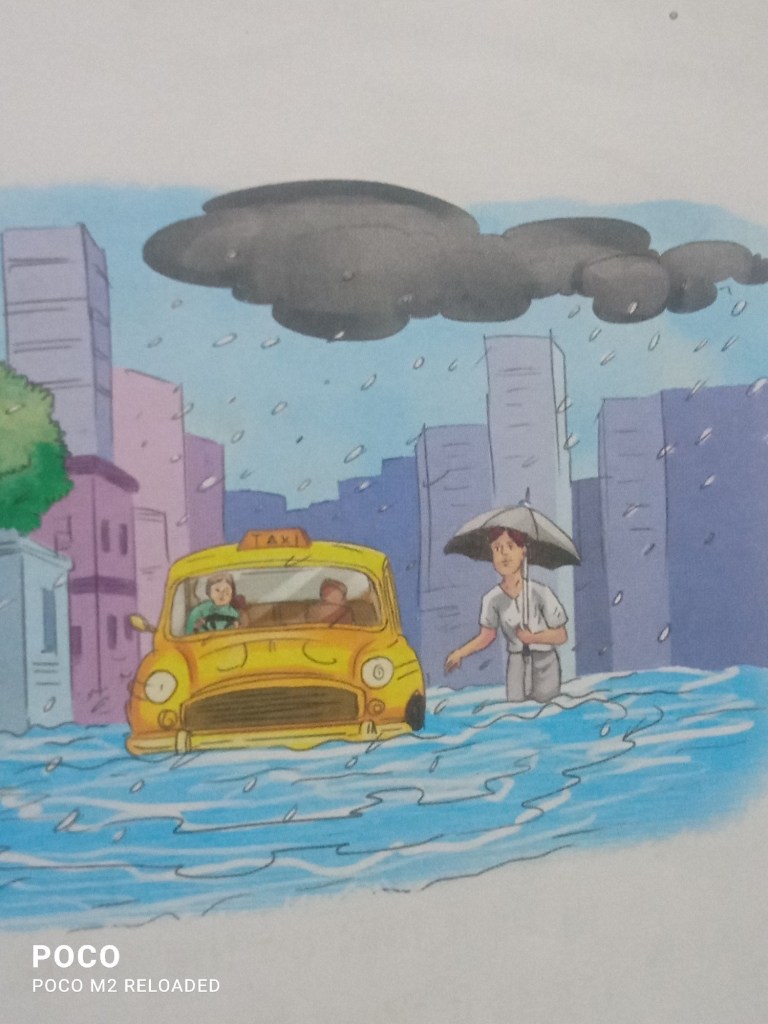
(a) Why does the poet think that the rain is beautiful in the narrow lane as well as in the broad street?
Answer: The poet finds the rain beautiful everywhere, whether in the narrow lane or the broad street, because it brings freshness, coolness, and joy.

(b) What sound does the rain make:

(i) as it falls on the roof?
Answer: The rain clatters on the roof, making a continuous rattling sound, like the trampling of hooves.

(ii) as it flows from the overflowing spout?
Answer: The rain gushes out forcefully from the spout, creating a rushing and splashing sound.

(iii) as it flows down the gutter?
Answer: The rain roars as it flows like a river down the gutter, making a loud and continuous noise.

(c) Do you agree with the poet that the rain is always welcome when it pours and pours? Give your own experience of a day of continuous heavy rainfall.
Answer: Yes, I agree with the poet that rain is always welcome because it cools down the surroundings, nourishes nature, and creates a refreshing atmosphere. However, continuous heavy rainfall can sometimes cause waterlogging and inconvenience.


2. Word Practice:

(a) Do you like to be indoors when it rains?
Answer: Yes, I like to be indoors when it rains because I can enjoy the sound of raindrops, read a book, or sip a hot drink while watching the rain outside.

(b) What do you prefer to do on such days?
Answer: On rainy days, I prefer to stay indoors, watch movies, listen to music, or read a book. Sometimes, I also enjoy going for a walk with an umbrella or playing in the rain.

(c) Do you like to have hot drinks?
Answer: Yes, I love having hot drinks like tea, coffee, or hot chocolate on rainy days. It makes me feel warm and cozy.

(d) Is it fun to wear a raincoat and experience the rain outside?
Answer: Yes, it is fun to wear a raincoat and step outside in the rain. Walking in the drizzle, splashing in puddles, and feeling the cool raindrops is an enjoyable experience.

(e) What happens in nature when it pours?
Answer: When it pours heavily, nature looks fresh and green. The trees and plants absorb water and appear more vibrant. Rivers and ponds fill up, birds seek shelter, and the air becomes cool and refreshing. However, sometimes heavy rain can cause floods and disrupt daily life.

Republic Day Speech

Good morning to everyone present here.

Today, we gather to celebrate the 26th of January, a day that holds immense significance in the history of our great nation. On this day in 1950, India became a sovereign, democratic republic, and the Constitution of India came into effect. It is a moment to honor the vision and sacrifices of those who fought tirelessly to make India a free and independent nation.

Republic Day is not just a celebration of our Constitution; it is a tribute to the values of justice, equality, liberty, and fraternity enshrined in it. Our Constitution, drafted under the leadership of Dr. B.R. Ambedkar, is a beacon of hope and guidance, ensuring the rights and duties of every citizen of this country.

As we hoist the tricolor today, let us remember the sacrifices of freedom fighters like Mahatma Gandhi, Bhagat Singh, Subhas Chandra Bose, and countless others who laid the foundation of our independence. It is their determination and selflessness that inspire us to uphold the ideals they stood for.

India has made remarkable progress over the years in various fieldsโ€”science, technology, education, and economy. Yet, challenges remain. As responsible citizens, it is our duty to contribute to the nation’s growth, promote harmony, and ensure that the values of democracy are upheld at all times.

Let us take a pledge today to work towards a better, brighter Indiaโ€”a nation where every individual has equal opportunities, where diversity is celebrated, and where we continue to march forward with unity and pride.

On this Republic Day, let us also remember our armed forces, who work tirelessly to protect our sovereignty and ensure our safety. Their dedication and courage remind us of the value of freedom and peace.

In conclusion, as we celebrate this day, let us strive to build a nation that our future generations will be proud of. Together, let us uphold the spirit of the Constitution and the essence of being Indian.

Jai Hind!

Republic Day Speech

Good morning everyone,
Today, we gather to celebrate the 76th Republic Day of India, a day that reminds us of the adoption of our Constitution on January 26, 1950. This document, crafted with vision and dedication, laid the foundation for our democracy, ensuring justice, equality, and liberty for all.

As proud citizens, let us honor the sacrifices of our freedom fighters and the architects of our Constitution. Their efforts gave us a nation that thrives on unity in diversity.

On this occasion, letโ€™s pledge to uphold the values of democracy, contribute to the progress of our country, and work together to build a brighter future.

Letโ€™s celebrate not just the day but the spirit of being Indian.
Thank you.

Design a site like this with WordPress.com
Get started