A school project is an educational task or assignment given to students to help them explore, understand, and apply knowledge on a specific topic or subject. It often goes beyond traditional classroom activities and encourages independent research, creativity, problem-solving, and critical thinking.
Purposes of a School Project:
1. Reinforce Learning: Helps students apply concepts learned in class in practical or creative ways.
2. Develop Skills: Enhances research, teamwork, communication, and time-management skills.
3. Encourage Creativity: Allows students to express ideas in innovative ways.
4. Promote Critical Thinking: Encourages analysis, evaluation, and problem-solving.
5. Real-World Application: Connects academic knowledge to real-life situations or challenges.
6. Assessment Tool: Helps teachers evaluate students’ understanding of a topic.
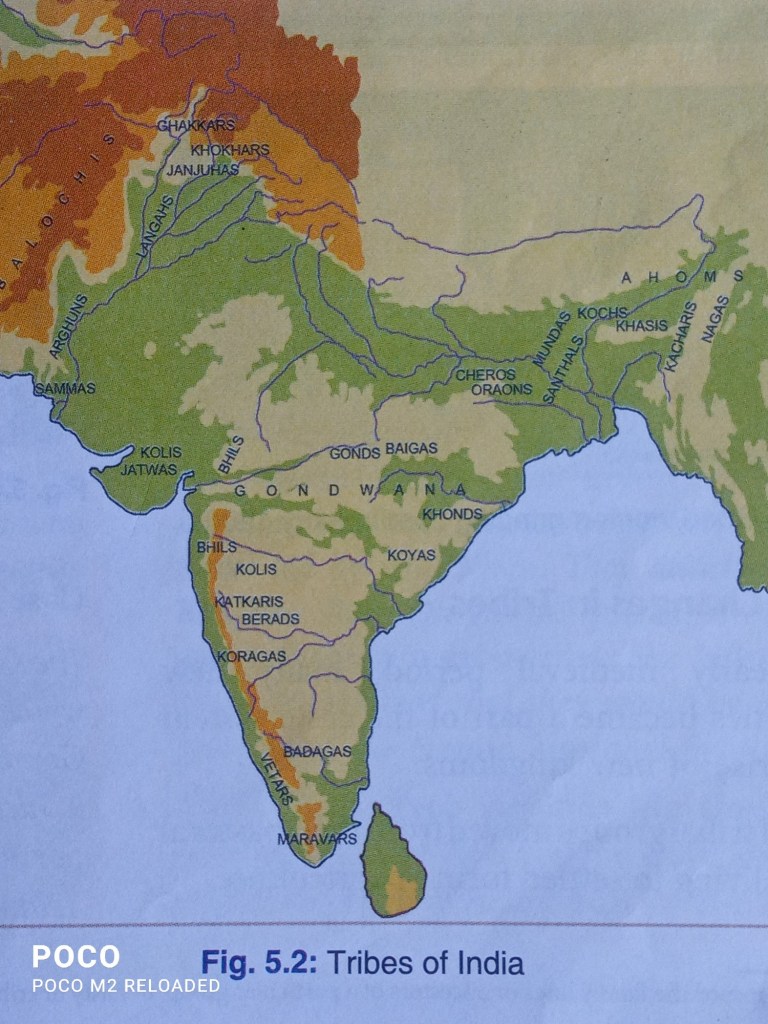
1. The Khokhars and Ghakkars were powerful tribes in:
(a) Multan and Sindh (b) Odisha and bangal
(c) North East (d) Punjab
Ans: (d) Punjab
2.The Ghakkar chief,Kamal Khan, was made a mansabdar during the reign of:
(a) Babur (b) Akbar (c) Jahangir (d) Shah Jahan
Ans: (b) Akbar
3. Raja Man Singh was the Mughal general when the Mughal defeated the:
(a) Ahoms (b) Gonds (c) Cheros (d) Todas
Ans: (a) Ahoms
4. Rani Durgavati was a famous ruler of the:
(a) Gonds (b) Ahoms (c) Bhils (d) Cheros
Ans: (c) Bhils
5. A barhot was made up of: (a) 10 villages (b) 12 villages (c) 15 villages (d)50 villages
Ans: (b) 12 villages
B. Write T for True and F for False statements:
1. T
2. F
3. T
4. T
5. F
C. Fill in the blanks:
1. The Delhi sultanate ruler Alauddin Khilji had used the services of the Banjaras to transport grain to the city markets.
2. The Cholas embraced Nadu who had once been a tribal deity, as their royal family god.
3. The Gond clans worship a deity described as Persa Pen.
4. The first Ahom ruler was Sukapha.
5. The older political system of the Bhuyans was suppressed by the Ahoms to create a new state.
D. Very Short Answer Type Questions:
1. List two powerful tribes in Punjab. Which tribal chief was made a mansabdar by Akbar?
Ans: Khokhars and Gakkhars were two powerful tribes in Punjab. Kamal Khan, a Ghakkhar chief, was made a mansabdar by Akbar.
2. What is shifting cultivation?
Ans: Shifting cultivation is a method of farming where land is cleared, cultivated, and then abandoned for a few years to allow it to regenerate naturally.
3. How did the folk artists make their living?
Ans: Folk artists earned their living by crafting and selling their artwork or performing traditional music, dances, and storytelling.
4. Who were the Gonds? In which region did they live?
Ans: The Gonds were a tribal group that lived in Madhya Pradesh, Chhattisgarh, and Andhra Pradesh regions.
5. Who were the Ahoms?
Ans: The Ahoms were an Assamese tribal group. They ruled over Kamrup, Darrang Nowgong, Sibsagar, Lakhimpur and portions of the Sadiya frontier tract for nearly 600 years.
E. Short Answer Type Questions:
1. What are tribes? Ans: Tribes are social groups comprising families or communities with a shared ancestry, language, culture, and customs. They generally live in specific territories and have a unique way of life distinct from mainstream society.
2. Mention the names of major tribes of India and the reasons where they live.
Ans: Major tribes of India and their regions:
Gonds: Madhya Pradesh and Chhattisgarh
Bhils: Rajasthan and Gujarat
Santhals: Jharkhand, Odisha, and West Bengal
Ahoms: Assam
F. Long Answer Type Questions:
1. Why is there not much information about tribal groups? How is information about them made available? Ans: Tribal groups traditionally preserved their knowledge, customs, and history orally, passing it from one generation to another. As a result, they left behind limited written records. Information about them is gathered from folklore, local traditions, archaeological evidence, and records by outsiders like travelers and rulers.
2. Discuss the changes in the caste system during the medieval period. Ans: During the medieval period, the caste system became more rigid. New groups, such as artisans and traders, were integrated into the system. Tribal societies were increasingly influenced by Brahmanical traditions, and many tribes adopted the hierarchical caste system. Some tribes like the Rajputs gained prominence by assimilating into Kshatriya status.
3. Write some similarities and differences between the Gonds and the Ahoms.
Ans: Similarities: Both tribes established powerful kingdoms and played significant roles in medieval Indian history. They assimilated local cultures and adopted Hindu practices over time.
Differences: The Gonds were concentrated in Central India, while the Ahoms ruled in Assam. The Ahoms established a strong administrative system, while the Gonds relied on tribal councils.
4. Classify different tribes based on their occupations:
Hunter-gatherers: Bhils and Santhals
Pastoralists: Banjaras
Settled agriculturists: Gonds
Craftsmen and traders: Ahoms
G. Differentiate between the following:
1. Garh and Khel
Garh: A large administrative unit used by the Gonds.
Khel: A unit of clan-based organization used by the Ahoms.
2. Chaurasi and Barhot
Chaurasi: A cluster of 84 villages under Gond administration.
Barhot: A cluster of 12 villages.
3. Artisans and Folk artists
Artisans: Skilled workers who make goods by hand, such as pottery or textiles.
Folk artists: Individuals who perform or create traditional art forms, including music, dance, and storytelling.
H. Higher-Order Thinking Skills:
1. How did the decline in forests affect the tribal groups during the medieval period? Ans: The decline in forests disrupted the livelihood of tribal groups, who depended on forest resources for hunting, gathering, and shifting cultivation. It forced many tribes to adapt to new occupations like settled farming or artisan work and made them more vulnerable to external control by rulers.
2. What was the main factor for the growing power of the Ahoms? Ans: The main factor for the Ahoms’ growing power was their well-organized administration, military strength, and the assimilation of local tribal groups into their kingdom. They also adopted Hindu traditions, which helped them consolidate power.
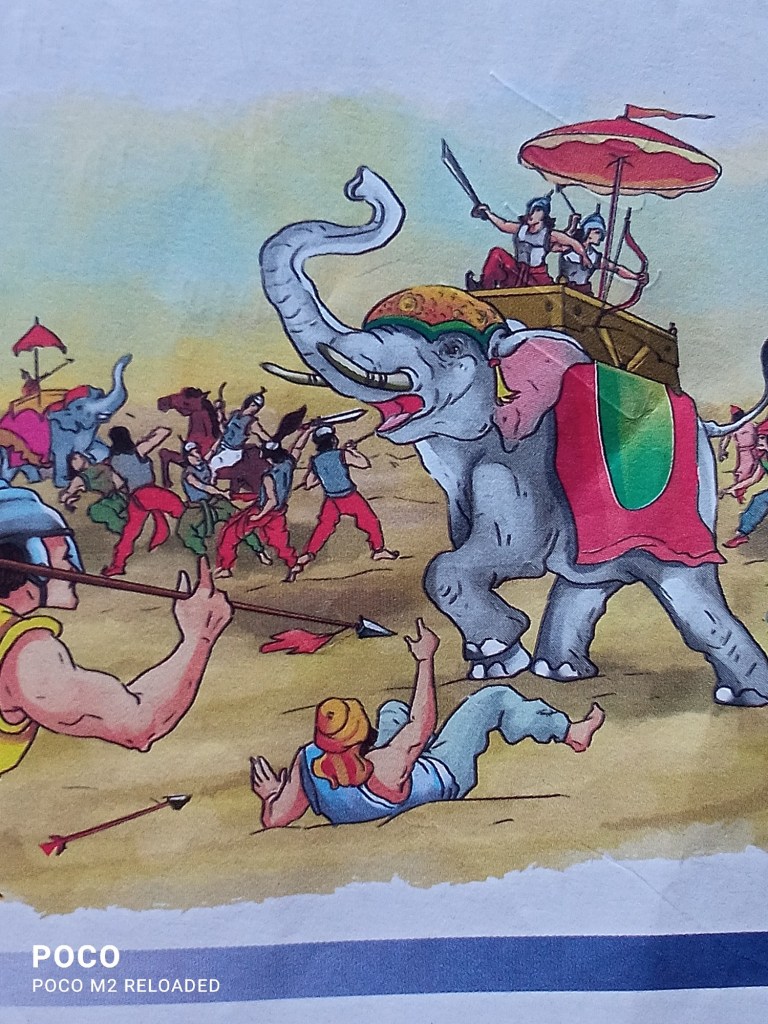
(a) What work did the large elephant do in the Maratha army? Ans: The large elephant carried the army’s flag and stayed in front of the soldiers during the battle.
(b) How did the animal behave in the long-drawn battle with the enemy? Ans: The elephant followed its master’s orders and stayed in its position without moving, even during the fierce battle.
(c) Why did he not go back from the battlefield along with the soldiers? Ans: The elephant did not go back because it was waiting for its master’s orders. It stayed loyal to the command it was given.
(d) Why did the retreating soldiers look back for a while? Ans: The soldiers looked back because they saw the flag still fluttering and realized the elephant had not moved. This gave them hope.
(e) What gave the soldiers courage to fight back? Ans: The sight of the flag still fluttering and the elephant standing bravely gave the soldiers courage to return and fight.
(f) How did the Maratha army finally win the battle? Ans:The Maratha army won the battle because they were inspired by the bravery of the elephant and returned to fight. The enemy was surprised and defeated.
(g) Why did the elephant not move away from the battlefield when the battle was over? Ans: The elephant did not move because it was waiting for its master’s orders, as it was trained to obey only him.
(h) Who made the elephant leave the battlefield and how did he do so? Ans: The master’s son made the elephant leave the battlefield. He touched the elephant gently and spoke a few words, which made the elephant happy. It trumpeted in joy and went back with him.
2. World practice:
(a) give the opposite of the following words used in the lesson
Attack — defend
Dead — alive
Earlier — late
Forward — backward
Hastily — carefully
Leader — follower
Loyal — unreliable
Remembered — forgot
(b) Fill in the blank spaces in the sentences below with the correct words from the following list:
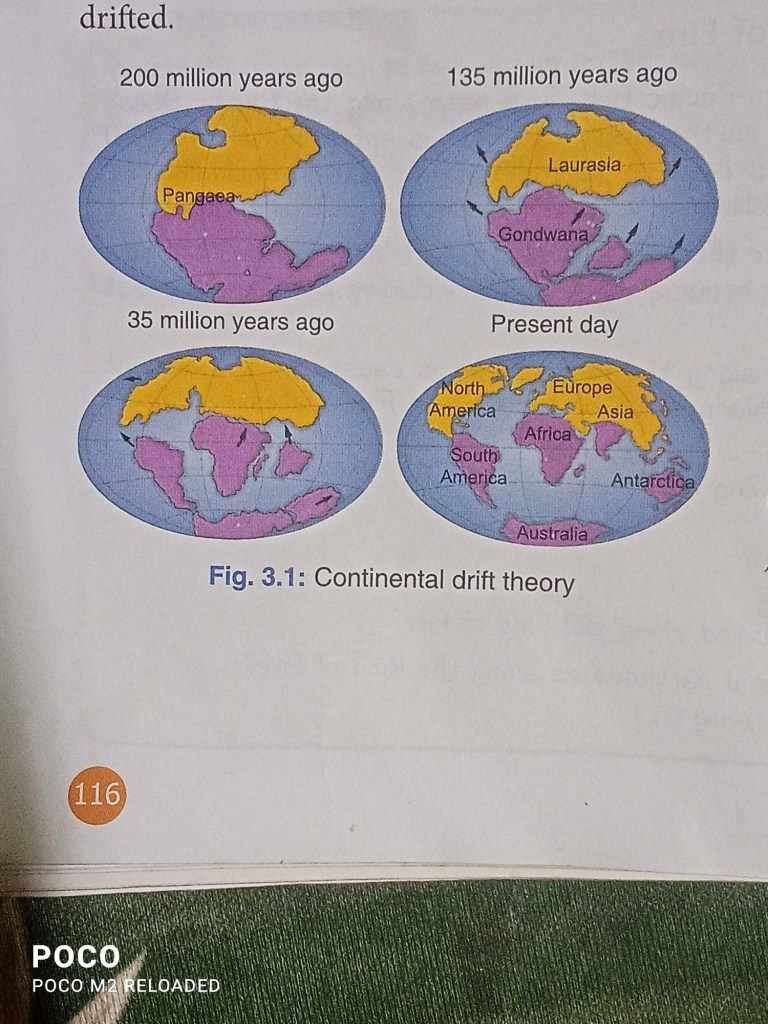
1. True – Alfred Wegener was a German geophysicist and meteorologist.
2. False – Tectonic plates move at a very high speed.
3. True – Exogenic movements take place on the surface of the Earth.
4. True – Tsunamis are caused by earthquakes taking place under the sea.
5. False – The focus of an earthquake lies above its epicenter.
—
D. Match the columns.
1. Vesuvius – (d) Active volcano
2. Etna – (e) Dormant volcano
3. Origin of earthquake – (a) Focus
4. Lava – (b) Vent
5. Richter scale – (c) Intensity of earthquake
—
E. Very Short Answer Type Questions (20–30 words)
1. What are tectonic plates? Ans: Tectonic plates are large slabs of the Earth’s lithosphere that float on the semi-fluid asthenosphere, causing movements that lead to earthquakes, volcanoes, and mountain formation.
2. Describe endogenic and exogenic movements. Ans: Endogenic movements originate within the Earth (e.g., earthquakes, volcanoes), while exogenic movements occur on the Earth’s surface due to external forces like wind and water erosion.
3. Who was Alfred Wegener? Alfred Wegener was a German geophysicist and meteorologist known for proposing the theory of continental drift.
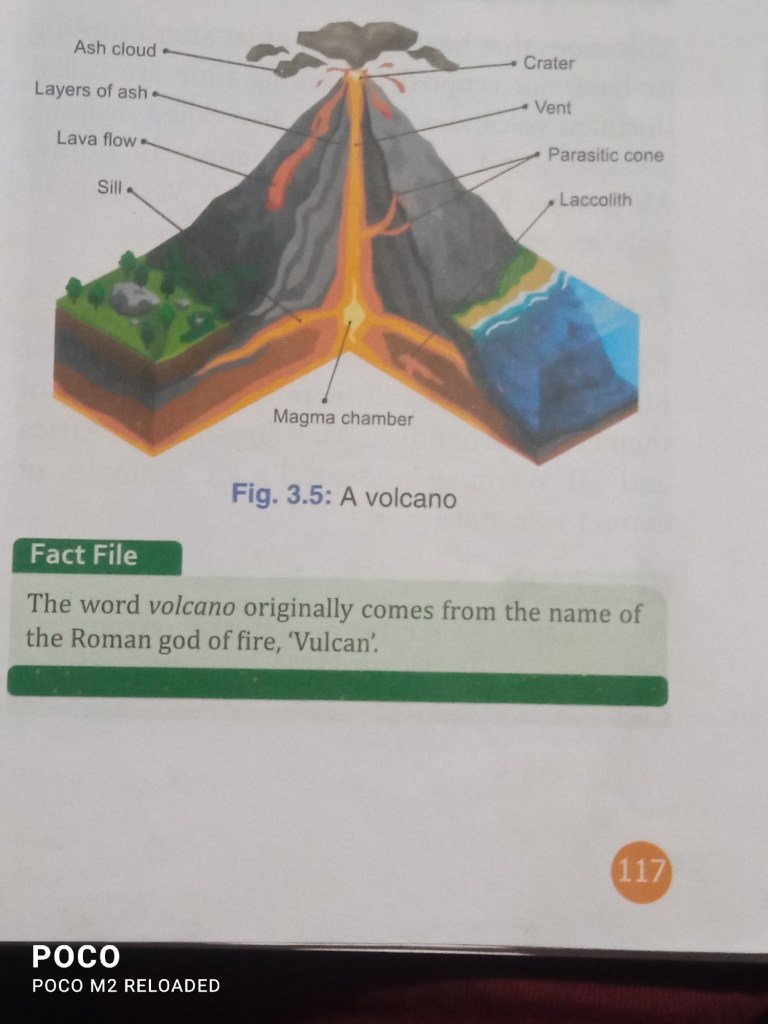
4. What is a volcano? Ans: A volcano is an opening in the Earth’s crust through which molten rock (magma), gases, and ash are expelled during eruptions.
5. List the three types of earthquake waves. Ans: The three types of earthquake waves are:
i) Primary waves (P-waves)
ii) Secondary waves (S-waves)
iii)Surface waves
—
F. Short Answer Type Questions (50–60 words)
1. Briefly explain the three types of plate movements.
Ans: a) Divergent: Plates move apart, forming new crust (e.g., mid-ocean ridges).
b) Convergent: Plates collide, causing subduction or mountain formation.
c) Transform: Plates slide past each other, causing earthquakes.
2. What is folding? Give examples of fold mountains. And: The collision of two plates leads to the folding up of the rock layers created a raised area on the earth’s crust. These are called folds.Examples of fold mountains are the Himalayas in India and the Rockies in North America.
3. Describe how block mountains are made. Ans: Block mountains are formed when large areas of the Earth’s crust are uplifted or tilted between fault lines, leaving higher blocks (horsts) and lower blocks (grabens).
4. Differentiate between dormant volcanoes and extinct volcanoes.
Ans: Dormant volcanoes: Inactive for long periods but may erupt in the future (e.g., Mount Fuji).
Extinct volcanoes: Have not erupted for hundreds of years and may not be erupt in the future.(e.g., Mount Kilimanjaro).
5. What is an earthquake? How is it measured? Ans: An earthquake is the shaking of the Earth’s surface caused by the movement of tectonic plates.It is measured using a seismograph and the Richter scale.
—
G. Long Answer Type Questions (80–100 words)
1. Explain the concept of continental drift. Why was the theory replaced and by which theory? Ans: The concept of continental drift, proposed by Alfred Wegener, suggested that continents were once joined as a supercontinent (Pangaea) and have drifted apart over time. This theory lacked a mechanism to explain how continents moved. It was replaced by the theory of plate tectonics, which explained continental movement through the motion of tectonic plates driven by mantle convection.
2. Explain the theory of plate tectonics. Ans: The theory of plate tectonics states that the Earth’s lithosphere is divided into tectonic plates that float on the on the soft layer of the mantle. These plates interact at boundaries, causing geological phenomena like earthquakes, volcanic activity, and mountain formation.
3. What is a volcano? Mention different types of volcanoes. Ans: A volcano is an opening in the Earth’s crust that can let magma, ash, and gases escape during eruptions. Types of volcanoes:
Composite volcanoes: Steep and explosive (e.g., Mount St. Helens).
Cinder cone volcanoes: Small, steep, and short-lived.
4. Discuss different types of earthquake waves.
Ans: Primary waves (P-waves): Travel fastest and pass through solids and liquids.
Secondary waves (S-waves): Slower than P-waves and travel only through solids.
Surface waves: Travel along the Earth’s surface, causing most damage.
5. Draw and label the diagram for a volcano.
H. Higher-Order Thinking Skills
1. Why most of the damages occur at the epicenter of an earthquake? Ans: Most damages occur at the epicenter because it is directly above the focus, where the seismic energy is strongest and closest to the surface, causing intense ground shaking.
1. Which of these is located in the southern part of India? → (d) Kerala
2. The Outer Himalayas are also known as: → (d) Shivalik
3. Which river is also called Tsangpo? → (b) Brahmaputra
4. Where will you find the lagoons? → (c) Kerala
5. Which of these crops is grown in the Brahmaputra Valley? → (c) Rice
B. Fill in the blanks
1. The northern part of the eastern coastal plain is known as Northern Circar.
2. The Barren Island is situated in the Andaman and Nicobar Islands.
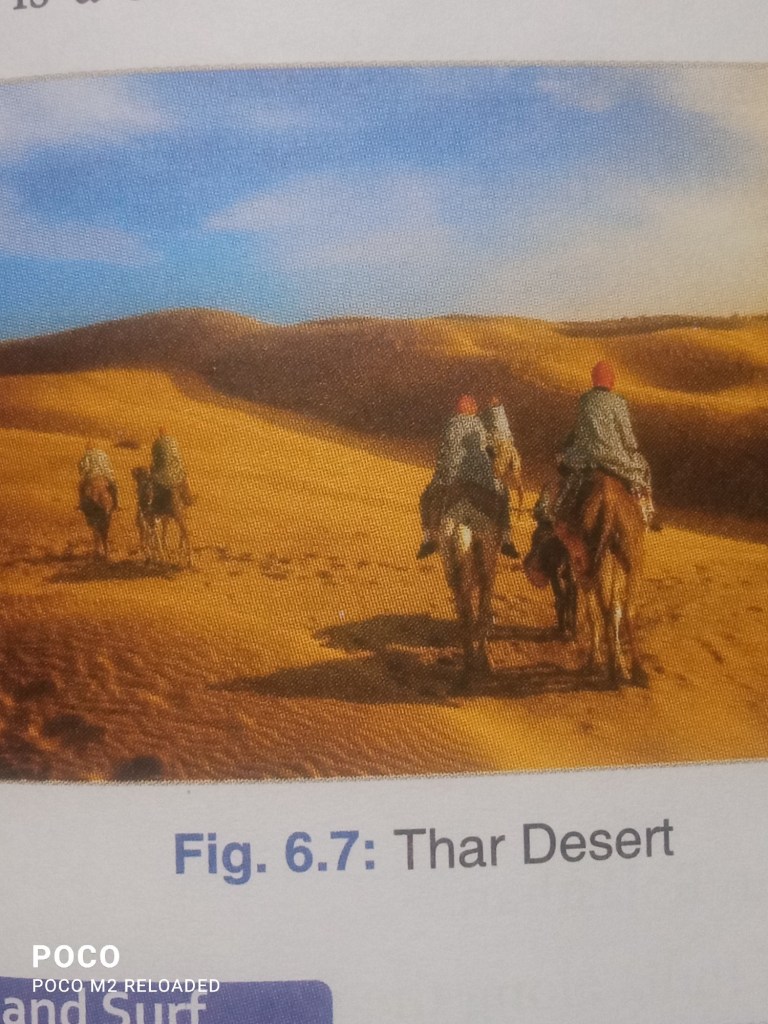
3. The Thar Desert is also known as the Great Indian Desert.
4. Sundarbans is the world’s largest delta.
5. India has 28 states and 8 union territories.
6. Mining is the main occupation of the people living in the Chota Nagpur plateau region.
C. Write T for True and F for False statements
1. F – The Deccan Plateau is also known as Chota Nagpur Plateau in Bihar.
2. T – The Palk Strait lies between India and Sri Lanka.
3. F – West Bengal has a common boundary with China.
4. F – The Eastern Ghats are also known as Sahyadri .
5. T – River Narmada divides the peninsular plateau into two halves.
6. F – The highest mountain range in the world is the Himachal.
D. Very Short Answer Type Questions
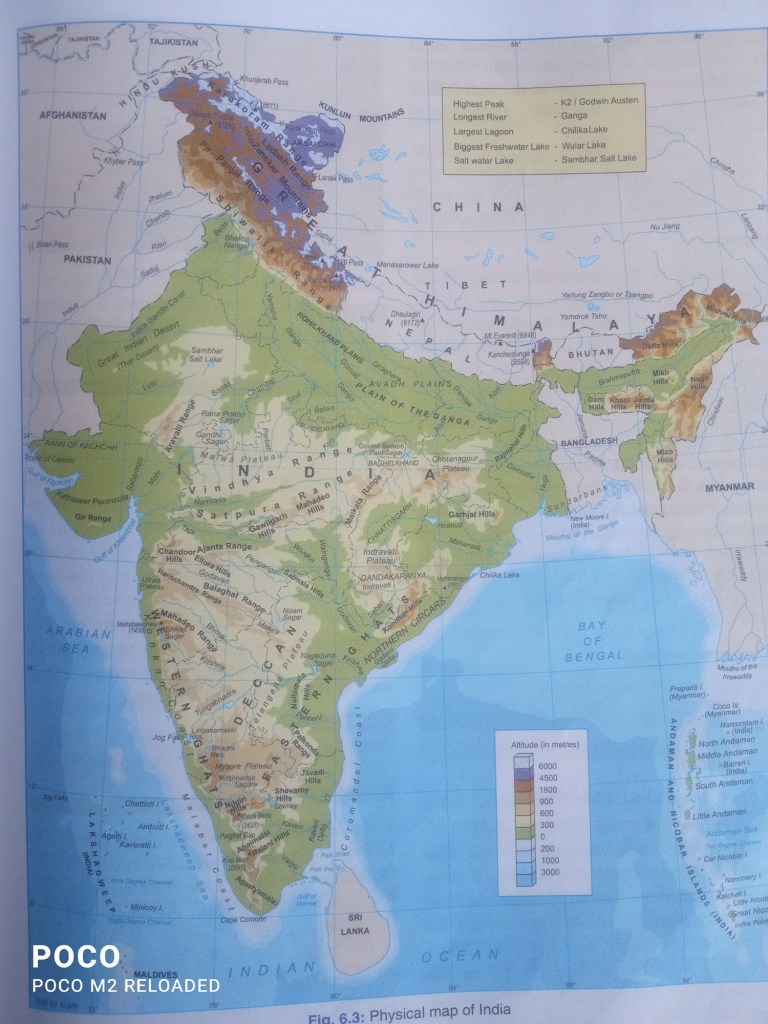
1. State the location of India. Ans: India is located in South Asia and is bordered by the Himalayas in the north, the Arabian Sea in the west, and the Bay of Bengal in the east.
2. Mention the major physical divisions of India. Ans: The major physical divisions of India are: a) The Himalayas b) The northern Plains c) The Peninsular Plateau c) The Indian Desert d) The Coastal Plains e) The Islands.
3. List the two major rivers that drain into the Arabian Sea. Ans: The Narmada and the Tapti rivers drain into the Arabian Sea.
4. Describe the location and extent of the Deccan Plateau. Ans: The Deccan Plateau is located in southern India. It extends from the Satpura range in the north to the southern tip of the Indian peninsula.
5. Which delta is formed by the Ganga and the Brahmaputra? Ans: The Ganga and the Brahmaputra form the Sundarbans Delta.
—
E. Short Answer Type Questions
1. Write a short note on the political divisions of India. Ans: India is divided into 28 states and 8 Union Territories. Each state has its own government, while Union Territories are governed by the central government. These divisions are based on historical, cultural, and linguistic factors.
2. Compare the Ganga Plain and the Brahmaputra Plain.
Ans: The Ganga Plain is extensive, fertile, and supports a dense population.
The Brahmaputra Plain is narrower and known for its frequent flooding due to heavy rainfall.
3. Write a note on the Malwa Plateau. Ans: The Malwa Plateau is located in central India, bordered by the Aravalli range in the northwest and the Vindhya range in the south. It is rich in black soil and supports agriculture, especially cotton and wheat.
4. Compare the Western Coastal Plain and the Eastern Coastal Plain.
Ans: The Western Coastal Plain is narrow and lies between the Western Ghats and the Arabian Sea.
The Eastern Coastal Plain is broader and lies between the Eastern Ghats and the Bay of Bengal.
5. Briefly describe the two groups of islands.
Ans: The Andaman and Nicobar Islands lie in the Bay of Bengal and are volcanic in origin.
The Lakshadweep Islands lie in the Arabian Sea and are coral-based.
F. Long Answer Type Questions
1. Explain the geographical extent of India. Ans: India lies entirely in the Northern Hemisphere. It extends from 8°4′ N to 37°6′ N latitude and from 68°7′ E to 97°25′ E longitude. The Tropic of Cancer (23°30′ N) divides India into two halves. The country has a total area of 3.28 million square kilometers.
2. Write about the mountain ranges of India. Ans: India is home to several mountain ranges, including the Himalayas in the north, which are the highest and youngest ranges in the world. The Western Ghats and Eastern Ghats are located in the southern peninsula. Other ranges include the Aravalli and the Vindhya.
3. Discuss the features of the Deccan Plateau. Ans: The Deccan Plateau is a large triangular landmass in southern India. It is bounded by the Western Ghats, the Eastern Ghats, and the Satpura hills. The plateau is rich in minerals and has black soil suitable for agriculture. It slopes gently towards the east.
4. Write a note on the Great Indian Desert with reference to its drainage. Ans: The Great Indian Desert, also known as the Thar Desert, is located in Rajasthan. It is an arid region with scanty rainfall and extreme temperatures. Rivers in the desert, like the Luni, are seasonal and often disappear into the sand.
5. What are the divisions of the Northern Plains? Ans: The Northern Plains are divided into three parts:
i) Punjab Plains (formed by the Indus and its tributaries).
ii)Ganga Plains (formed by the Ganga and its tributaries).
iii)Brahmaputra Plains (formed by the Brahmaputra and its tributaries)
G. Higher-Order Thinking Skills
1. Why is India called a peninsula? Ans: India is called a peninsula because it is surrounded by water on three sides: the Arabian Sea to the west, the Bay of Bengal to the east, and the Indian Ocean to the south.
2. Why is the Ganga Plain suitable for agriculture? Ans: The Ganga Plain is suitable for agriculture due to its fertile alluvial soil, adequate water supply from the Ganga and its tributaries, and favorable climatic conditions.
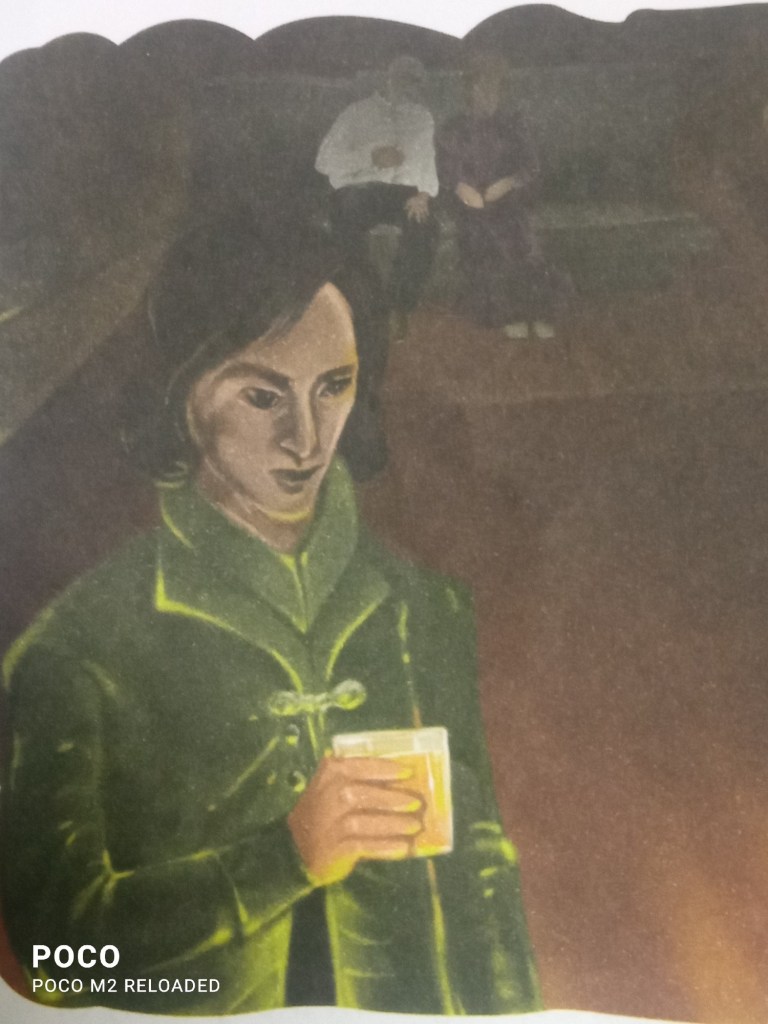
1. The young man seemed overconfident because……. he believed there was no ghost in the red room and thought it was just a superstition.
2. The three caretakers had never visited the Red Room because…… they were to afraid of the ghost say to hount the ghost.
3. The red room of the Lorraine Castle was infamous because……. it was believed to be haunted and had a reputation for being mysterious and dangerous.
4. The young man told himself to be steady because……… he was feeling nervous and wanted to control his fear.
5. The young man did not remember where he was because …….. he had been knocked unconscious in the Red Room.
B. Think carefully and answer in detail
Why did the castle look so Haunted give three reasons
Ans: (i) The castle was old and decaying.
(ii) The passages were dark and filled with eerie silence.
(iii) The environment gave a sense of isolation and gloom.
2. How did the stories about the red room work on the narrator’s imagination?
Ans: His imagination magnified every sound and shadow making him Dilip something Supernatural was present.
3. Do you think that there really was Supernatural activity in the room?
Ans: No I don’t think so, it is the fear that follows the narrator through the corridor so that the his dare not turn. It faught against him in the room. There is fear that room. Plain black fear.
4. How do you think our imagination and fear contribute to what we she or perceive?
Ans: Our minds tend to create scenarios based on fear, turning ordinary events into terrifying experience. Fear heightens our sences and distart reality.
5. Why do people fear ghosts?
Ans: People fear ghosts due to the unknown, cultural stories, and their link to death, amplified by imagination and survival instincts.
6. What techniques do the writers of horror fiction use to create fear in the minds of leaders? Explain with an analysis of ‘ The Red Room’.
Ans: The Red Room illustrates how fear can over power reason. The narrator enters with confidence but succumbs to fear due to the oppressive atmosphere. The real ‘ghosts’ in the story is the fear itself, amplified by isolation and darkness.
5. The figure of Pashupati found on the Indus seals is identified with:
( a) God Vishnu (b) God Brahma (c) God Shiva (d) God Indra
Ans: God Shiva
B. Write T for true and F for false statements
1. Most of the Indus cities were divided into two parts. T
2. Fire alters have been excavated at Harappa and Mohenjodaro. T
3. The Harappan script has not been deciphered yet. T
4. The Indus people did not know how to use the potters wheel. F
5. A dockyard has been discovered Dholavira.
T
C. Fill in the blanks:
Harappan and Mohenjodaro were the earliest Indus site to be excavated.
Grains were stored in granaries.
3. Lothal and Dholavira are located in Gujarat.
4. Oval- shape structures containing ash have been found at kalibangan and Lothal.
5.Mesopotamian Civilization is called the cradle of Civilization.
D. Very short answer type questions
List three Civilization that flourished at the same time as the Indus valley civilization.
Ans: (i) Mesopotamian Civilization
(ii) Egyptian civilization
(iii) Chinese civilization
2. What was the extent of the Indus valley civilization?
Ans: It extended from Afghanistan to Gujarat and from Balochistan to Uttar Pradesh.
3. List some important Indus sides.
Ans: Some important Indus sites are Harappa, Mohenjodaro, kalibangan ,Lothal, and Dholavira.
4. What do you understand by the term “citadel”?
Ans: A Citadel was a raised area in an Indus City that housed public buildings and served administrative and religious purposes.
5. Why is the Indus valley civilization also called the Harappan civilization
Ans: It is called the Harappan Civilization because Harappa was the first site to be excavated.
E. Short answer type questions
1. Describe the great bath of Mohenjodaro.
Ans: The great bath was a large triangular thank used for ritual bathing. It was surrounded by corridors had steps leading into it, and was made of baked bricks, with a layer of bitumen for waterproofing.
2. Write a short note on Indus seals.
Ans: Indus seals were usually made of steatite and bore inscription and animal notifs. They wear likely used for trade, identification, and religious purposes.
3. Lothal was a port city. Elaborate.
Ans: Lothal had a dockyard which indicates, it was an important trade Centre. Goods were transported via waterways, linking Lothal with other reasons.
4. Write a note on Dholavira.
Ans: Dholavira located in Gujarat, is known for its unique water conservation system, including reservoirs. It had a well planned city layout with a citadel and a lower town.
5. Examine the religious beliefs of the people of the Indus Valley Civilization.
Ans: They worshiped nature, animals, and possibly a mother goddess. Seals depicting the figure of Pashupati suggest reverence for a proto-Shiva deity.
F. Long answer type questions
1. Illustrate that the Harappans were great town planners.
Ans: The Harappans excelled in town planning. There cities were laid out in a grid pattern, with well defined streets and drainage system. Houses were made of baked bricks and had multiple rooms. Public buildings like the granaries and the great bath showcased advanced urban designs
2. The drainage system of the Indus valley civilization was unique. Explain.
Ans: The drainage system was well plant with covered drain running along the streets. Each house had a private bathroom and a drain connected to the main sewer line showcasing their advanced knowledge of sanitation and hygiene.
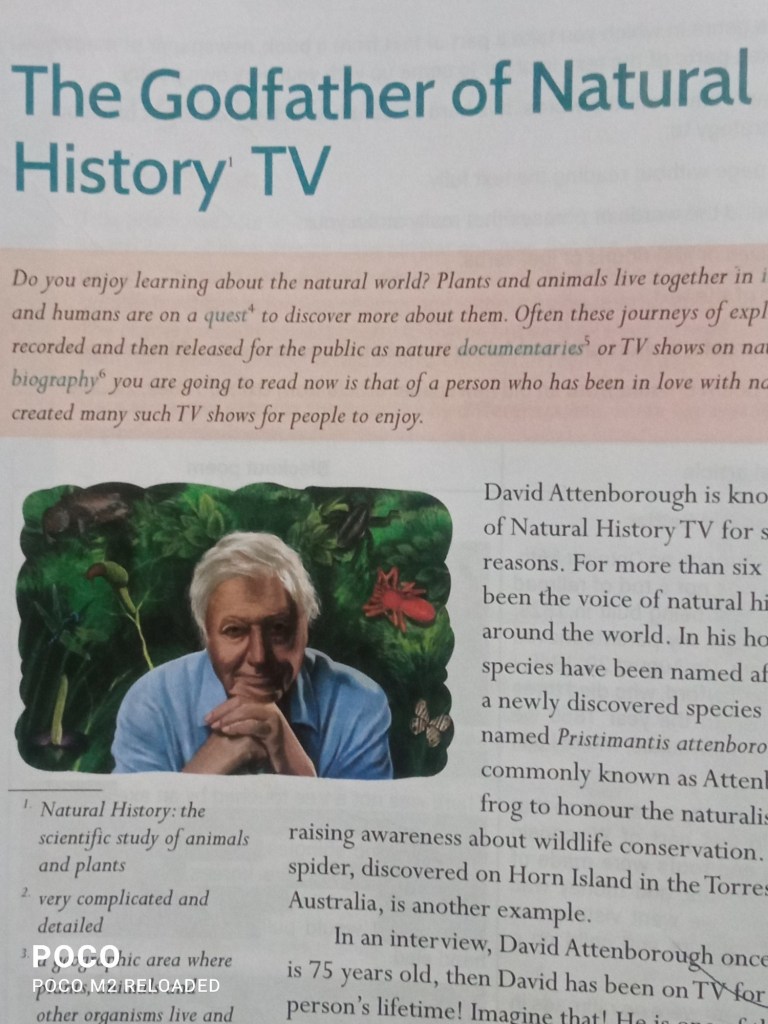
1. Television and social media are good source of information and entertainment what are the importance of the BBC series of David Attenborough for the viewers?
Ans: The BBC series by David Attenborough provided viewers with deep insights into the natural world. It educated them about the beauty and diversity of wildlife raising awareness about the importance of conserving nature.
2. What does a naturalist do? What is the importance of a naturalist as a profession?
Ans : A naturalist studies and conserves ecosystems, playing a key role in protecting biodiversity and rasing environmental awareness.
3. What are the qualities a person who works in conserving nature – wildlife and environment- need? Give reasons to support your answer.
Ans: Such a person need patience, resilience, and a deep passion for nature. They must have strong observation skills, a scientific mindset, and ability to work in challenging environment.
4. What kind of risk are faced by a person working for conserving wildlife and nature?
Ans : Conservationists face encounters with dangerous wildlife, harsh weather, and health risks from remote areas or diseases.
B2.Think carefully and answer in detail.
1. How are the following professions important? Give two reasons for each.
a) a naturalist
b) a conservation
c) an environmental advocate
d) an environment minister
Ans: a naturalist
i) They help conjured and protect species and ecosystem.
ii) They educate the public about the natural world.
b) a conservationist
i) They help protect endangered species.
ii) They work to conserve natural habitats and ecosystems.
c) an environmental advocate
i)They raise awareness about environment issues.
ii) They influence policies and promote sustainable practices.
d) an environmental minister
i) They develop and implement policies to protect natural resources.
ii) Establishing regulations for industries to reduce their environmental impact is a key part of this.
2. Identify at least three steps that you can take to help or protect animals or birds in the place where you live.
Ans. a) Avoid using plastic products to prevent pollution.
b) Plant trees or create a small garden to attract wildlife.
c) Support local wildlife organisation or santuaries.
Class — V, Subject — English, Lesson — 14 , Real English
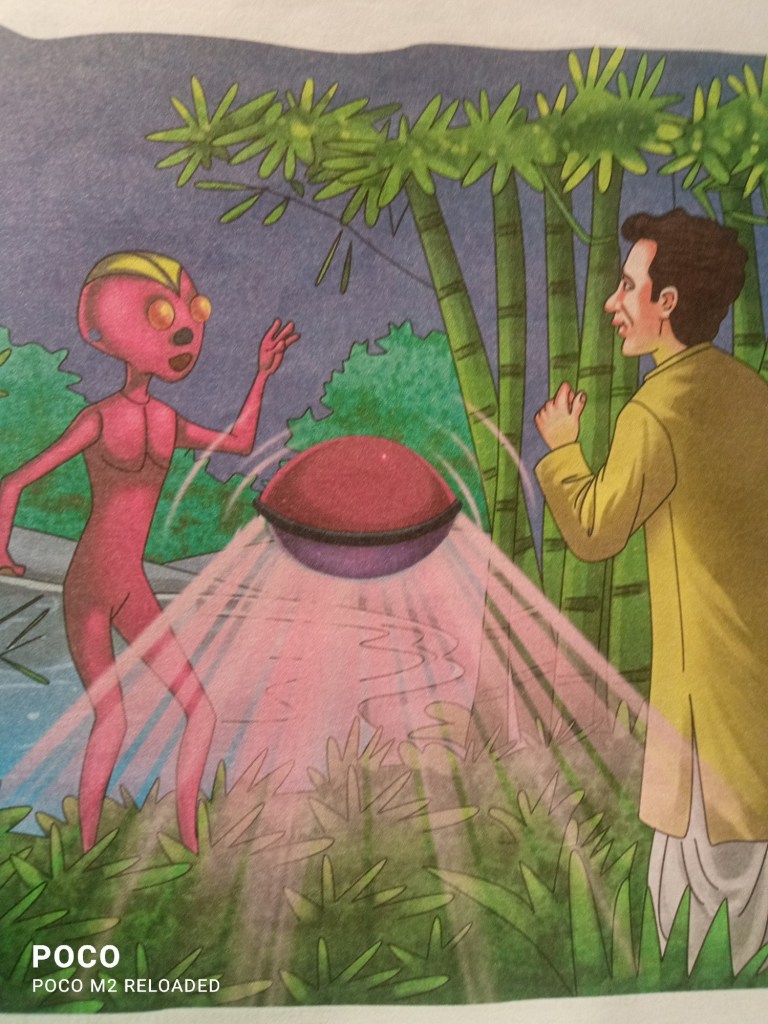
Meeting of Ang and Bonku Babu
A. Questions and answers
1.Who was Ang?
Ans : Ang was an Alien from the planet Craneus.
2. How did Ang come to earth?
Ans : Ang accidentally landed on earth when he intended to go to Pluto.
3. What did he tell Bonku Babu about his planet and about himself?
Ans : Ang felt, proud describing himself as a superior being who knew 14000 languages.
4. What impression did Ang create in Bonku Babu’s mind?
Ans : Ang’s pride and confidence left Bonku Babu feeling that Ang was a powerful and intelligent being.
5. Why did Pancha Ghosh so excited at the Sunday meeting?
Ans: Pancha Ghosh excited at the Sunday meeting because he was going to tell everyone about bamboo grove ,where all the bamboo around the pond had shed all their leaves.
6. What was the first thing that Bonku Babu did on entering Sripati Babu’s house?
Ans : Bonku Babu burst into a gaffow and laughed loudly for a whole minute as soon as he entered Sripati Babu’s house.
7. Did the meeting with Ang change Bonku Babu in any way? Give reasons for your answer.
Ans: Yes, Bonku Babu got the courage to stand up for himself after meeting Ang, because he was the only person to not make fun of him. Often people get the courage to stand up for what is right when they have get support from others.
8. Banku Babu had something to say to the people in Sripati Babu’s house. Write against each of their names what he told them.
Ans : Chandi Babu: at your age, hiding other people’s shoes and umbrellas is not just childish, but totally wrong. Kindly bring my umbrella and brown Canvas shoes to my house tomorrow.
Nidhi Babu : if you call me Bu,nkum ‘ I will call you Nitwit and you must learn to live with that.
Shripati Babu : you are an important men and must have hangers- on, but please count me out from today.
Pancha Babu: you are here as well! l Let me inform you that last night, an Ang arrived from the planet Craneus and landed on the pond in your bamboo grove. We had a long chat. The Ang was most amiable.
B2 Ang has been described as a strange creature very different from humans complete the following table with details of his appearance.
Head : Round and Shiny with no hair.
Eyes : Large, bright yellow ,growing
Ears : Tiny holes on each side of the head
Nose : no visible nose, only two holes
Mouth : A large gaping hole
Arms and legs : Long, thin arms and legs
Hair : No hair
Body : Covered with a shiny pink outfit
B3.
C1.
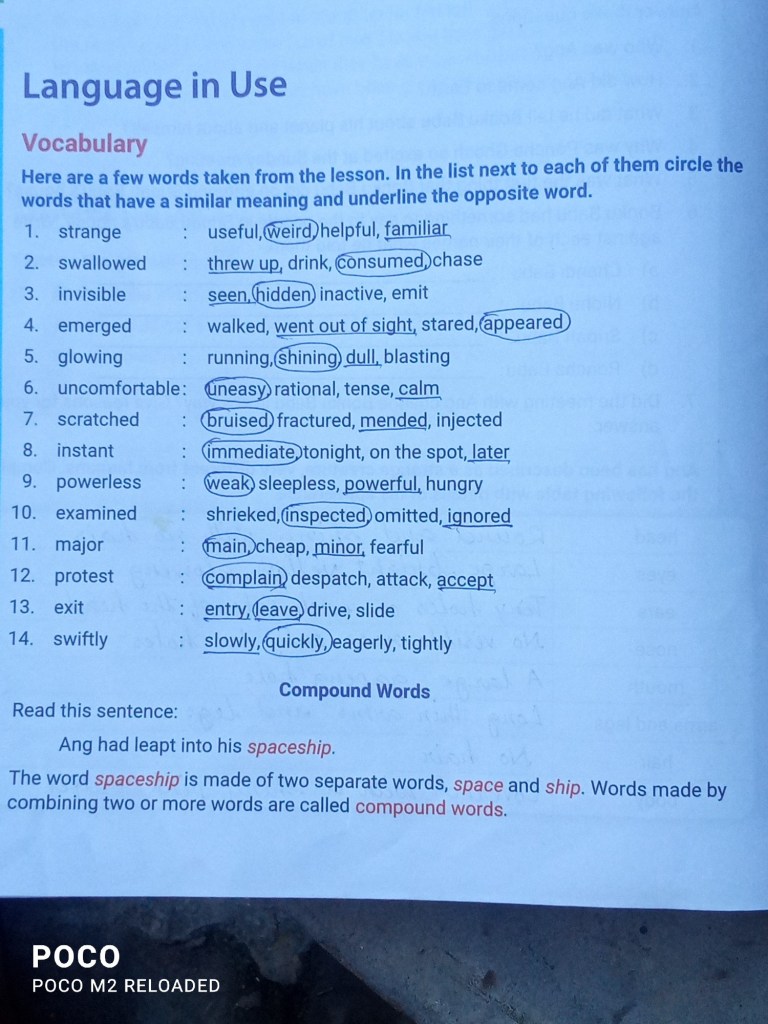
Match the words in Column A with those in Column B to get some commonly used compound words.
A B
arm cycle
atom friend
foot chair
lamp dream
black bomb
dark worm
glow ball
day room
pen friend
motor board
Ans : arm — chair
atom — bomb
foot — ball
lamp — post
black — board
dark — room
glow — worm
day — dream
pen — friend
motor — cycle
C2. Complete the following sentences with the compound words that you got by solving C1
1. My uncle has broad a beautiful red motorcycle which can go very fast.
2. We love playing football in the rain.
3. The teacher drew the figure of a human heart on the blackboard.
4. Divya’s grandmother had a pen friend who lived in Switzerland.
5. The lamp post outside my house broke yesterday.
6. You can see the glow worm shining in the dark forest.
7.Photographs are developed in a dark room.
8. The world will not survive if people start fighting with the atom bomb.
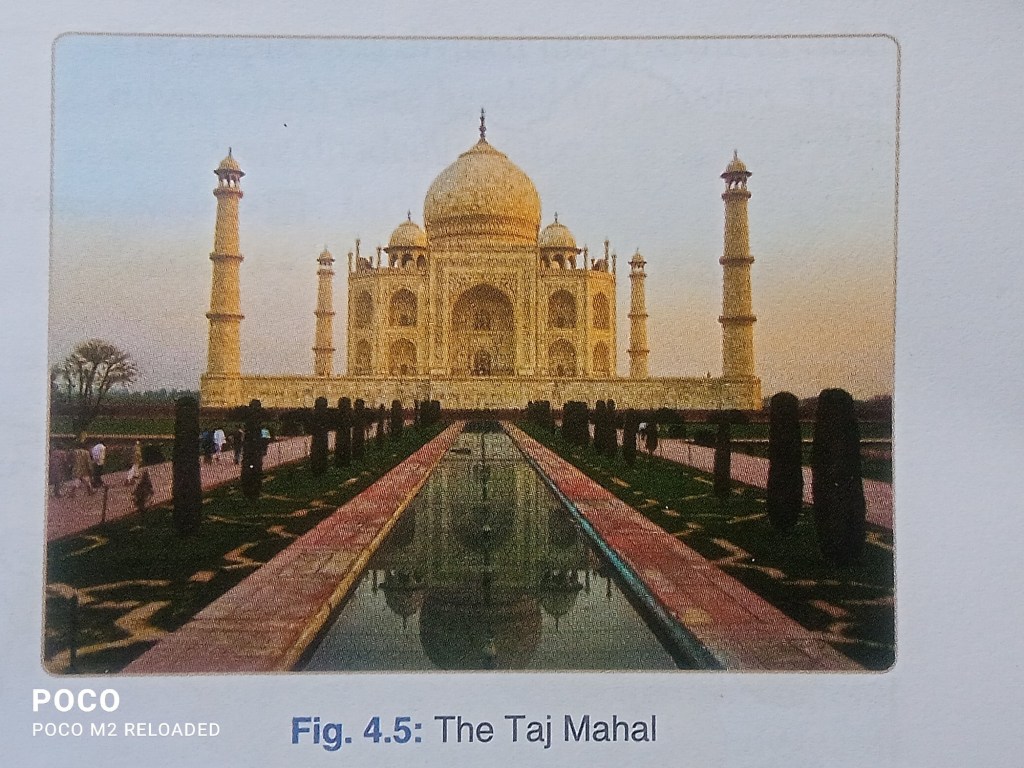
The Taj Mahal is made by Shah Jahan for his beautiful queen Mamtaj Mahal
Question and answers for the chapter “The Mughal Empire” , Class — vii, subject — Social Science.
A. Very short answer type questions:
Name the autobiography of Babu in which language it is written? Ans: the autobiography of Babur is called the Baburnama and it was written in chagatai turkic.
Who defeated Humayun twice? Mention the places and years. Ans: Humayun was defeated twice by Sher ShahSuri.The first defeat was at the battle of Chausa in 1539, and the second was at the battle of Kanauj in 1540.
Between whom and when was the battle of Haldighati caught? Ans: the Battle of Haldighati was fought between Maharana Pratap of Mewar and the forces of Akbar led by Mansingh I of Amber in 1576.
4. What is the meaning of Noor Jahan who was she
Ans: “Noor Jahan” means ” Light of the world” She was the wife of the Mughal emperor Jahangir originally named mehr-un-nisha.
5. The Mughals were descendants of Two Famous rulers
Ans: The Mughals were descendants of Genghis Khan from the maternal side and Tamerlane ( Taimur) from there paternal site.
B. Short answer type questions:
1. Write a short note on the raign of Sher Shah Suri.
Ans: Sher Shah Suri was an Afghan ruler who established the Sur Empire in North India after defeating the Mughal Emperor Humayun. Sher Shah Suri was known for administrative reforms, including a new tax system, building roads and enhancing trade. Hi policies influenced later Mughal rulers.
2. Describe the administrative changes introduced by Akbar
Ans: Akbar introduced several administrative reforms to strengthen his Empire. He implemented the mansabdari system to organise his army and bureaucracy established a centralized administration, and promoted religious tolerance called sulh-i-kul. His reforms laid the foundation a stable and prosperous Empire.
3. Write a short note on Noor Jahan.
Ans: Noor Jahan was the influential wife of Emperor Jahangir and one of the most powerful women in Mughal history, She effectively handled the administration and made important decisions on behalf of Jahangir. Known for her intelligence and political acumen, she influence the Mughal court and supported architecture poetry and art.
4. Describe the cultural contribution of Shah Jahan.
Ans: Shah Jahan is known for his significant contributions to Mughal architecture. His reign saw the construction of iconic structure like the Taj Mahal, The Red Fort, The Jama Masjid. His architectural achievements symbolised the Zenith of Mughal Art and culture.
5. Write a not on Aurangzeb in the battle in Deccan
Ans: Aurangzeb expanded the Mughal Empire into the Deccan region, defeating the Maratha ruler Shivaji’s successor and other southern kingdoms. Although he achieved military success, the prolonged campaigns drained the Empires resources and eventually contributed to is decline. His policies led to increased resistance in the Deccan.
C. Long answer type questions
1. Assess the fact that it was Akbar who expanded and consolidated the Mughal Empire.
Ans: Akbar played a crucial role in expanding the Mughal Empire. He extended Mughal territories through conquest in Gujarat, Bangle, Rajasthan and the Deccan. Beyond military success, Akbar’s policy of Sulh-i-kul fostered religious tolerance which helped integrate diverse communities. His administrative reforms like the Mansabdari system and land revenue system, established a stable governance model. Akbar’s vision and policies made the empire one of the most powerful in the world during his reign.
2. Describe Akbar’s Rajput policy.
Ans: Akbar’s policy was a mix of diplomacy, alliances, and military actions. He married Rajput princesses recruited Rajput nobles into his court , and granted them high ranks. This approach fostered loyalty among the Rajputs who became vital allies and administrators within the empire by winning their trust, Akbar was able to secure the Northwest Frontier and strengthen his rule.
3. Write about the mansabdari system under the Mughals.
Ans: The mansabdari system was military and administrative system introduced by Akbar. Officials known as mansabdars, were assigned ranks that determined their status salary and number of soldiers they maintained. This system helped centralize control and ensured loyalty to the emperor, as appointments and promotions depended on merit and the rulers favour.
4. Justify the fact that land was the main source of revenue for the Mughals.
Ans: Land revenue was the Mughal Empire’s primary source of income as agriculture was the main economic activity, as agriculture dominated. Taxes collected financed the army and administration.
5. Discuss Aurangzeb religious policies.
Ans: Aurangzeb’s religious policies were more orthodox compared to his predecessors. He introduced the jizya tax on non-Muslims banned certain cultural practices, and destroyed some Hindu temples. His policies led to discontent among non-Muslims and weaked alliances that previous had cultivated. This approach eventually contributed to internal dissent and the decline of the empire.
 Site 𝓝𝓲𝓻𝓾'𝓼𝓫𝓵𝓸𝓰